
The Lake That Kept Its Secrets in the Rain

We arrived at Lünersee beneath cloud and rain, expecting the mountains to hide from us. Instead, the mist turned a family walk around the lake into something quieter, stranger and more beautiful, as if the old spirits of the Alps had decided to walk with us.
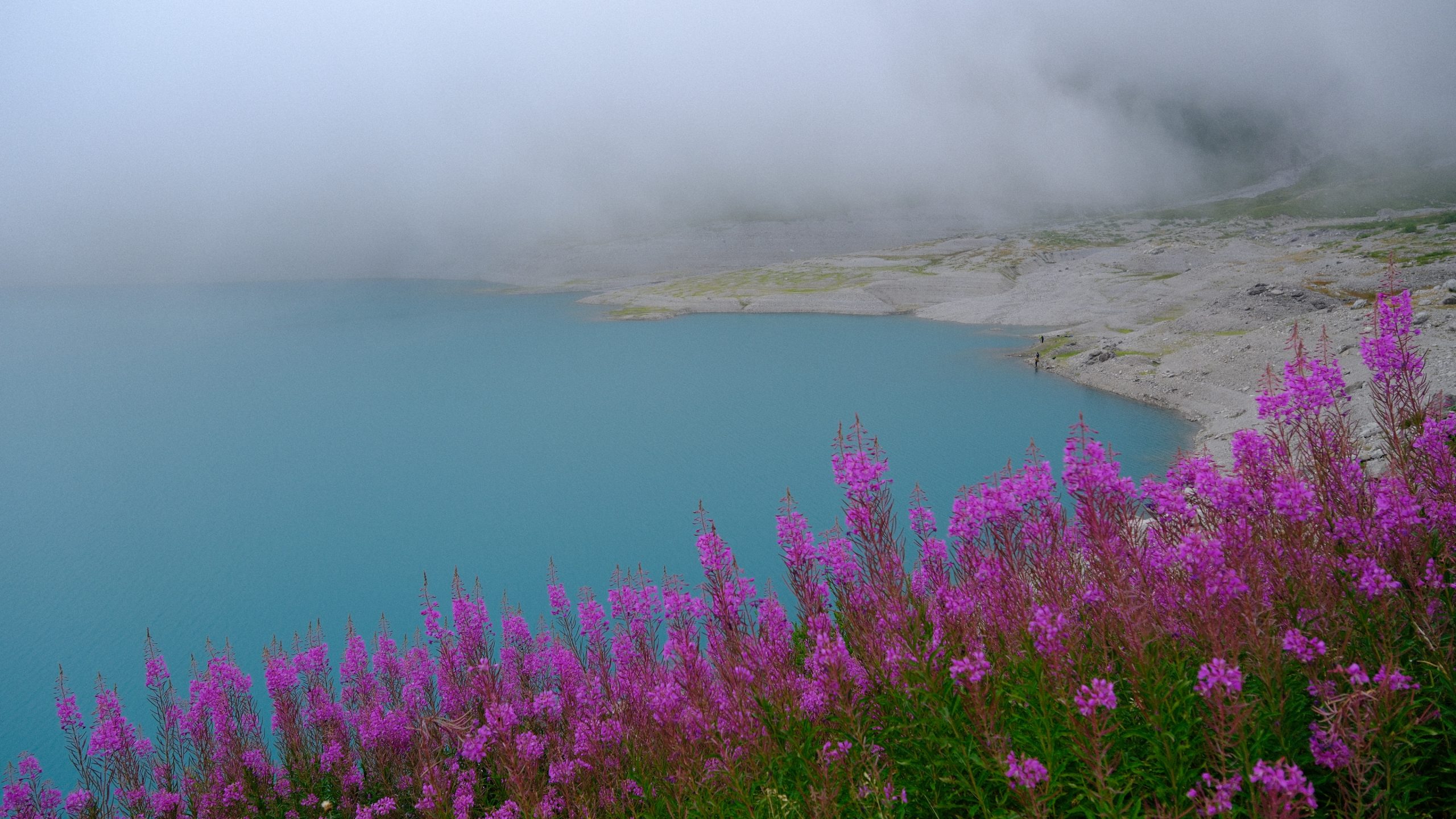
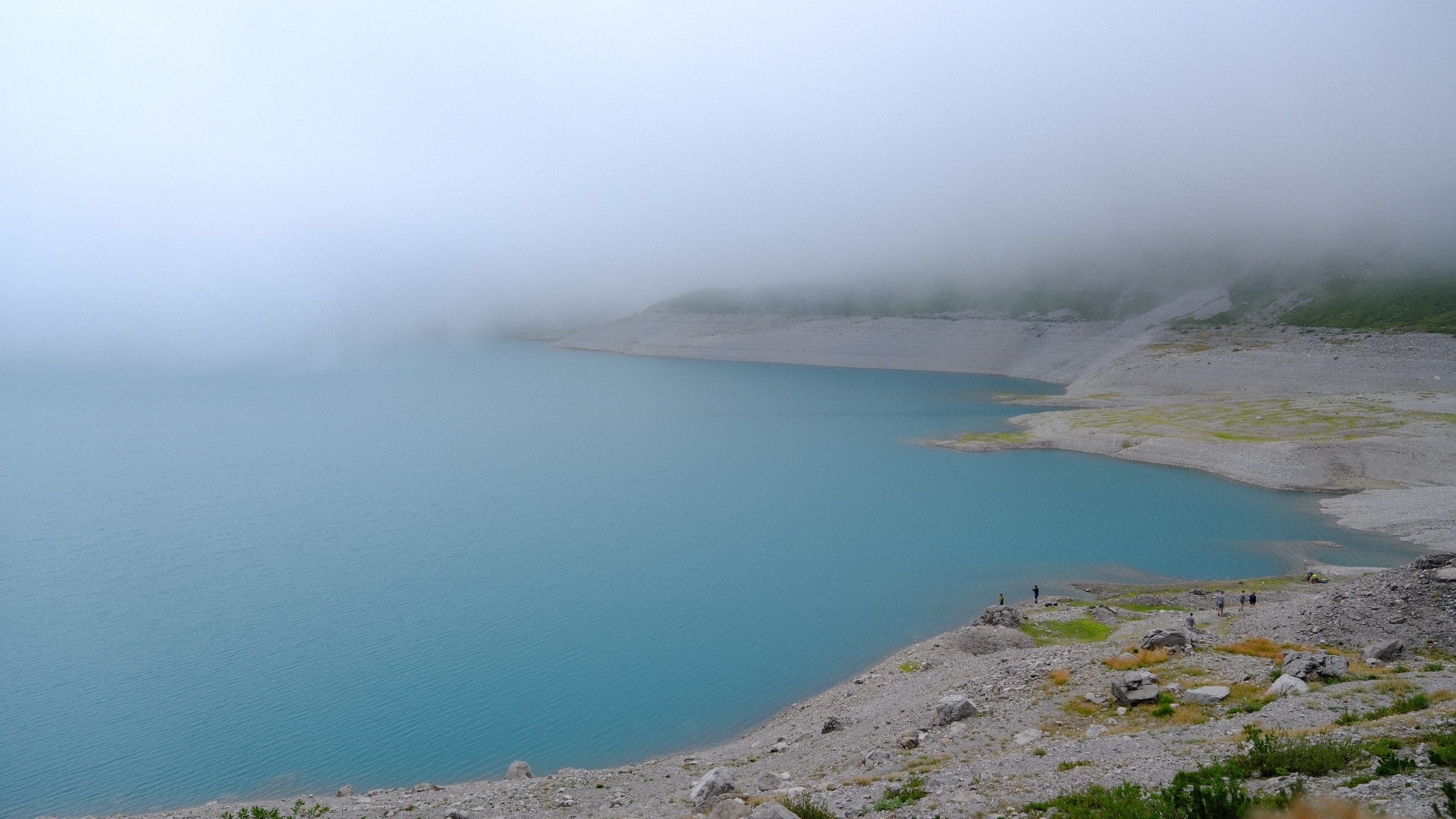
The rain softened every edge around Lünersee, but somehow made the colour of the water more vivid.
There are places that reveal themselves in sunlight, and places that seem to prefer keeping a little of themselves hidden.
Lünersee, on the day we visited, belonged entirely to the second kind.
Clouds had lowered themselves onto the mountains. Rain moved in and out of the landscape. The Lünerseebahn climbed steeply from the end of the Brandnertal and disappeared towards a grey wall above us, its red cabin becoming smaller until it looked less like transport and more like a signal from another world.
We could not see what waited at the top.
That uncertainty became part of the pleasure.
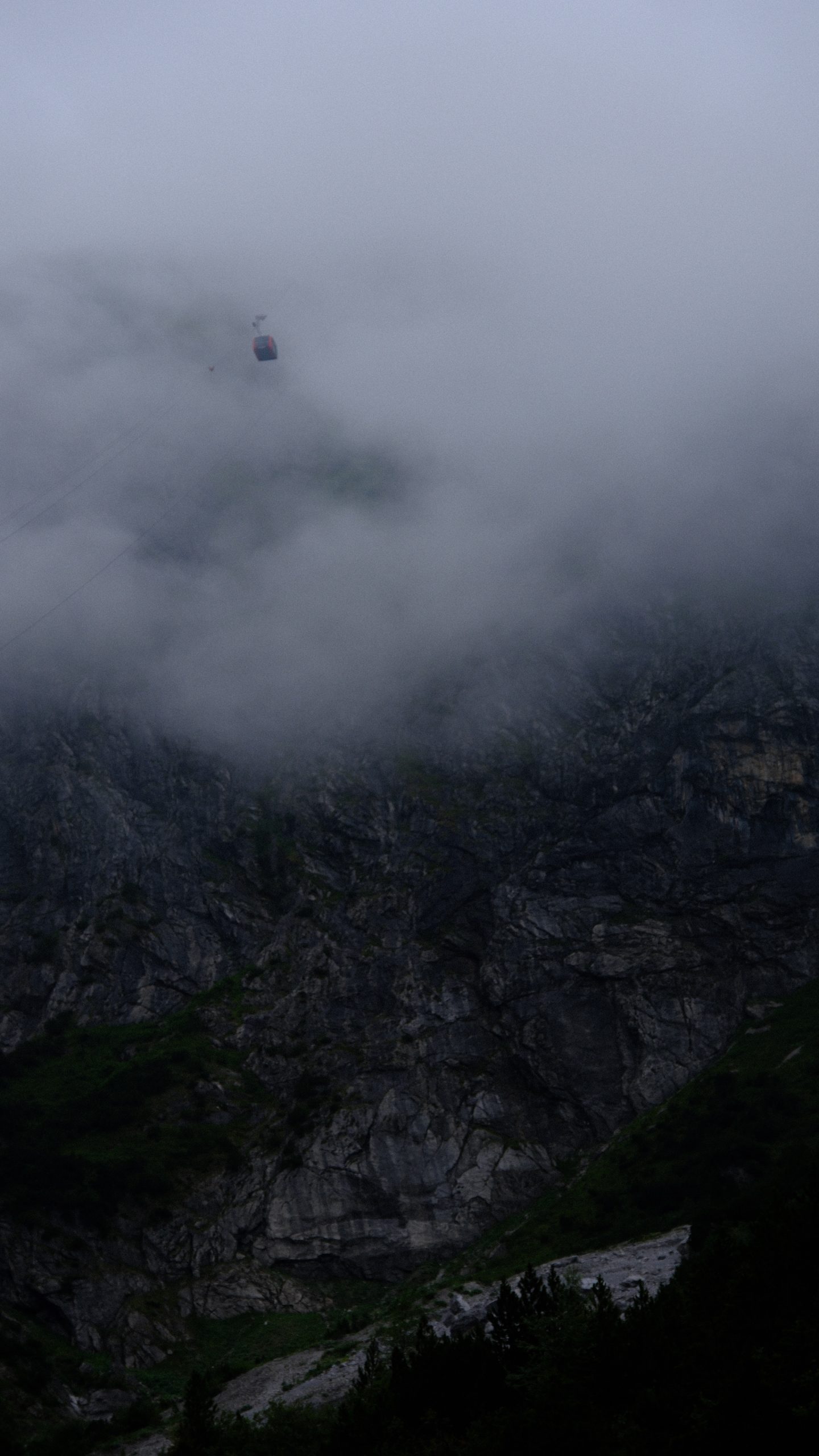
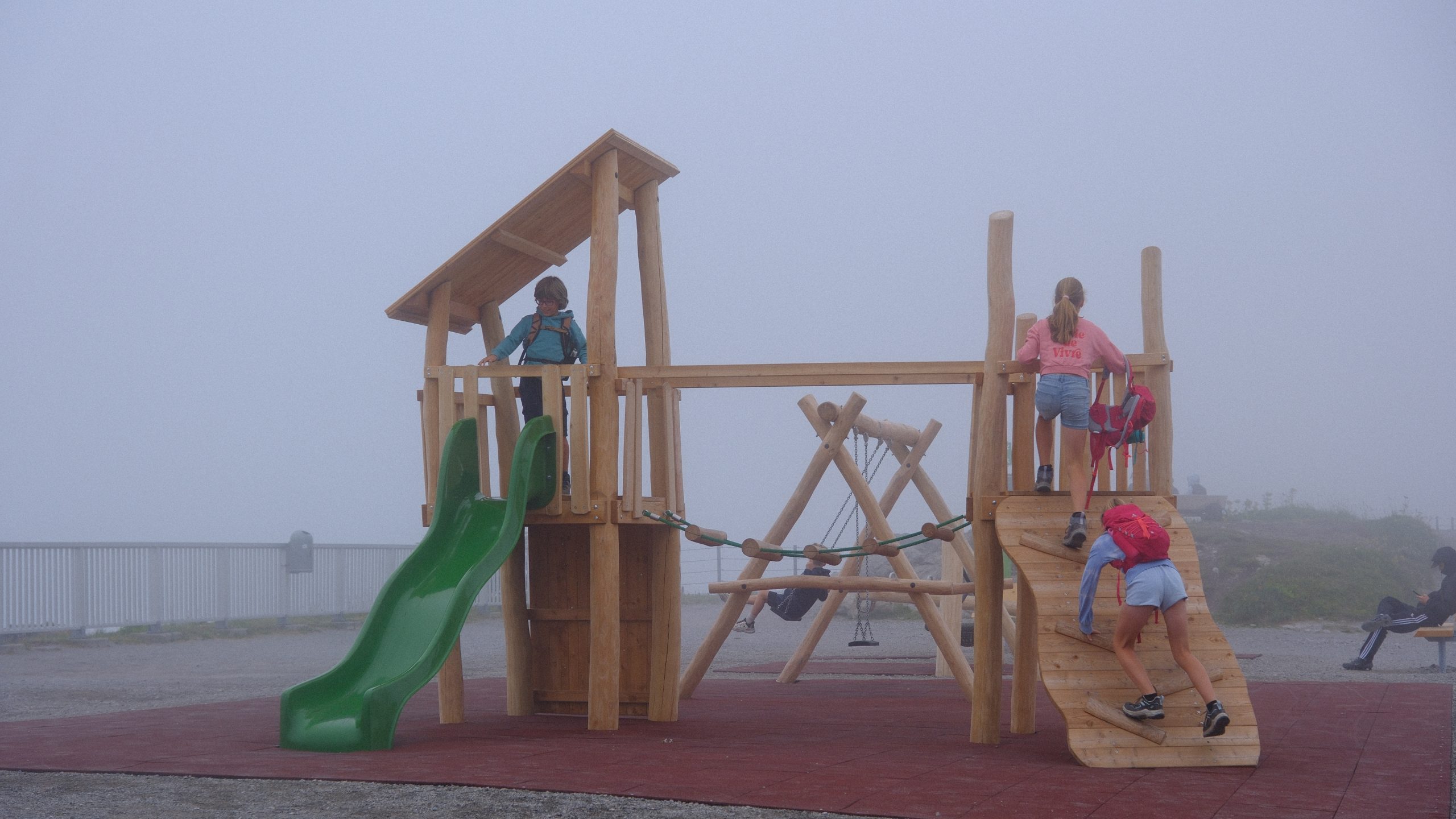
We followed the gondola into the cloud and arrived to find a mountain playground almost disappearing in the mist.
The ride takes only about six minutes, but it gains more than four hundred metres. The rock face drops dramatically beneath the cabin. On a clear day, I imagine the scale is immediate. In the rain, it had to be guessed from fragments: dark cliffs, moving cloud and the occasional glimpse of the valley below.
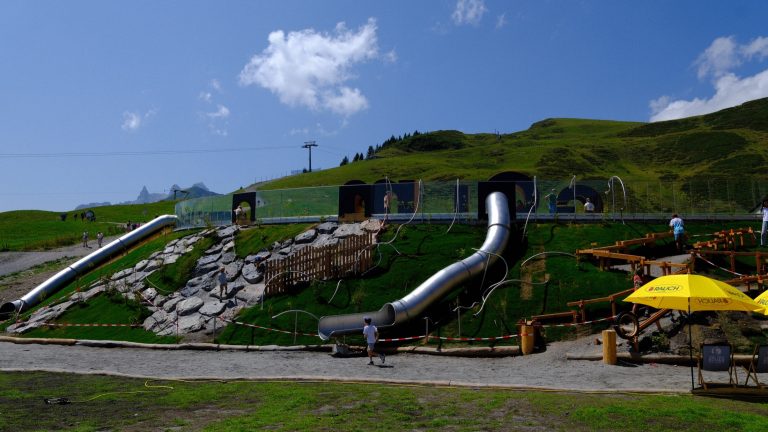
At the mountain station, even the playground seemed enchanted by the weather. Its wooden towers and small slide stood alone in the whiteness, ready for children who did not consider poor visibility a reason to postpone anything. A metal heart filled with stones and flowers welcomed us beside the hut. The route board promised a straightforward circuit around the lake.
The official description calls it an easy 6.25-kilometre round walk. It usually takes around one hour and fifty minutes. We needed more than two hours, which is what happens when the path contains a lake, a child and far too many reasons to stop.
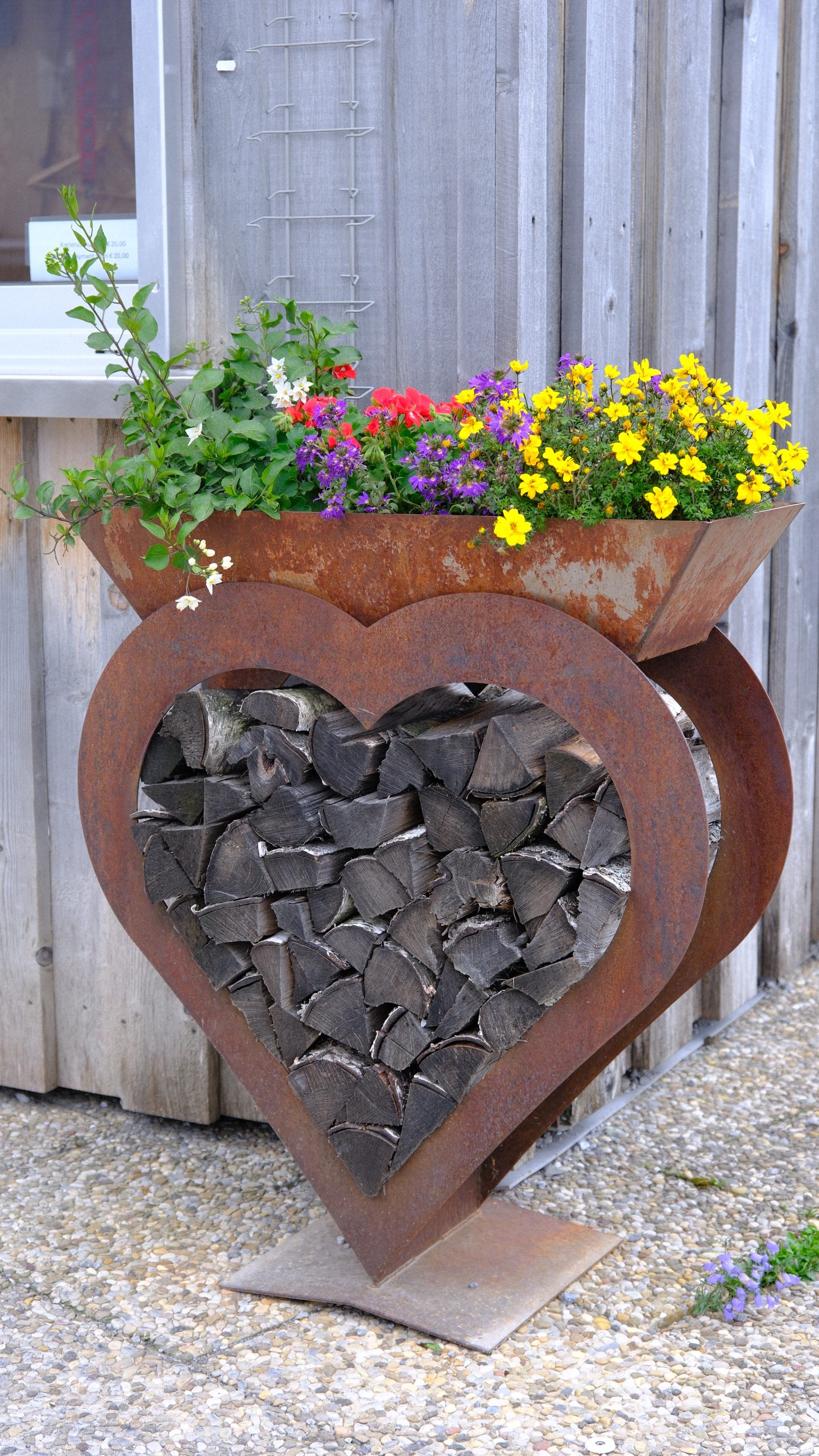
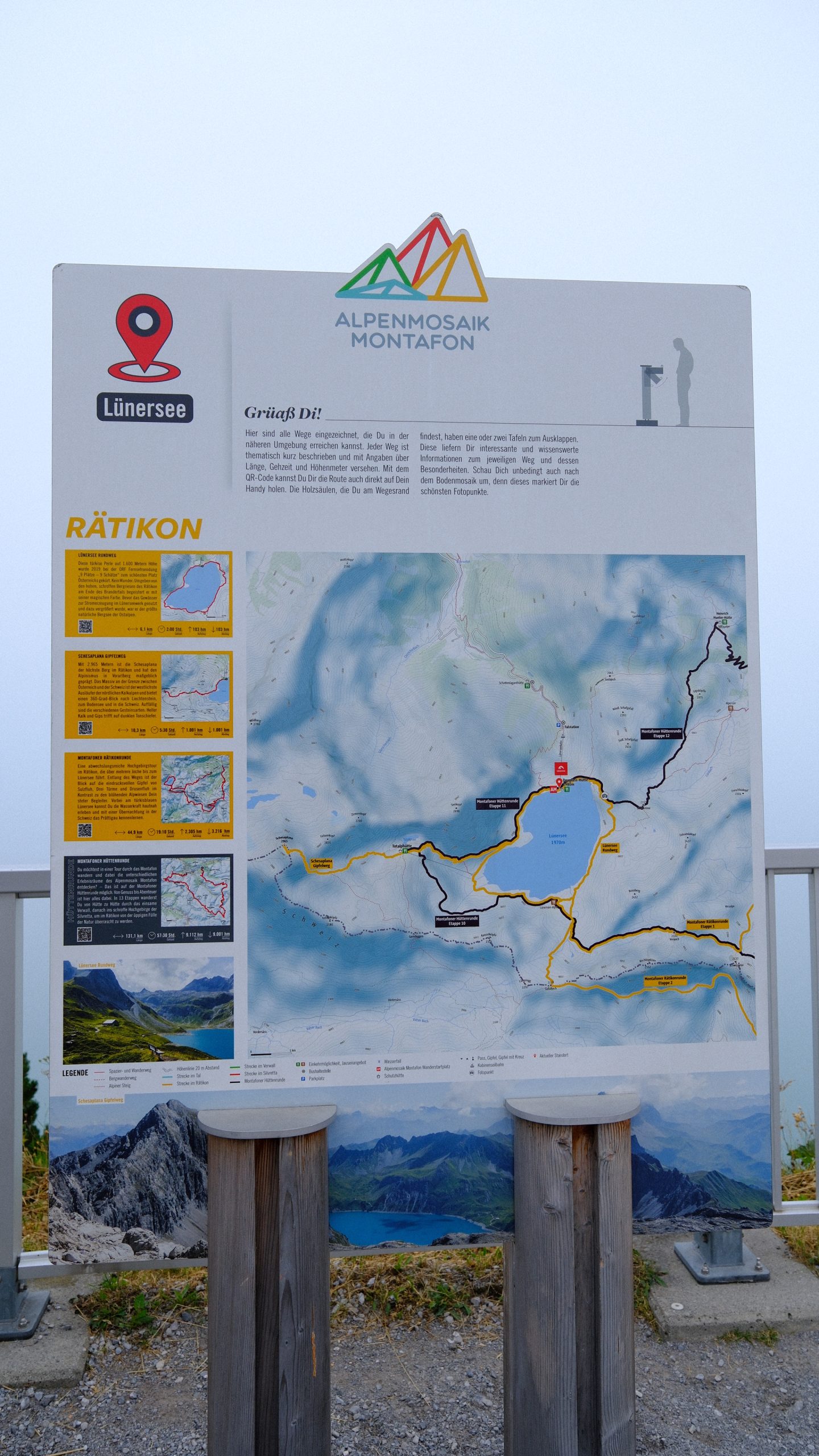
A heart of mountain stones beside the Douglass Hütte, and the map for the circular Lünersee trail.
When the lake appeared
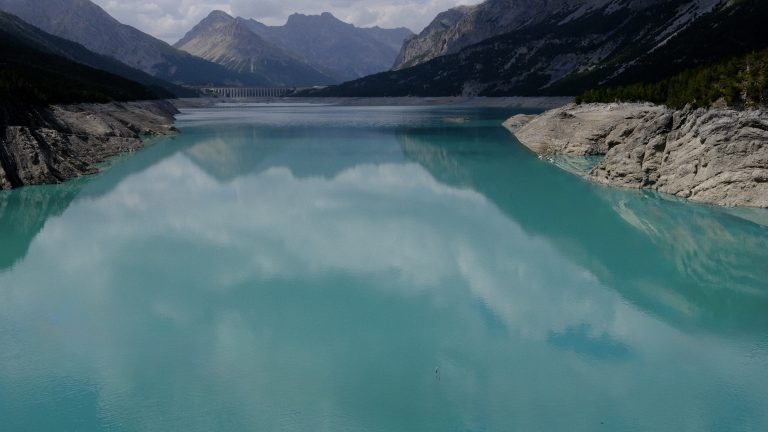
At first, Lünersee did not present itself as one grand panorama. The mist disclosed it slowly.
A pale turquoise edge appeared between rocks and dwarf pines. Then another section of water emerged farther along the path. The opposite shore would be visible for a moment before the cloud crossed it again, leaving us to wonder whether we had truly seen it.
This slowness made us pay attention. On a bright day, the eye might rush towards the peaks and the famous sweep of the Rätikon. In the rain, our world became smaller and more intimate: blue water beneath us, fireweed burning pink along the path, wet stone and low green shrubs holding the edge of the mountain.
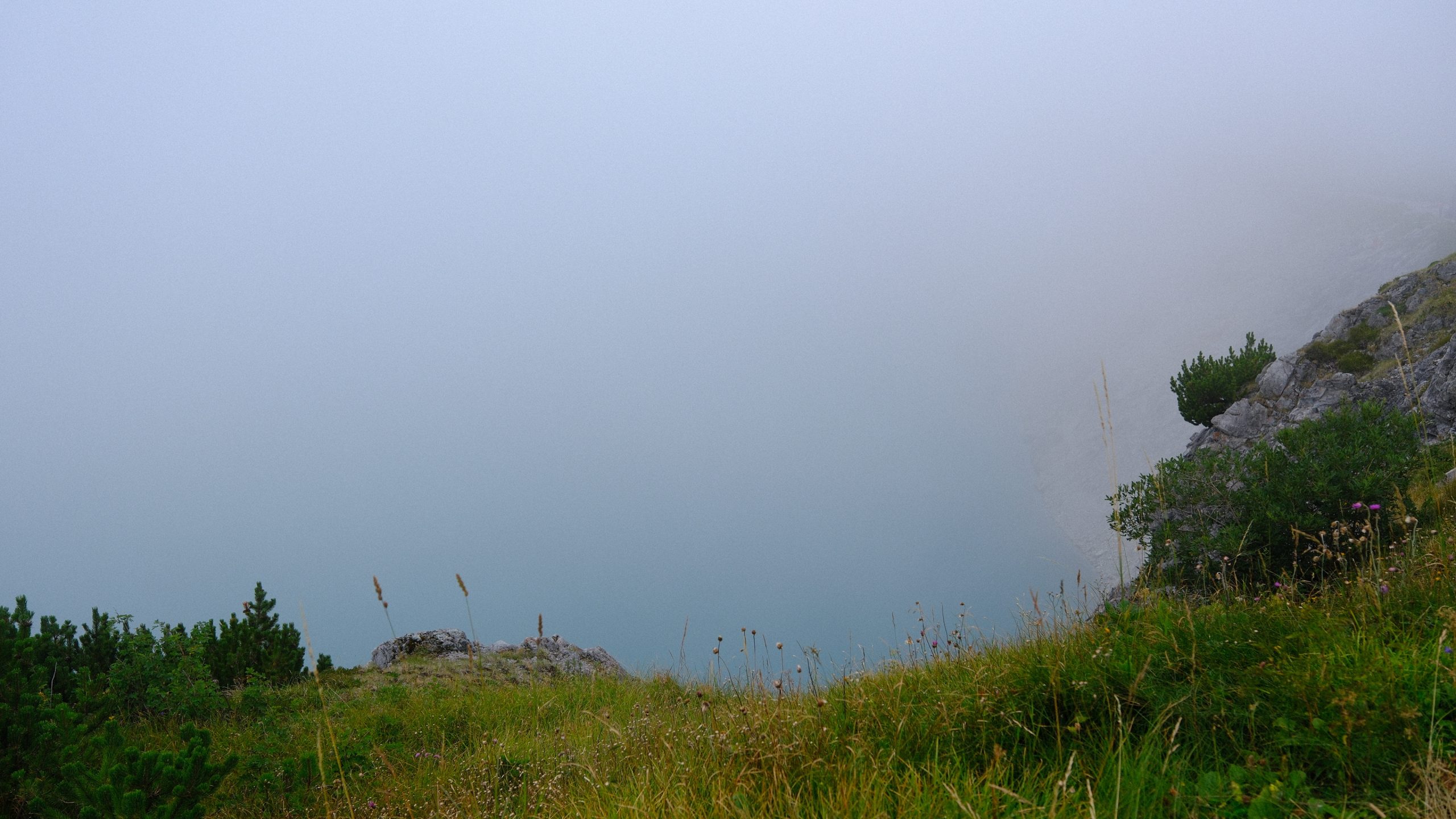
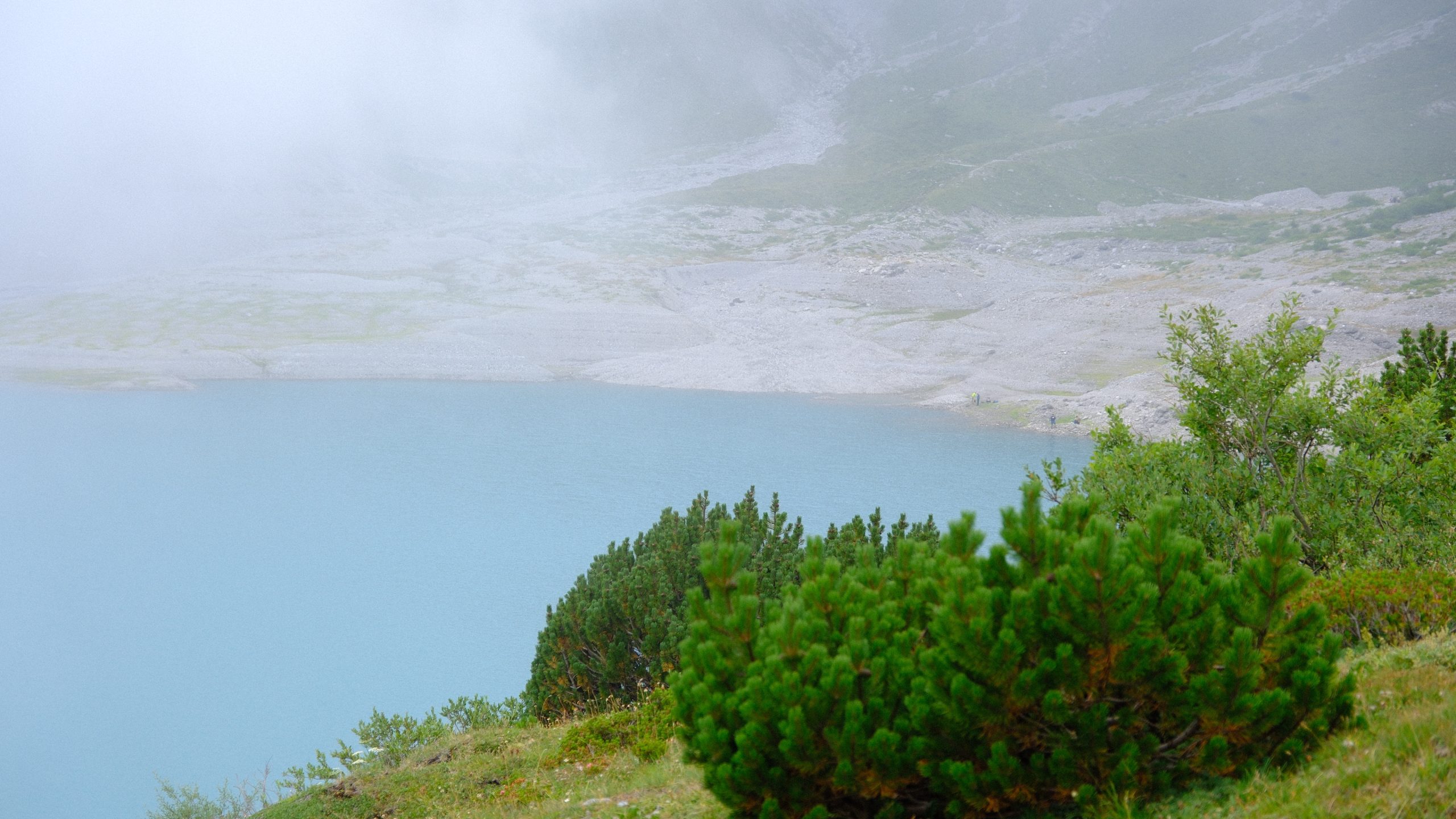
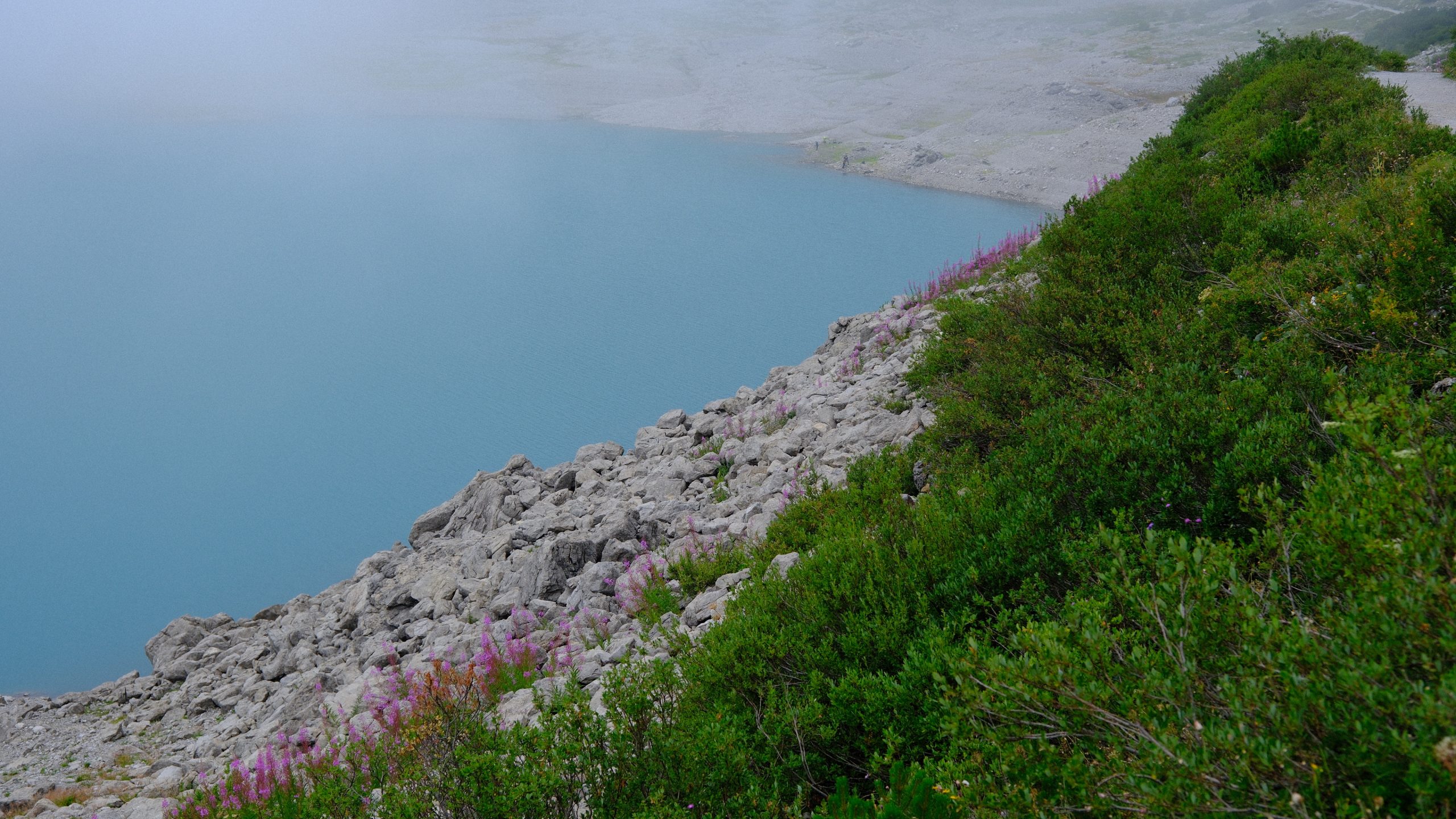
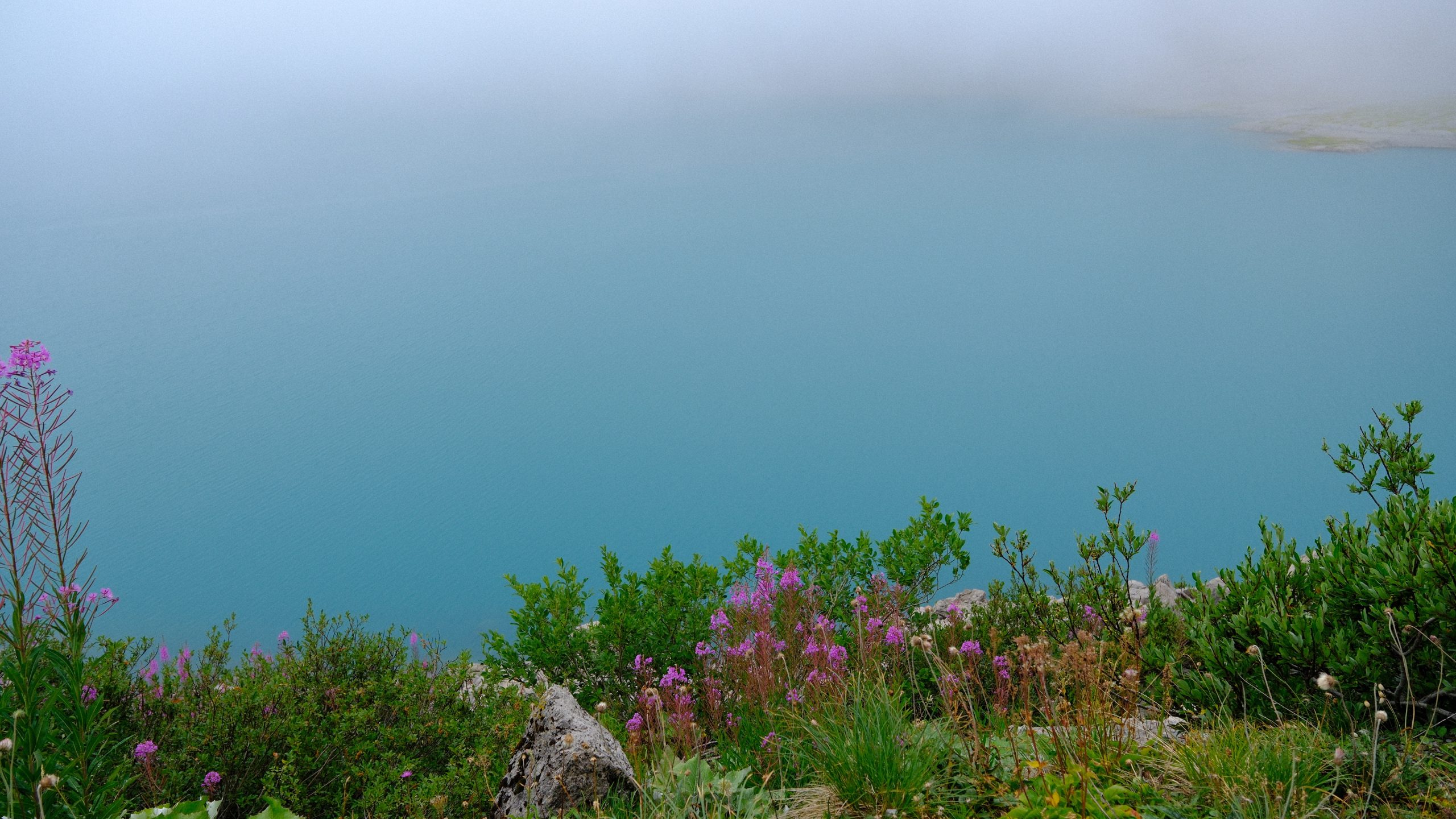
Lünersee appeared in fragments through the cloud, turquoise water bordered by rock, dwarf pine and fireweed.
It felt less like looking at a landscape and more like being allowed into one.
Chris ran ahead, then back to us, then ahead again. He had the path, the flowers and the changing glimpses of water to investigate. Every new opening in the mist was another discovery.
“It is amazing,” he said.
And it was. Not amazing despite the weather, but amazing because of it.
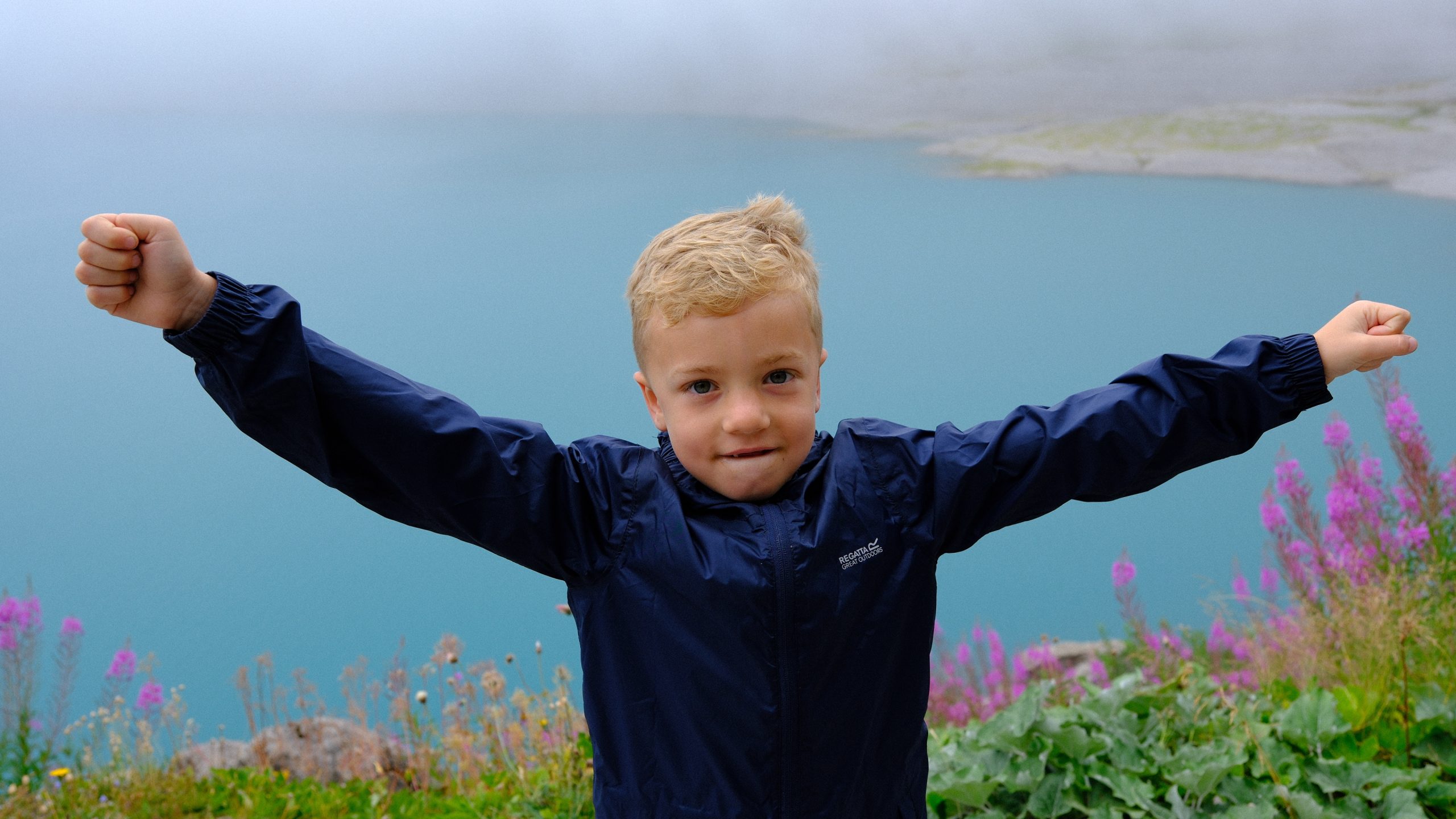
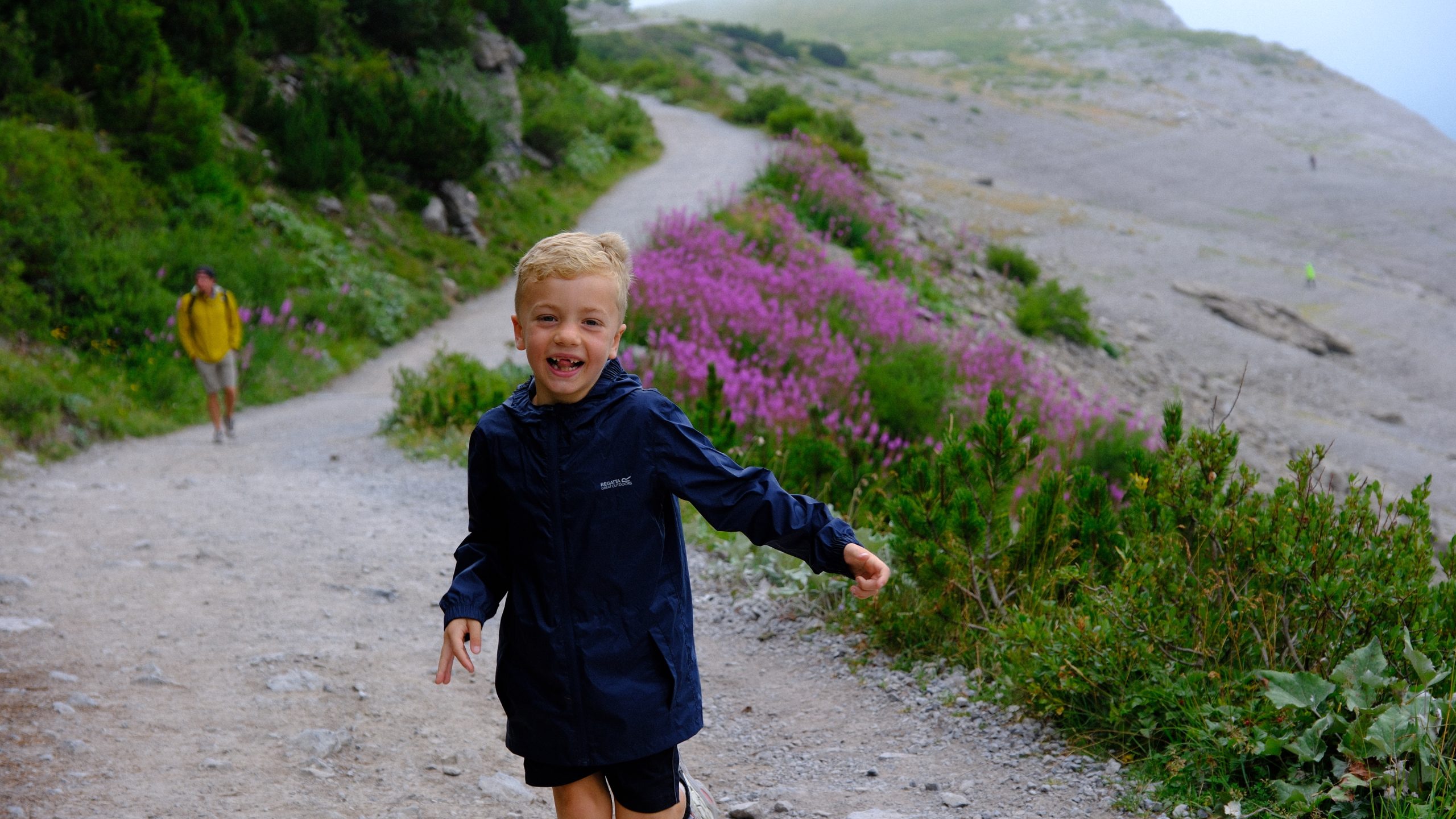
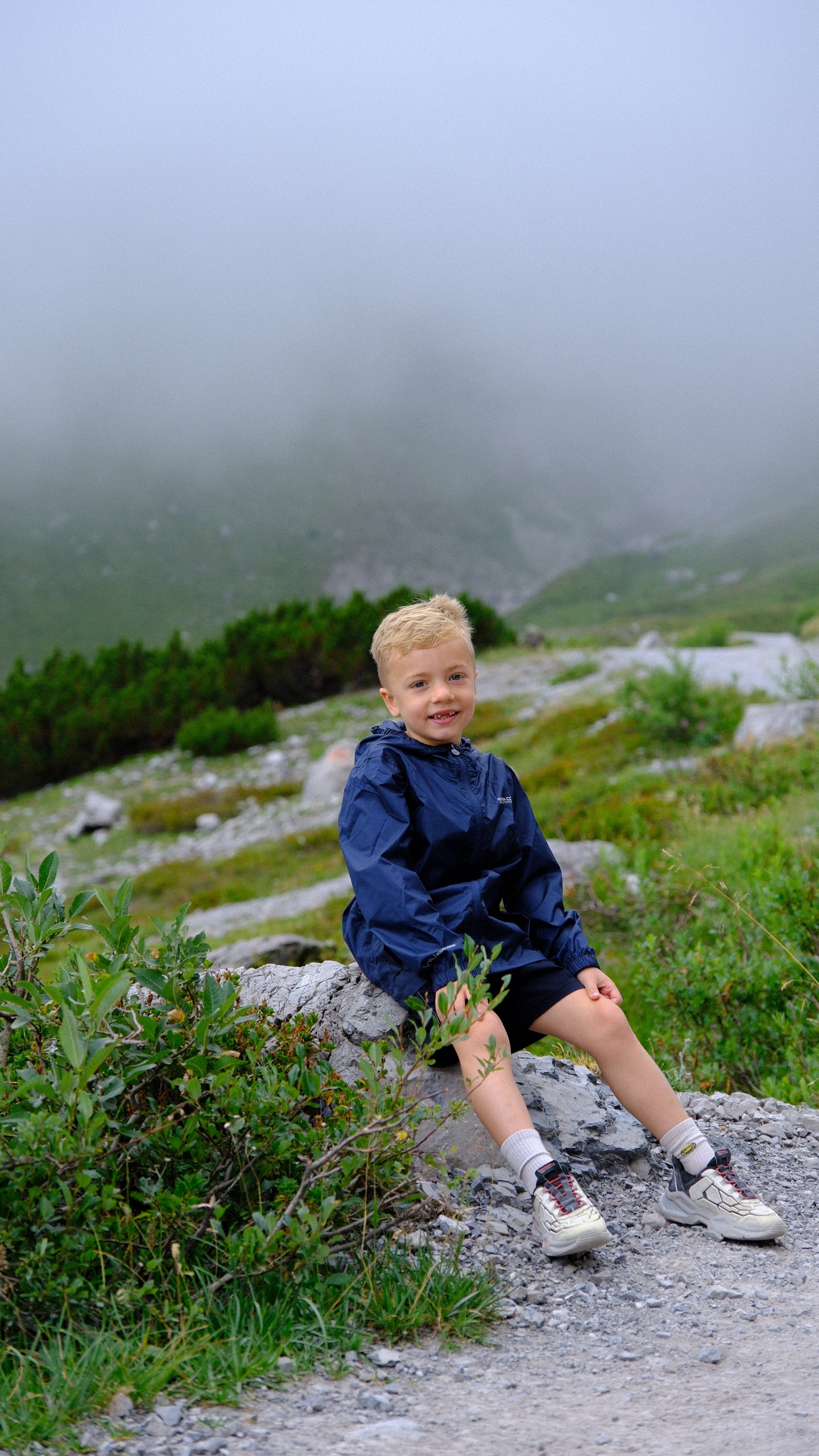
Chris announced that the lake was amazing, then ran on to see what the mist would reveal next.
Pink fireweed was the brightest thing in the grey afternoon.
The people beneath the water
Perhaps mountain weather makes everyone more susceptible to old stories. When the visible world ends a few metres beyond the path, it becomes easy to imagine that another one has taken its place.
Lünersee has its own spirit legend. It is known as the story of the Seebutz.
The tale says that two shepherds once stood beside the lake on the Feast of the Assumption. Church bells sounded from Brand in the valley below. One shepherd wished he could be there to hear the sermon. The other mocked him, saying that clergy lived in the lake too, and that one of them could surely come out to preach.
Then a gentleman rose from the water on a white horse.
He raised his hand and delivered a sermon to the shepherd who had laughed. Afterwards, the man became quiet and sickly. The legend says that he died a year later.
It is a story about respect, but also about the old Alpine feeling that water has inhabitants, mountains have tempers and mockery can be overheard. The lake is not an empty view. It is a presence.
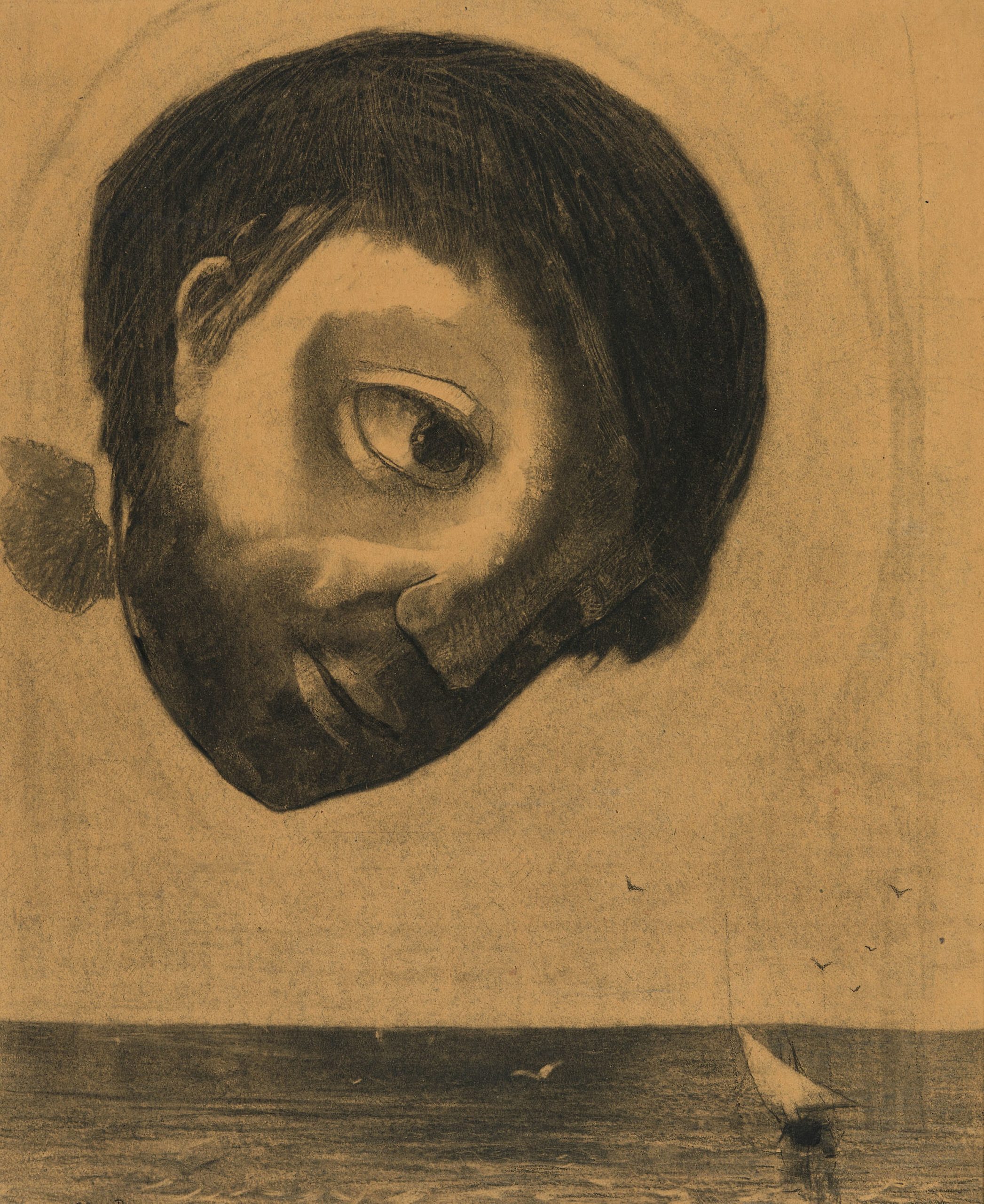
Guardian Spirit of the Waters by Odilon Redon, 1878. Public domain. This is an artistic folklore interlude, not a historical depiction of the Lünersee Seebutz.
The modern lake keeps a more tangible submerged history too. Lünersee was once one of the largest natural mountain lakes in the Eastern Alps. Its capacity was enlarged by the dam completed in the 1950s, and the original Douglass Hütte had to be rebuilt because its former location was flooded when the reservoir first filled.
So there really is an older place beneath the water, though not quite the village of spirits one might imagine in the fog.
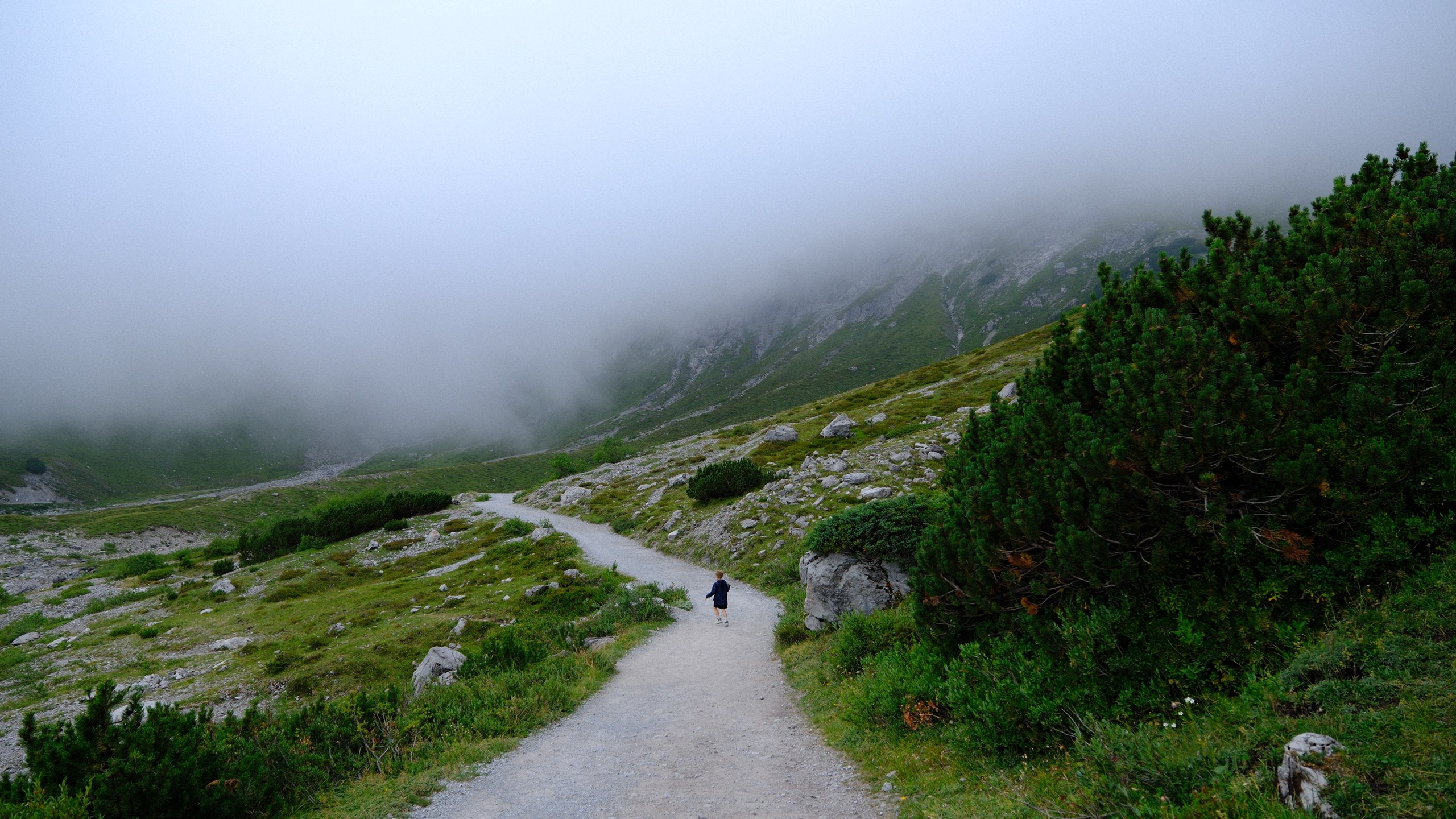
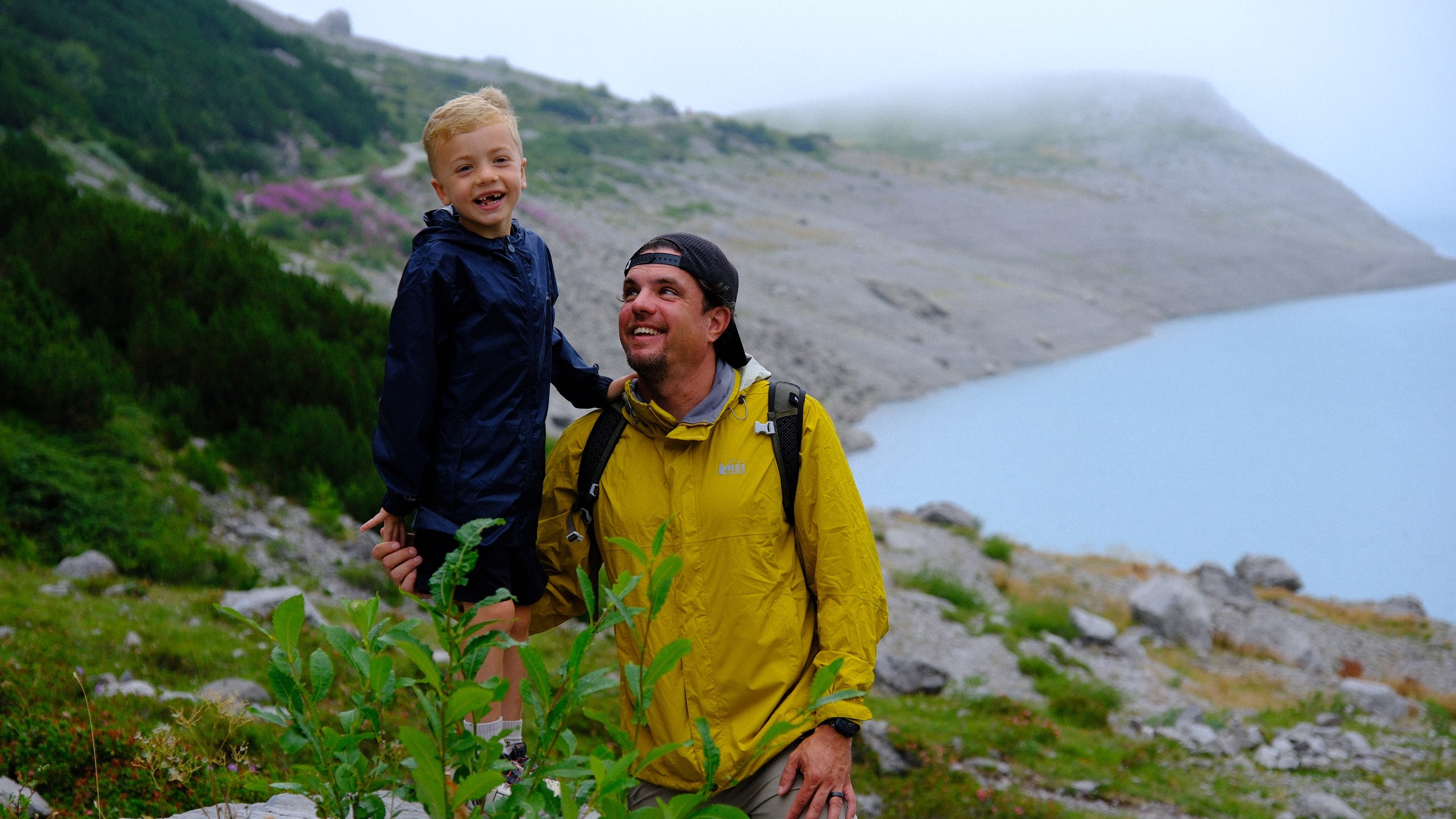
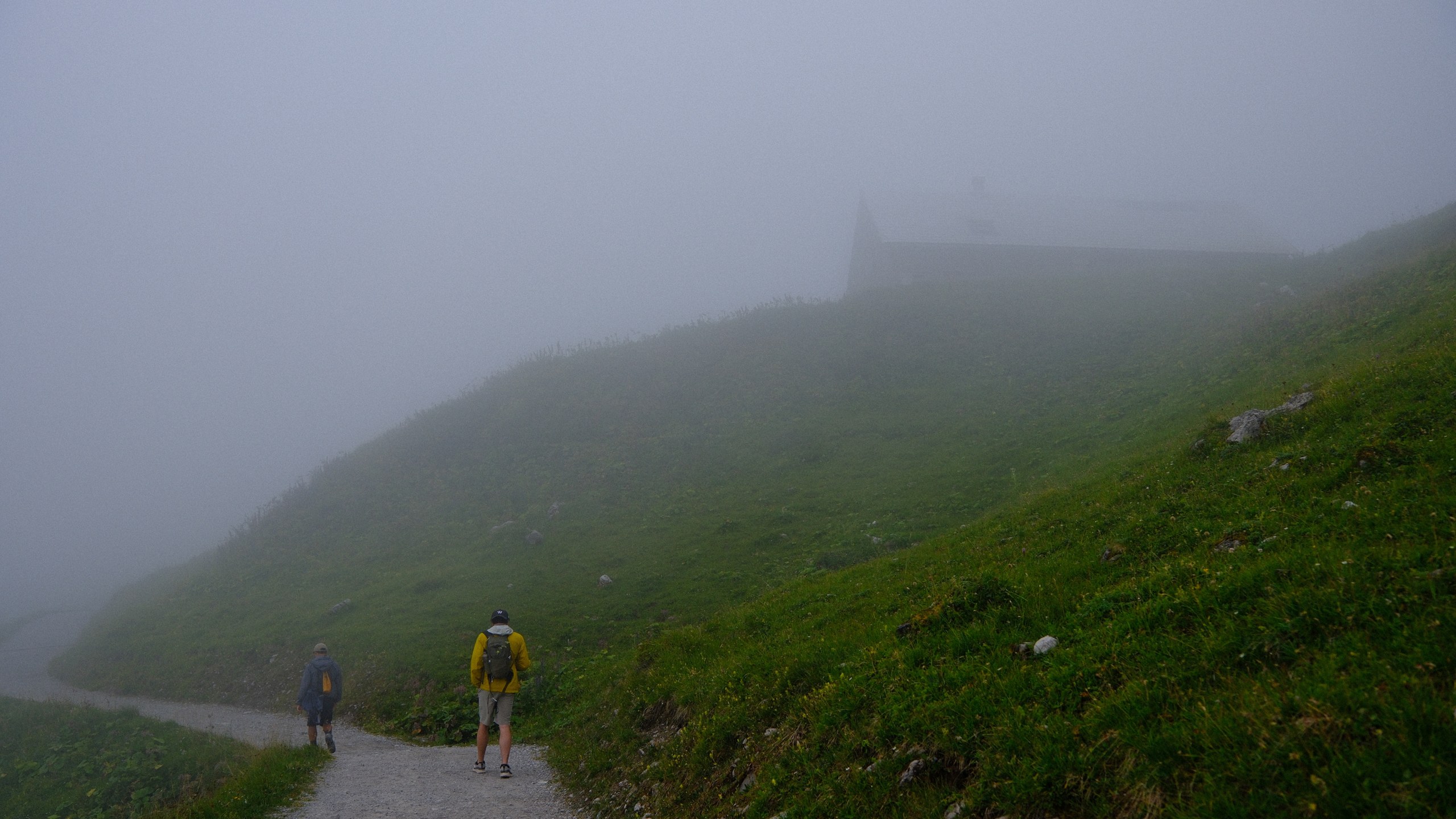
The circular path carried us between clearings, family photographs and long passages where the mountains vanished completely.
Chris, meanwhile, remained on his very best behaviour. He walked, laughed, posed, explored and somehow avoided the kind of small rebellion that can turn a family hike into an endurance test.
Perhaps the Seebutz approved of him.
Or perhaps he sensed that this was not the day to offend anyone living beneath the lake.
Creatures at the edge of sight
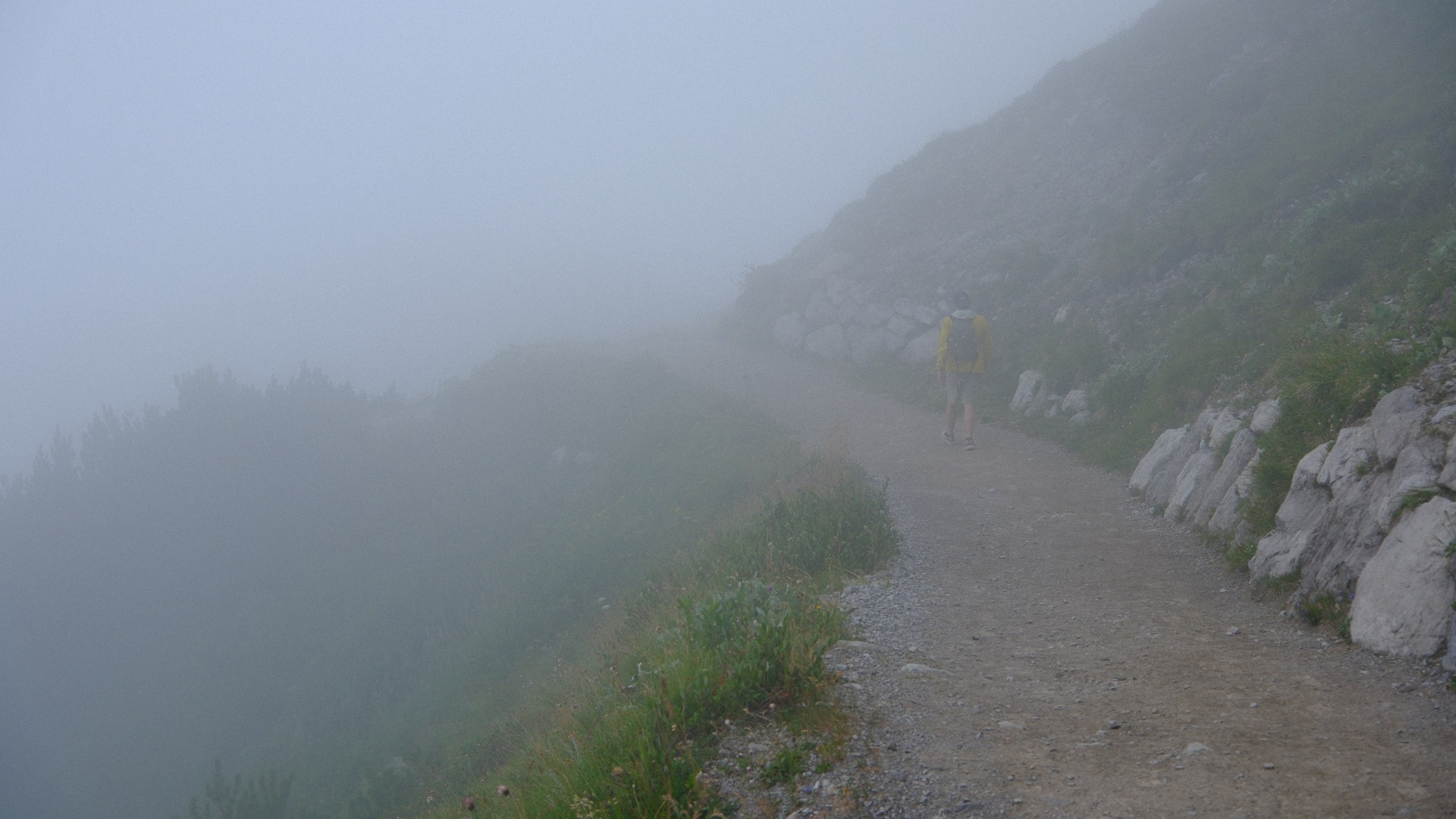
The path became stranger as the cloud thickened. One moment we could see blue water far below. The next, there was only a narrow trail passing beneath a wall of rock. Wet ledges disappeared into white air, and the route ahead looked as if it had been erased.
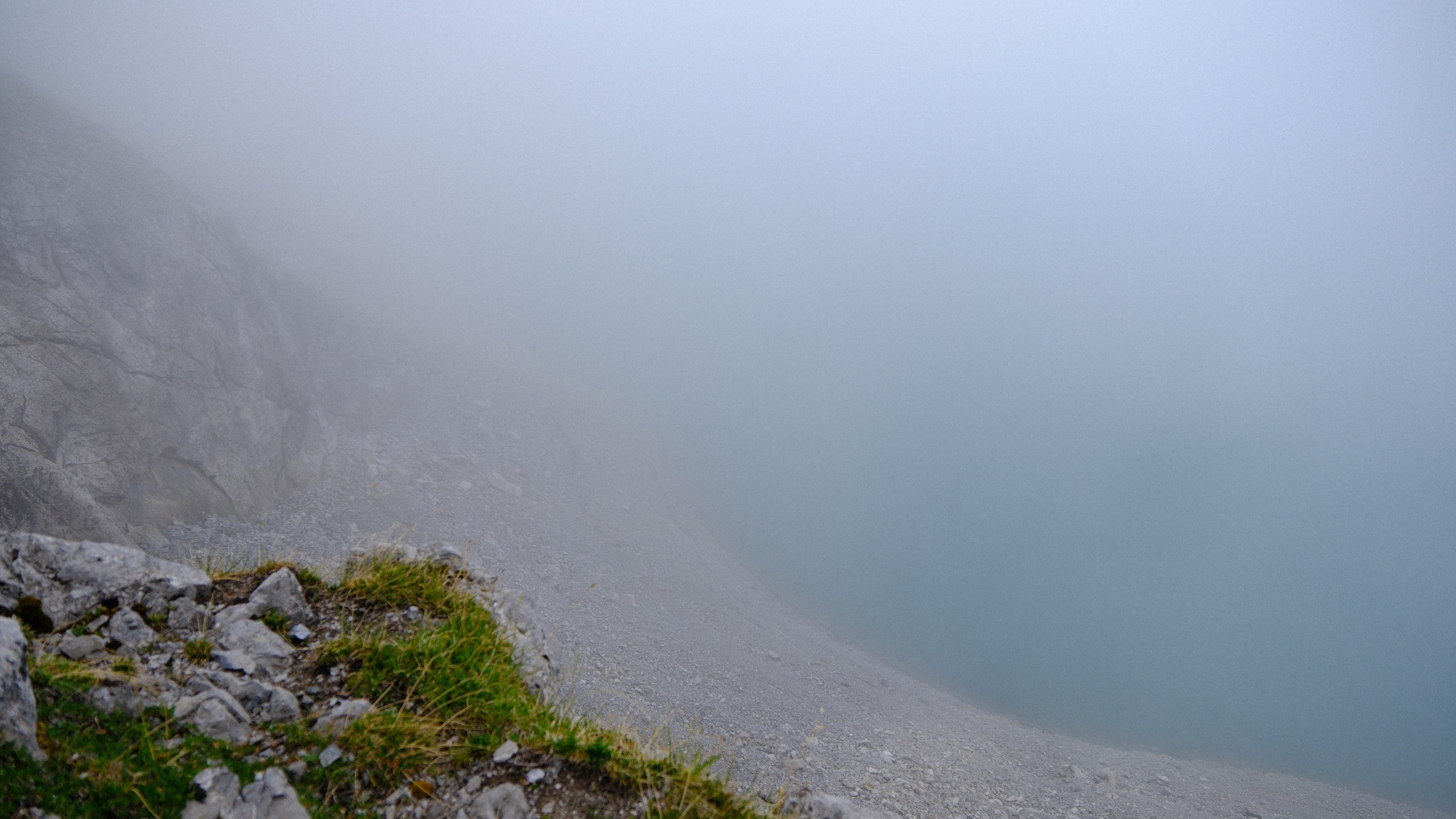
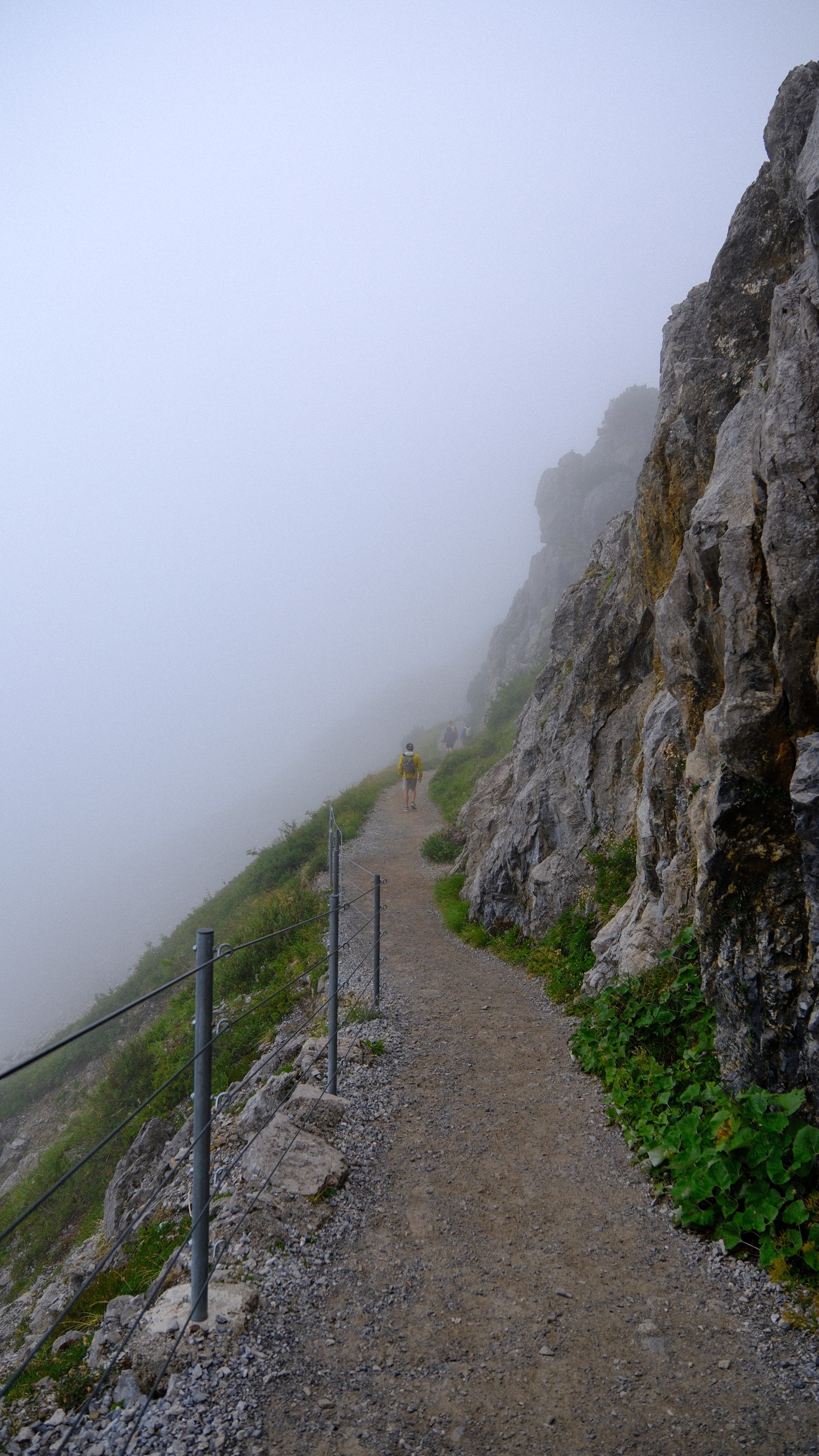
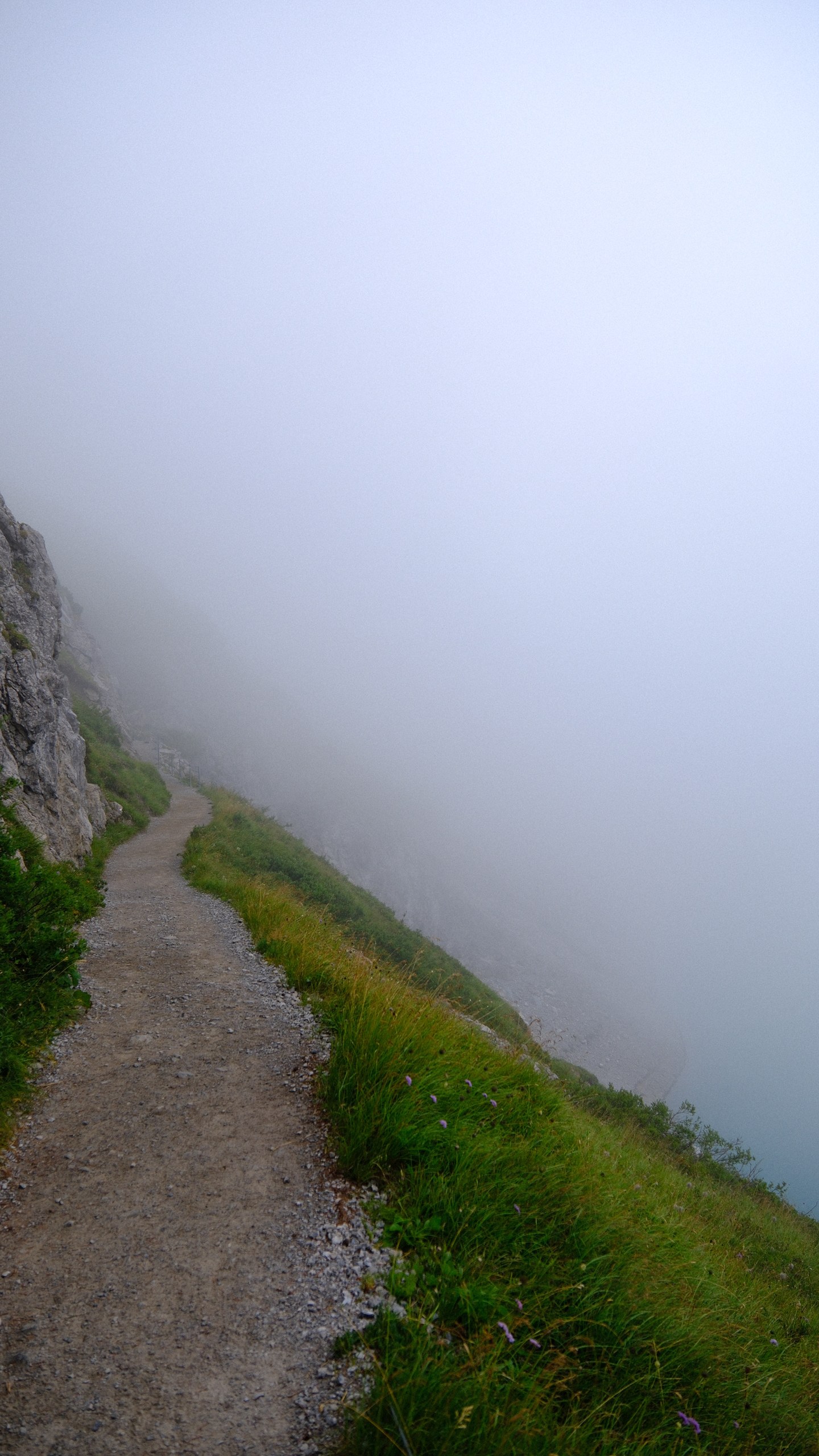
At the lake’s far edge, water, cliff and path repeatedly disappeared into cloud.
Small things took on unusual importance. A rain-filled pool among the plants looked like a tiny mirror left for a woodland creature. Spiderwebs gathered droplets and stretched between stems, delicate enough to be missed in sunshine but luminous in the mist.
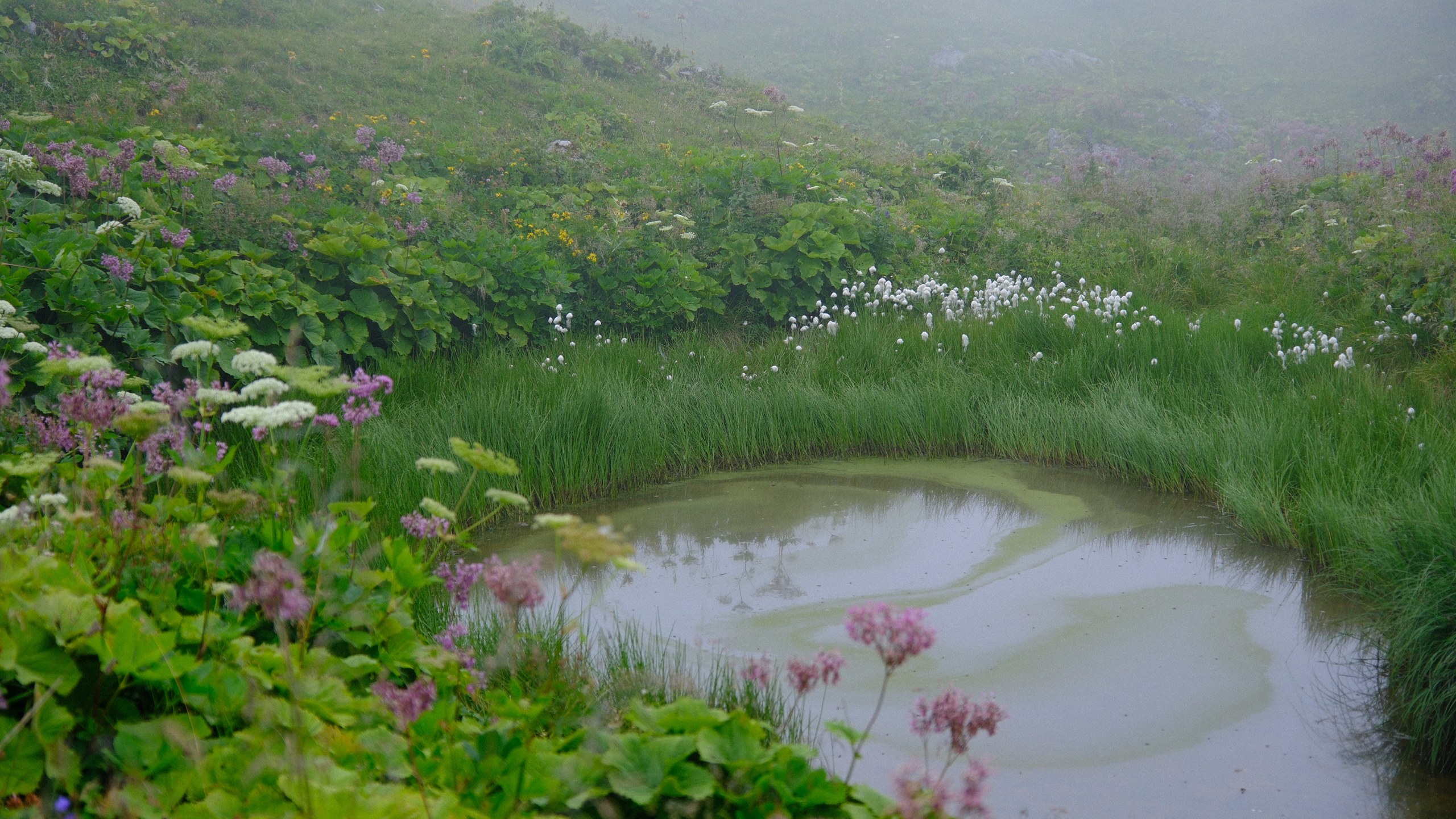
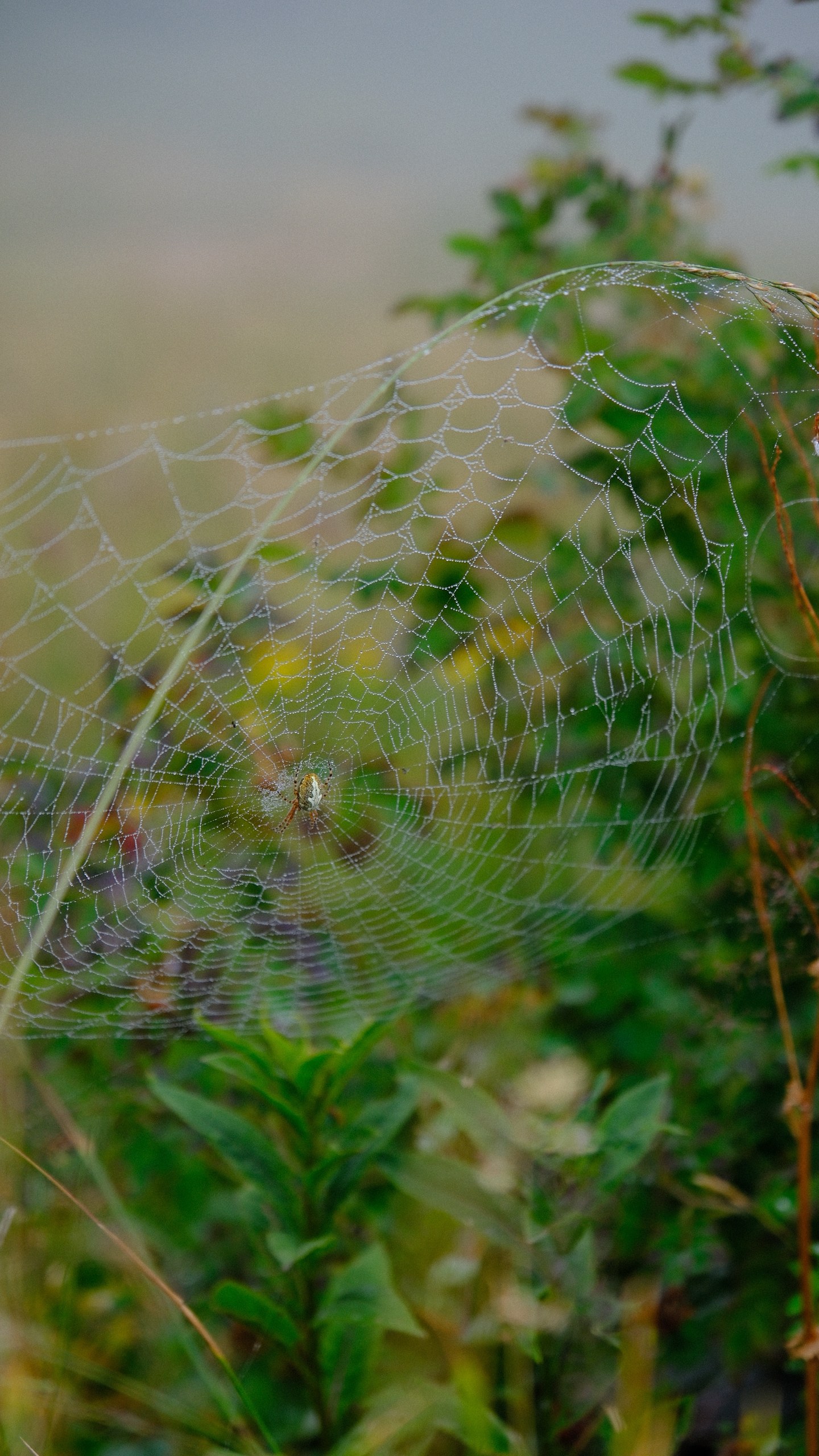
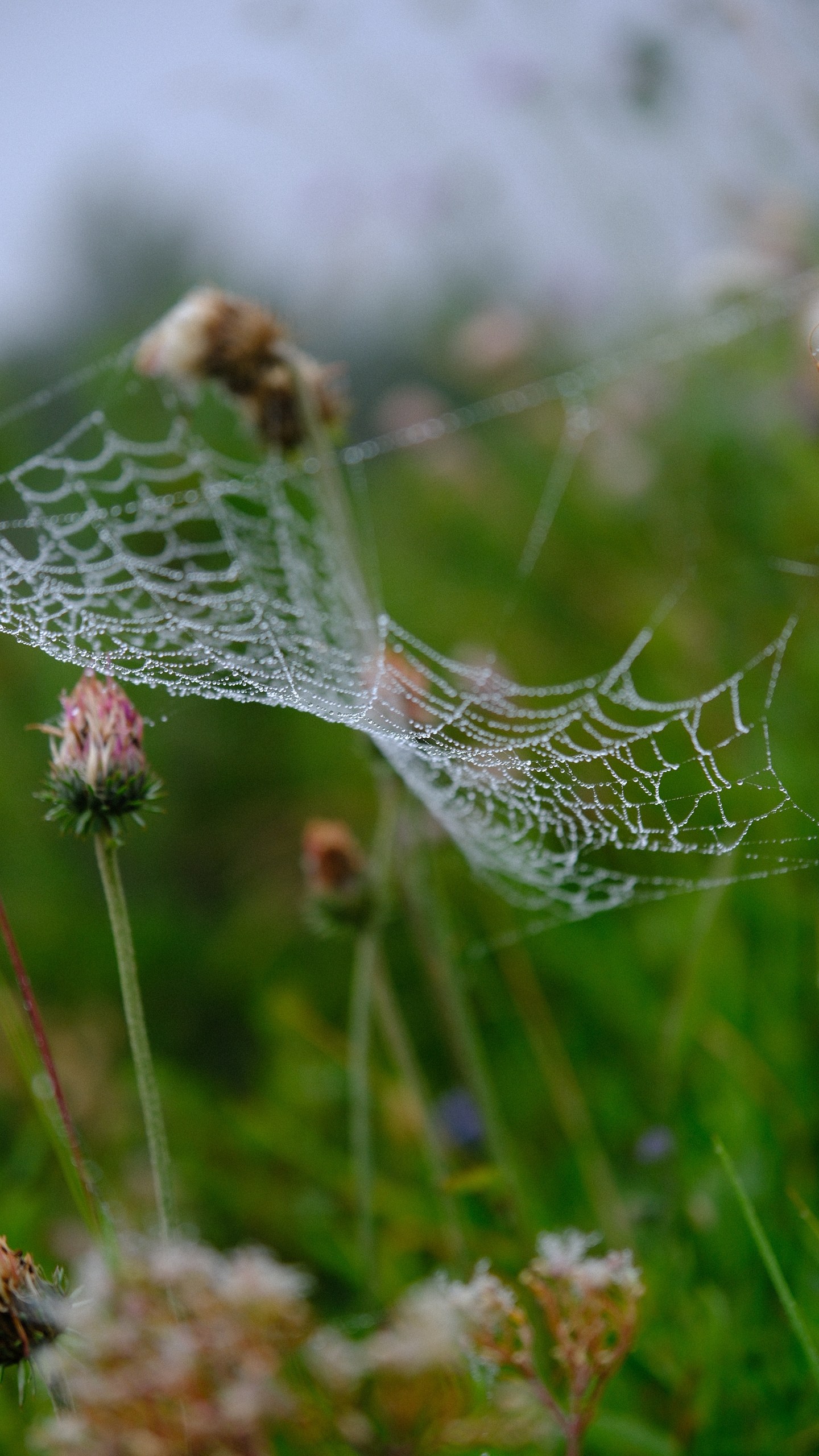
Rain revealed a smaller enchanted world of pools, wet plants and silver webs.
The Alps have more than lake spirits in their folklore. Somewhere in the wider mountain imagination lives the Tatzelwurm, a dragon-like creature variously described as a serpent with short legs, a cat-faced lizard or something seen too briefly between rocks to be explained properly.
There is no reliable tradition placing a Tatzelwurm specifically at Lünersee. Still, the old stories belong to the same landscape of caves, scree and vanishing paths. On a day when the rock openings seemed to breathe cloud, it was easy to understand how such creatures entered local tales.
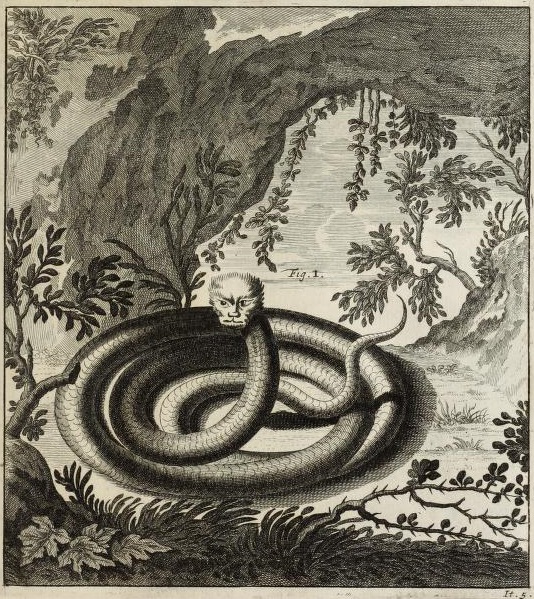
A cat-headed Alpine dragon recorded by Swiss naturalist Johann Jakob Scheuchzer in 1723, later associated with the Stollenwurm or Tatzelwurm tradition. Public domain.
We did not see a dragon. We did see paths dissolve, cliffs appear without warning and an entire lake hide itself while we stood beside it. That felt magical enough.
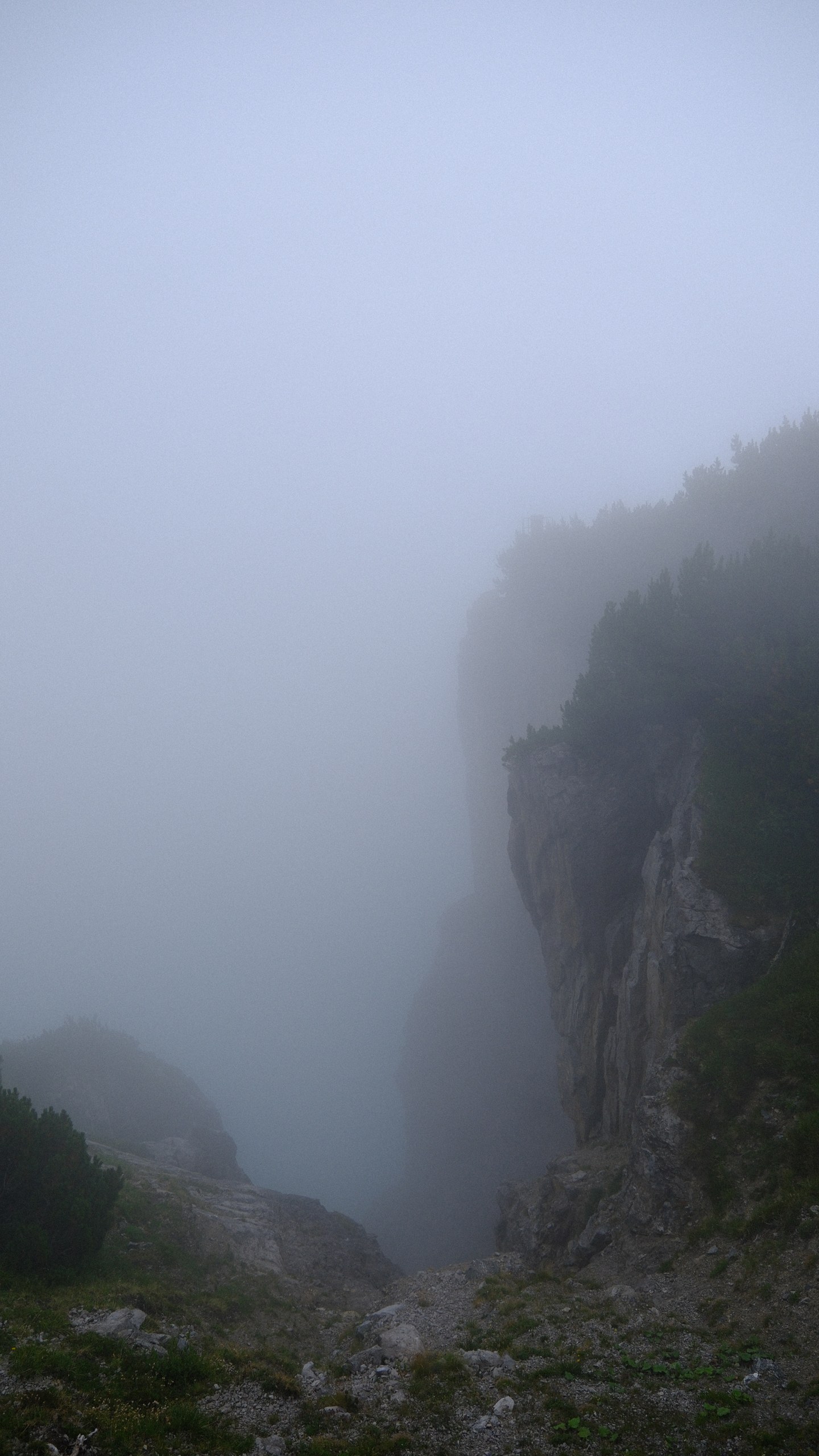
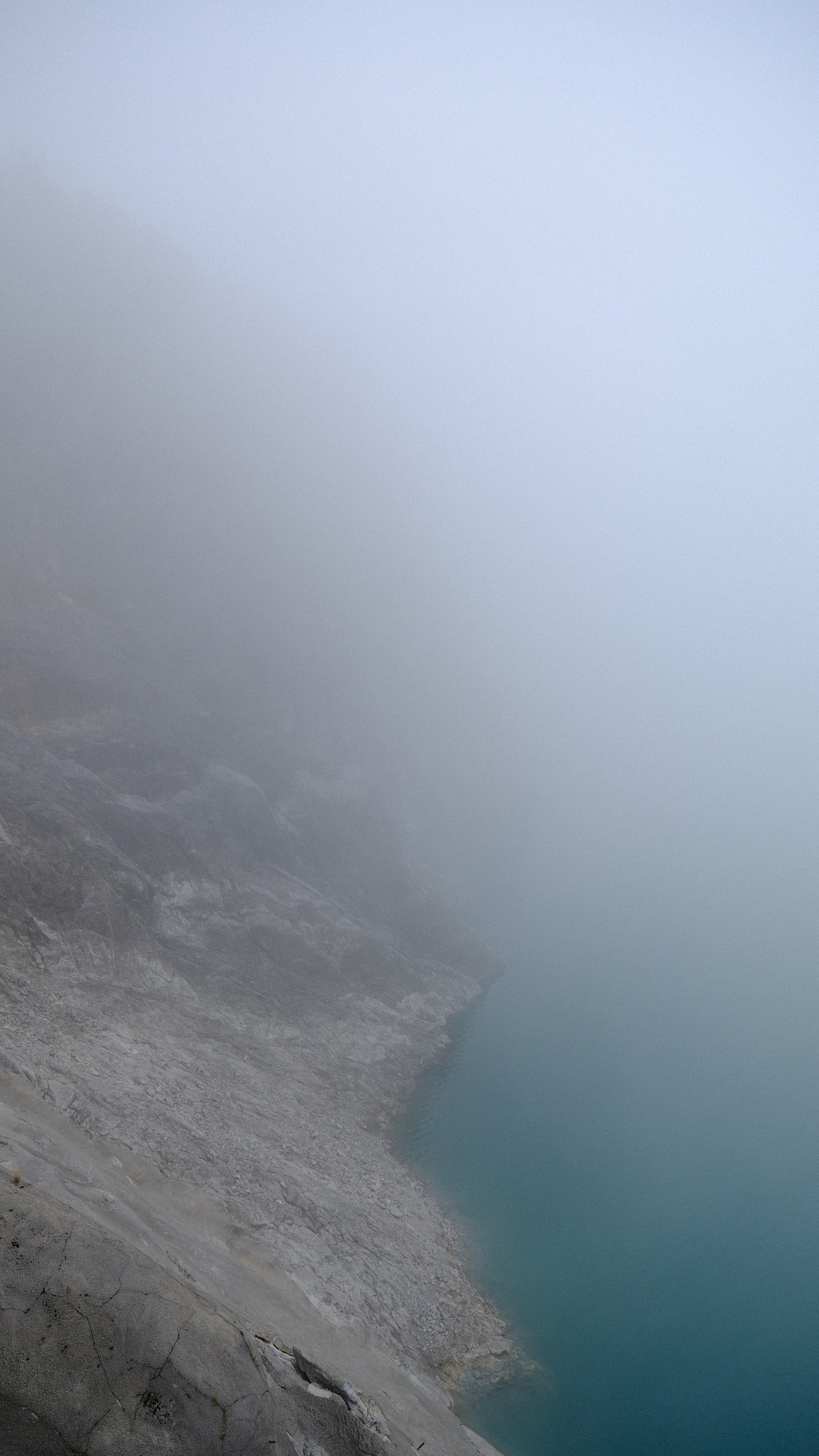
Rock and water at the edge of visibility, the sort of landscape in which old creatures remain possible.
Warmth at the Douglass Hütte
By the time we completed the circuit, the Douglass Hütte felt like a reward waiting at the edge of the cloud. It stands beside the mountain station at 1,979 metres, with the lake on one side and a children’s playground close enough to extend the adventure after lunch.
Inside was warmth, wood and the welcome seriousness of Alpine food after a wet walk.
I ordered the trout fillet with parsley-butter potatoes. My husband had goulash and sausages. Chris chose his favourite Flädlesuppe, the clear soup filled with fine strips of pancake that has followed him happily through our Austrian mountain days.
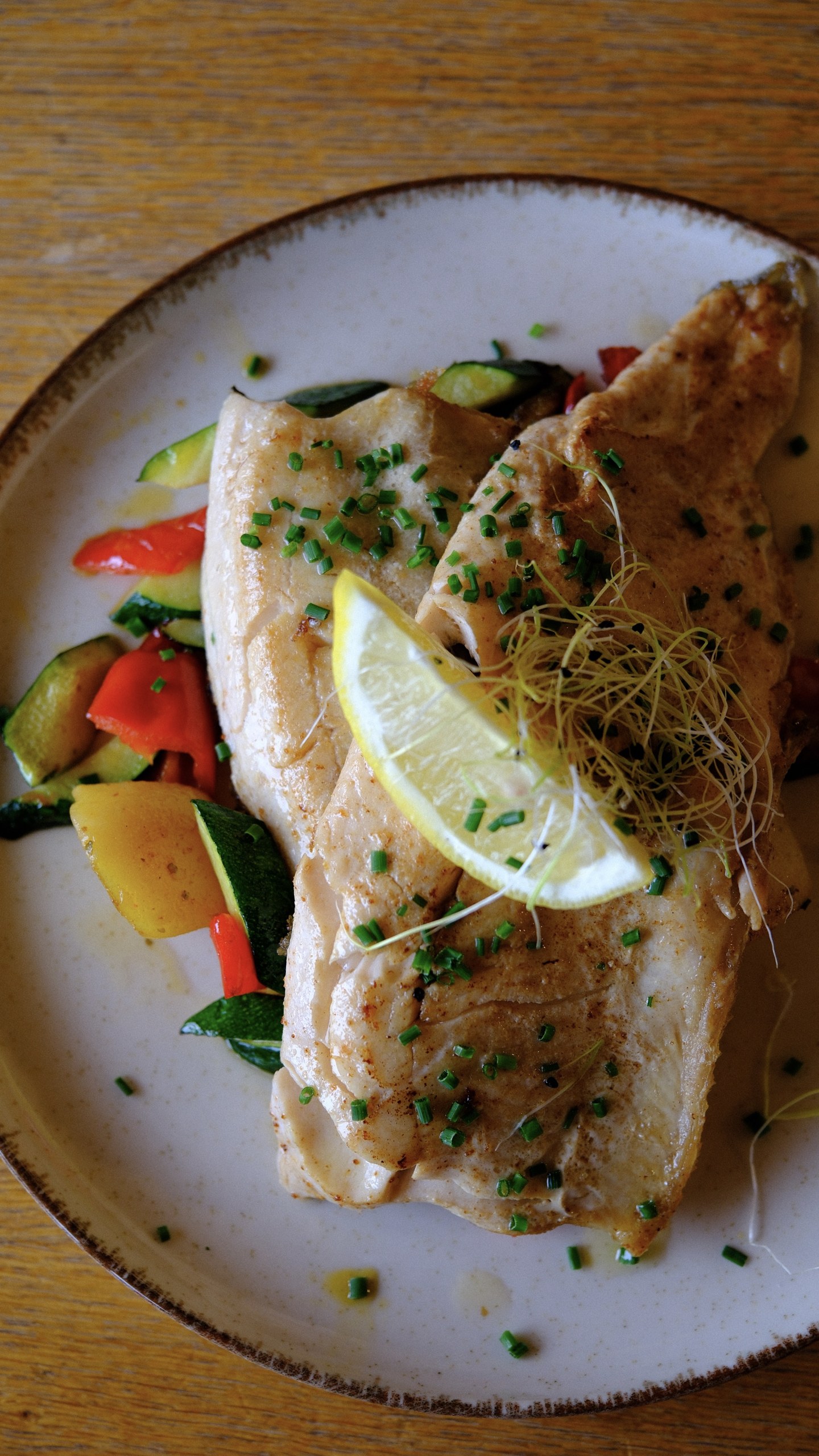
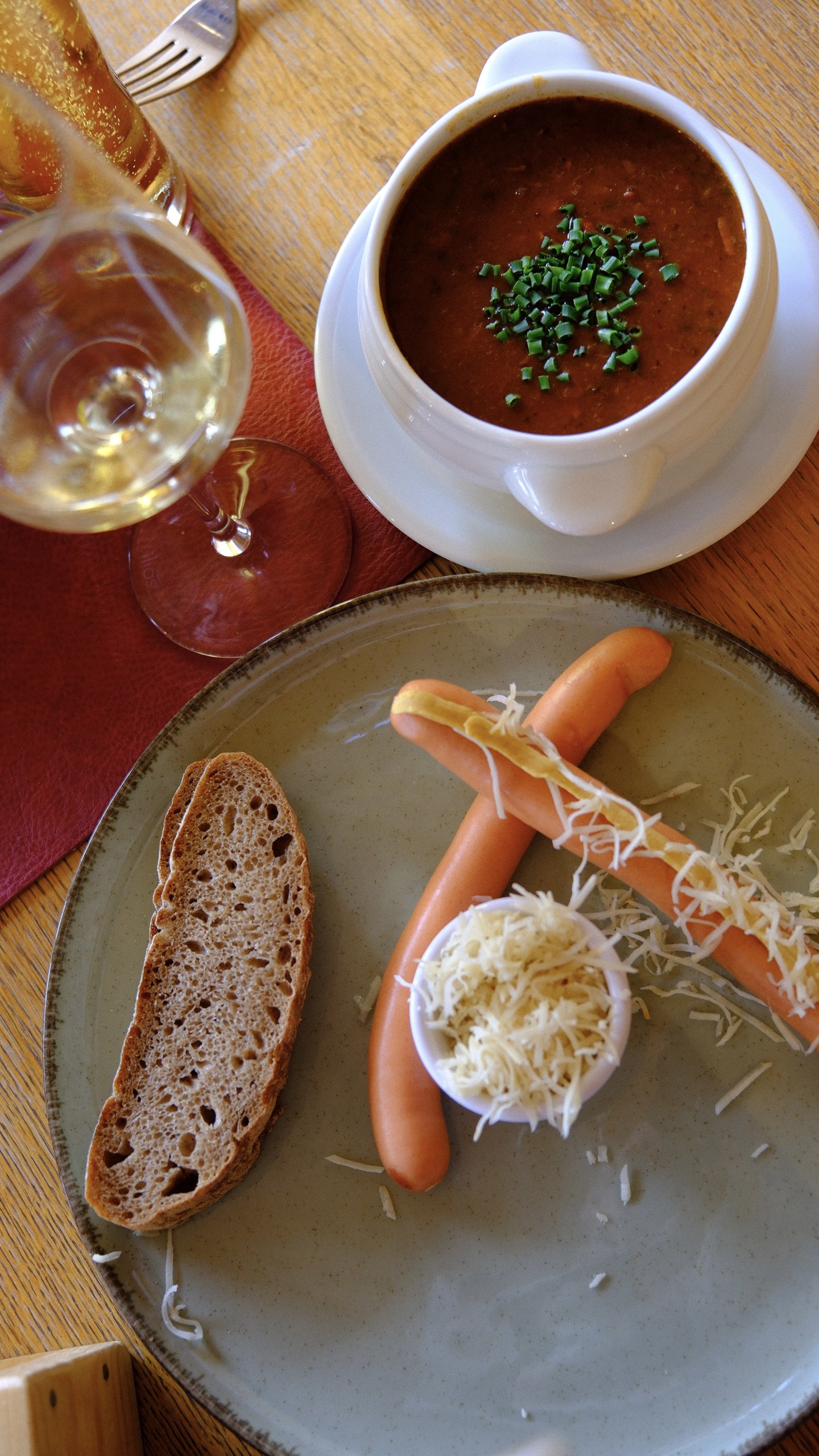
Trout with vegetables for me; goulash and sausages for my husband; and Chris’s favourite Flädlesuppe at the Douglass Hütte.
The trout was exactly right for the place, simple, warm and satisfying. The parsley butter melted into the potatoes, turning a straightforward mountain lunch into the flavour I most wanted to carry home.
After we return, I will make my own version and share the recipe on Cadre Nomade. It will be a way of bringing the walk into our kitchen: trout, parsley-butter potatoes and a little memory of the mist beyond the windows of the Douglass Hütte.
Recipe coming soon: Trout with parsley-butter potatoes
Around us, the weather continued doing whatever it pleased. Chris still had energy for the playground. The spirits, if they had accompanied us, had done remarkably kind work.
The gift of a rainy day
We often hope for clear skies in the mountains. We imagine that beauty depends on seeing everything: every summit, every reflection, every metre of the view.
Lünersee gave us another kind of beauty. The cloud removed the grand panorama and left us with a sequence of smaller revelations. A gondola crossing a dark cliff. A sudden curve of turquoise. Pink flowers beside grey stone. Our child running happily through rain. A web turned silver by water. A warm bowl of soup at the end.
The lake never showed us all of itself.
That is why it remains so vivid.
Some places become memorable because we see them clearly. Others stay with us because they keep their secrets.
Planning the Lünersee circuit
Our visit was in August 2026. Mountain weather, gondola operations and restaurant hours can change quickly, so check the official Lünersee information before travelling.
- Getting there: The Lünerseebahn rises from Schattenlagant at the end of the Brandnertal to the dam in approximately six minutes.
- The circuit: The official Lünersee round walk is approximately 6.25 kilometres with about 89 metres of ascent. The listed walking time is one hour and fifty minutes. We spent more than two hours because we stopped often.
- With children: The route is described as easy and family-friendly, but it is still a high-mountain walk. Weatherproof layers and shoes with reliable grip matter, especially in rain.
- Food and play: The Douglass Hütte is beside the mountain station and has a children’s playground. Its menu includes traditional and regional dishes, with trout from the lake among its specialities.
- Weather: Cloud and rain made our visit magical, but conditions can also make mountain paths unsafe. Follow local advice and do not continue when visibility or footing becomes dangerous.
Official information:
- https://www.brandnertal.at/brandnertal/de/unsere-bergbahnen/luenerseebahn
- https://www.luenersee.at/de/douglass-huette-auf-1-979-m-1_vc8937
Folklore and historical sources:
- https://vorarlberg.orf.at/tv/stories/3013065/
- https://commons.wikimedia.org/wiki/File:Scheuchzer(1723)-vol2-p378a-catheaded-serpent.jpg
- https://commons.wikimedia.org/wiki/File:Redon_-_Guardian_Spirit_of_the_Waters,_1878.jpg




-vol2-p378a-catheaded-serpent.jpg)
