Roasted Butternut, Ricotta & Parmesan Hand Pies

A fall visit to Tendercrop Farm in Wenham, Massachusetts, became the beginning of these small savory pies.
The farm had already shifted into autumn. Baskets waited by the entrance, rows of mums were just beginning to open, and pumpkins filled the tables in every shade from pale cream to deep orange.
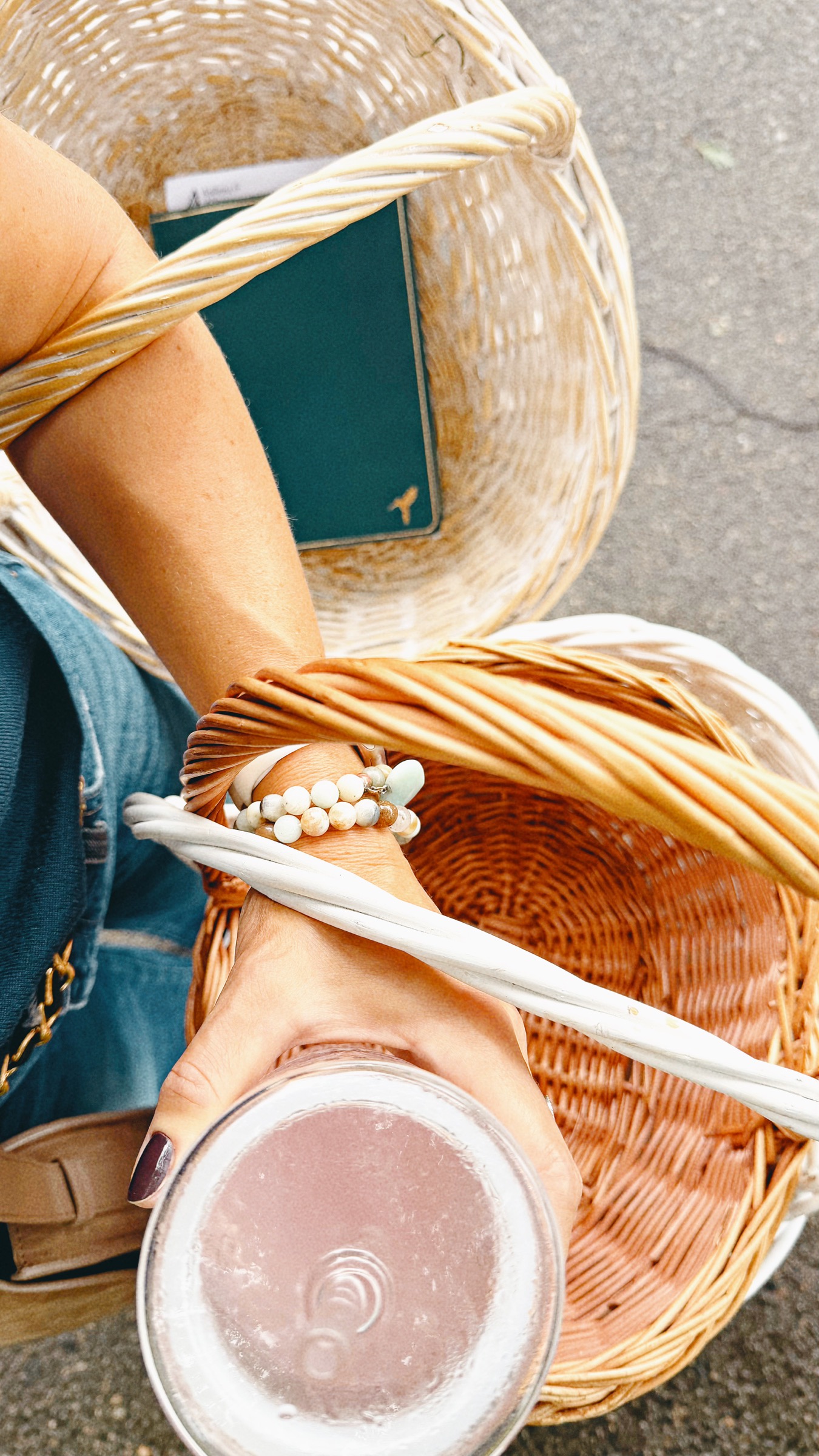

By the time I returned to the car, the baskets were full of the season: squash, tomatoes, onions, carrots, beans, potatoes, greens, ricotta, and Parmesan. It was less a shopping trip than a fall haul, with the ingredients for several meals gathered together in one place.

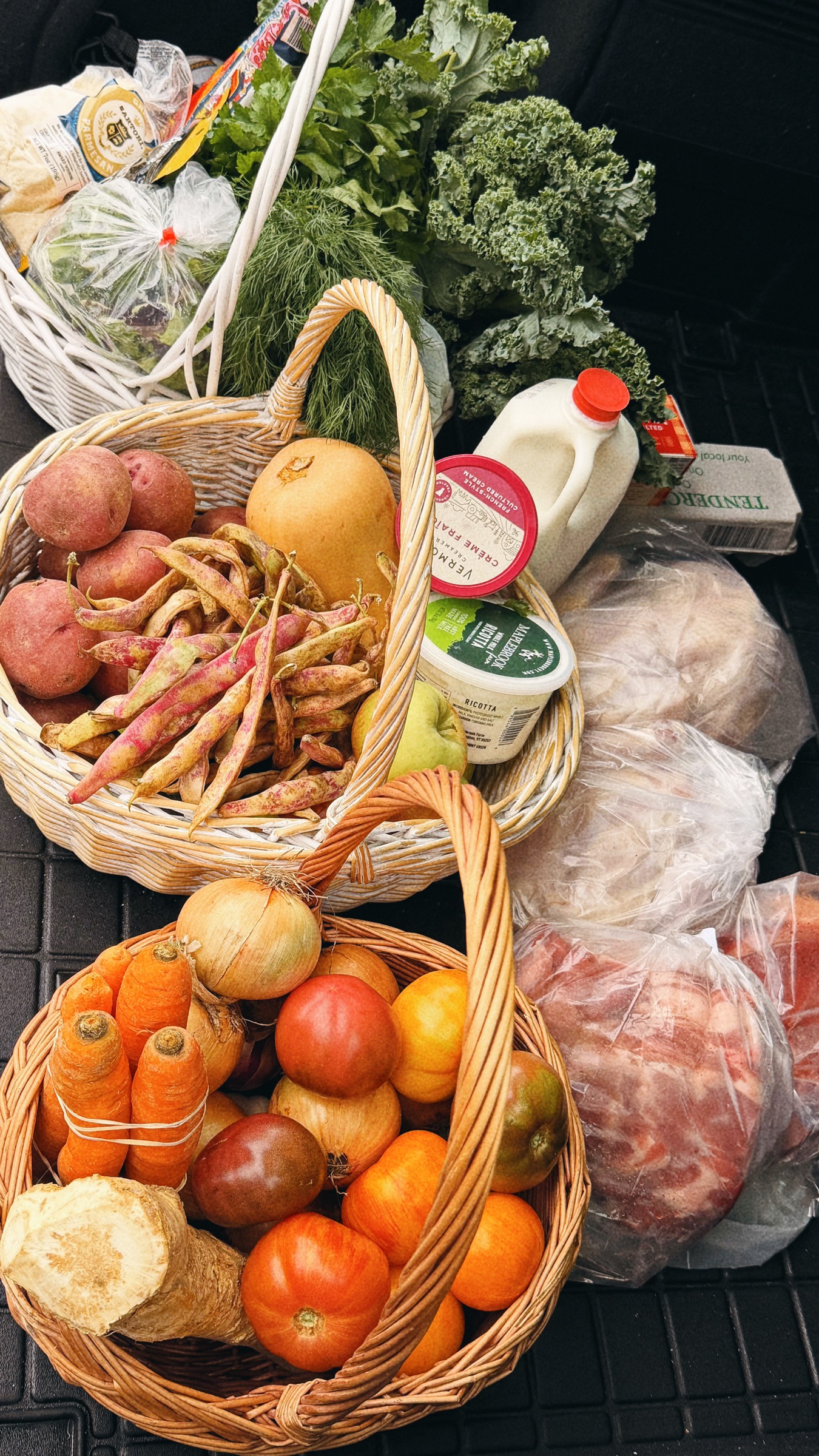
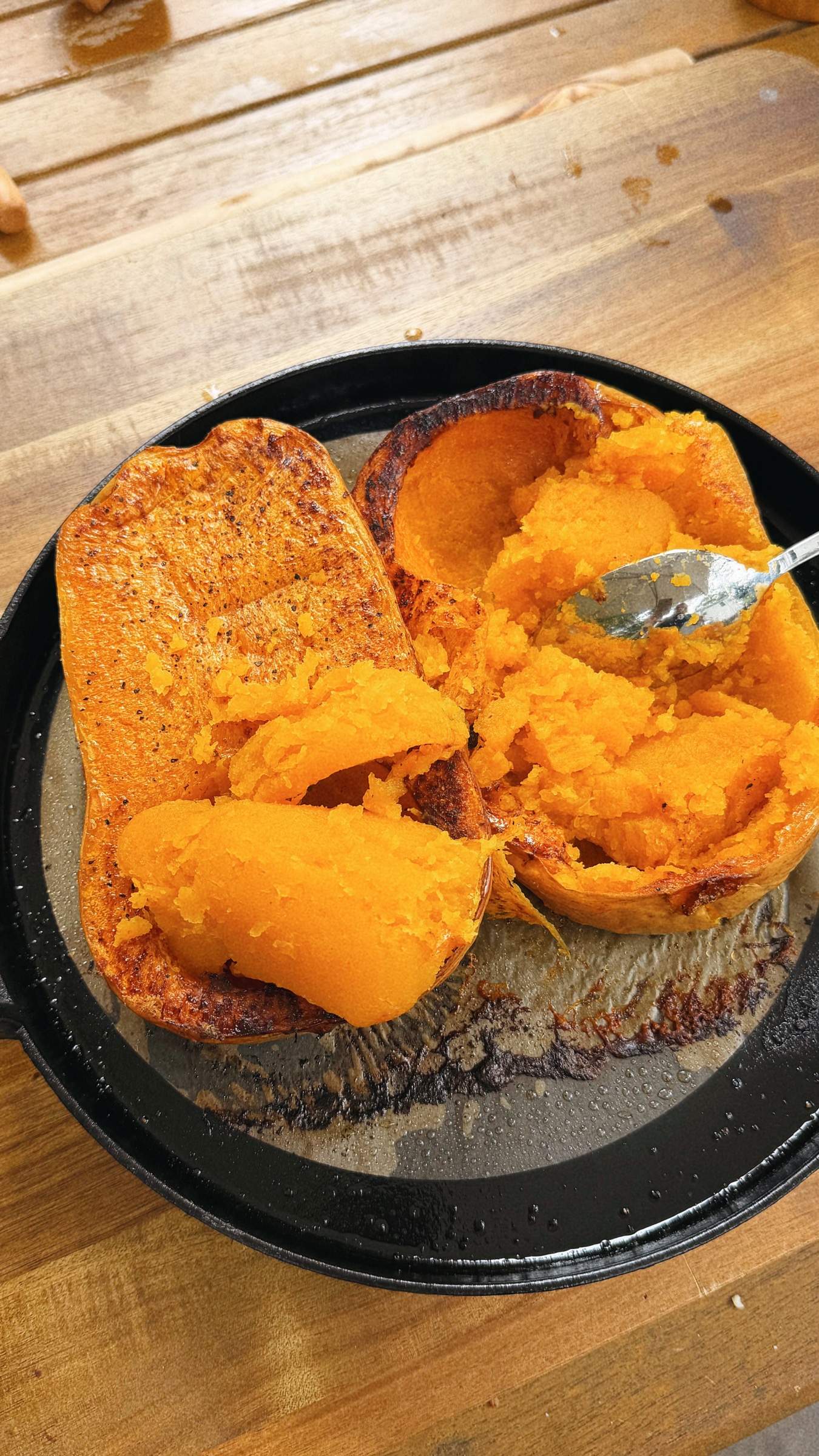
The butternut squash became the center of this recipe. Roasted until completely tender, it was mixed with butter, shallot, garlic, sage, Parmesan, and a pinch of nutmeg.
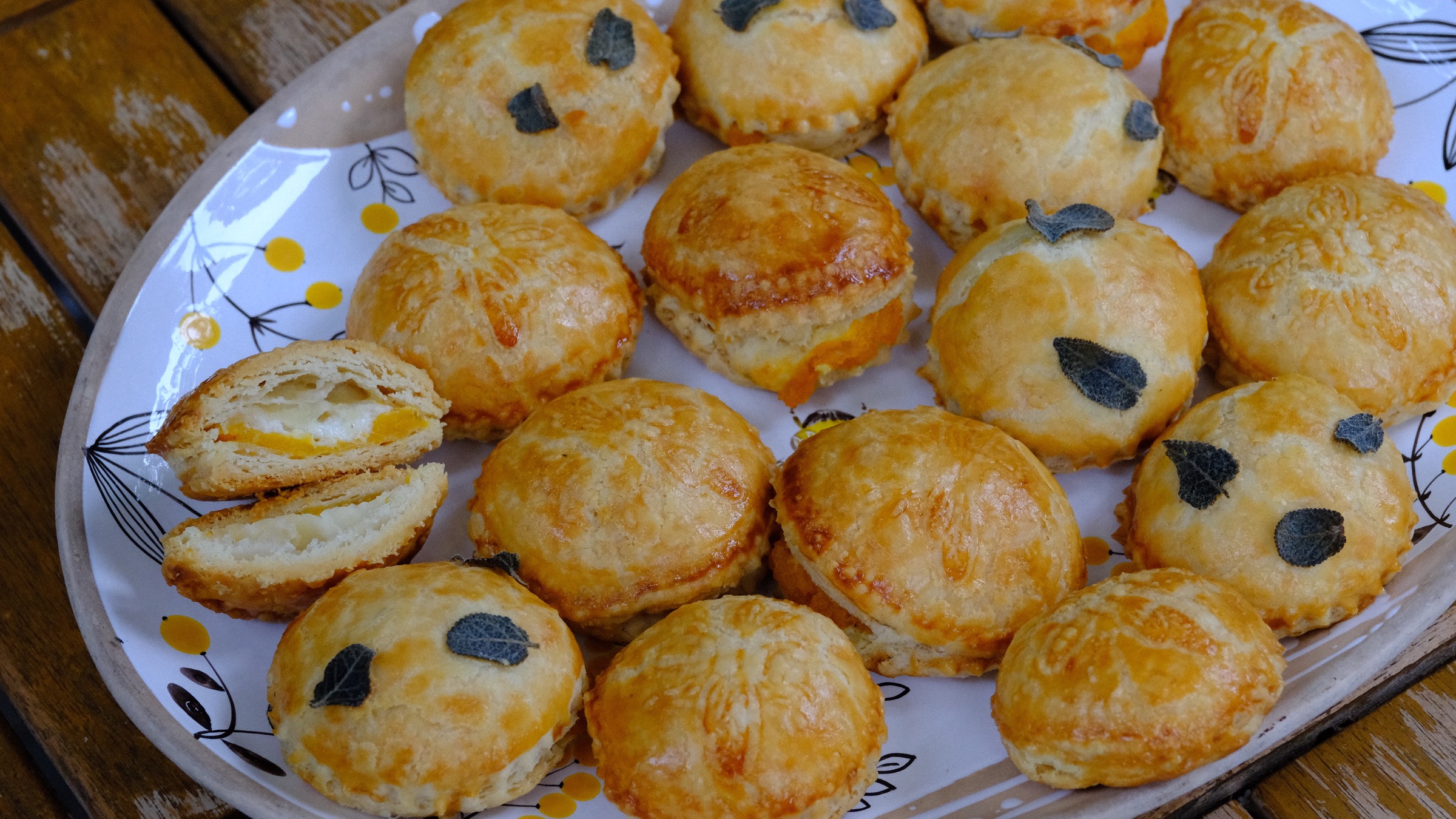
The seasoned squash and cool ricotta stay separate inside each pie. Ricotta brings a soft, milky contrast to the filling, while the larger pastry top curves over both without being stretched. That small detail is especially useful when the pastry has been embossed.
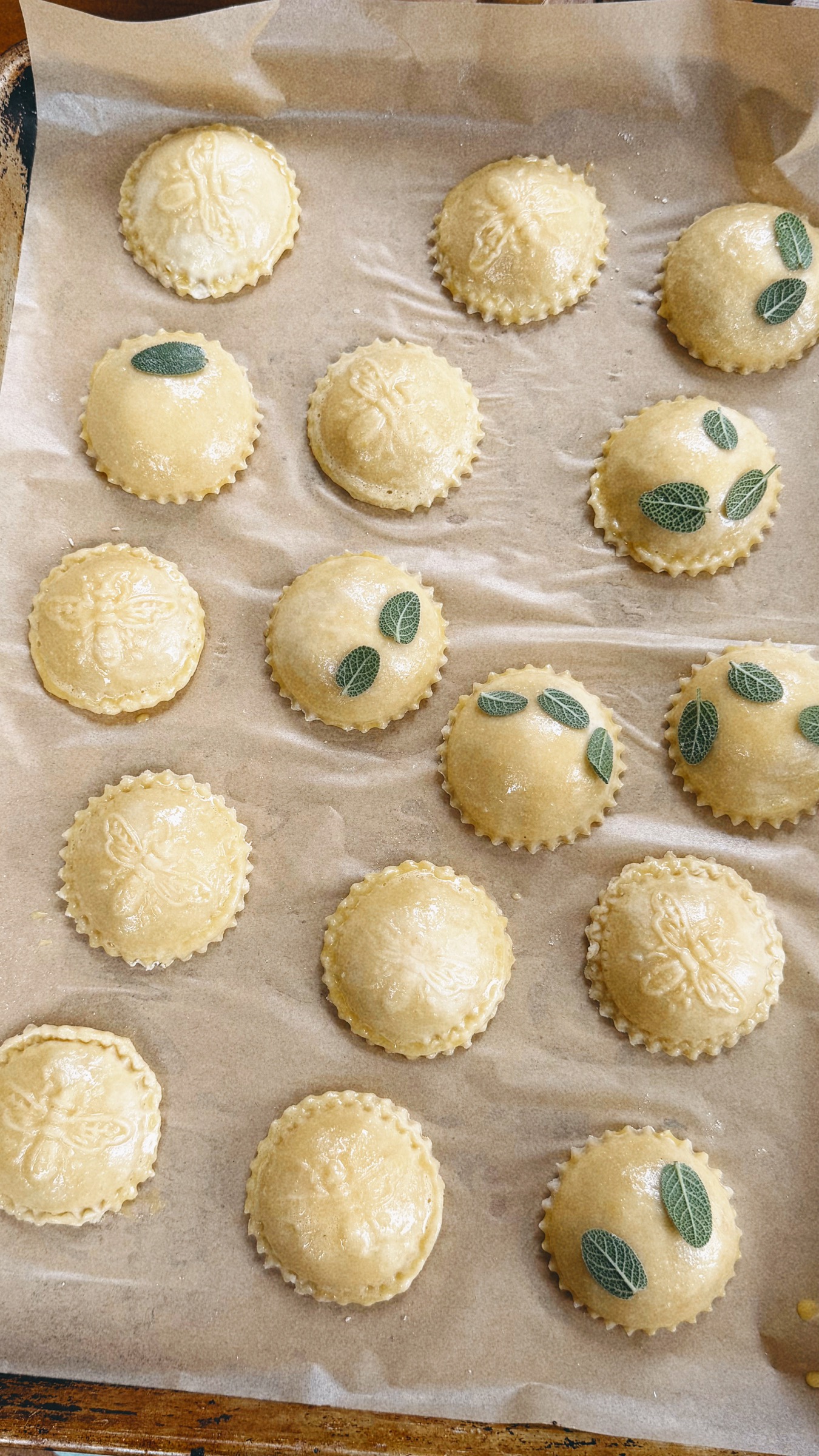
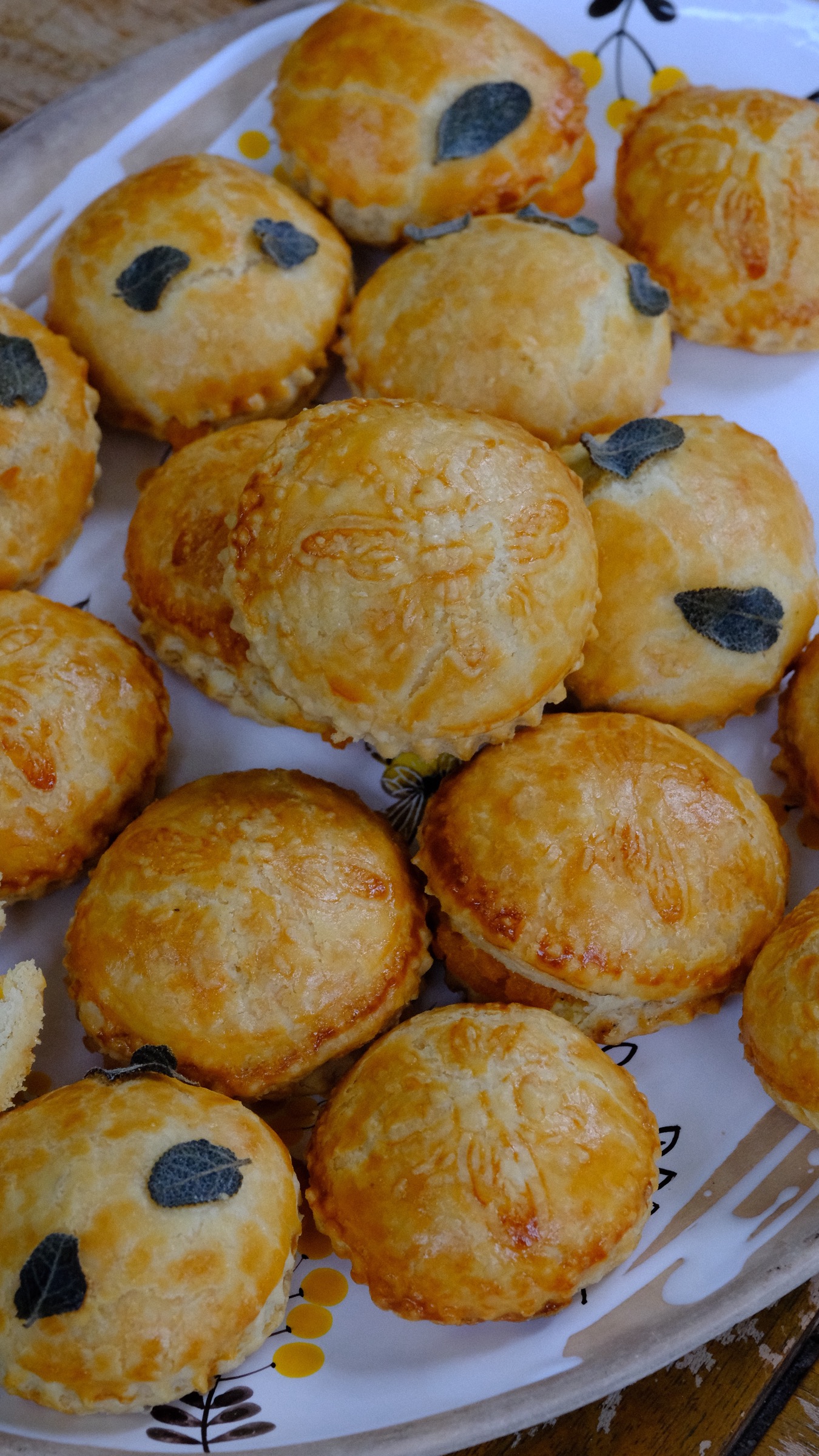
My cutters were quite small, so this batch gave me 16 pies rather than 12. They disappeared quickly enough that I would suggest making a double batch.
The pastry trick I learned from my grandmother
The pastry includes one tablespoon of cognac, a technique I learned from my grandmother and still use in delicate pastry, both savory and sweet.
Cognac is approximately 40 percent alcohol, so it does not hydrate flour or encourage gluten formation as strongly as the same quantity of water. Much of the alcohol evaporates in the oven, helping the crust bake tender and crisp.
It still contributes some water, so it counts toward the dough’s total liquid. Add the water and cognac gradually and stop as soon as a squeezed handful of dough holds together. The finished dough should look shaggy, with visible pieces of butter, rather than wet or smooth.
Unlike neutral vodka, cognac also leaves subtle aromatics behind. They suit the sweetness of squash and the warmth of butter, sage, and nutmeg.
Keeping an embossed pattern clear
Cold pastry holds a decorative pattern best. Let the chilled dough soften only until it can be rolled without cracking, then work efficiently. Make the tops slightly larger than the bottoms so they can curve over the filling without being pulled or stretched.
Once the top pastry is embossed, avoid stretching it or rolling it again. Too much water in the dough can soften the pastry and cause the pattern to disappear as it bakes, so add only enough liquid for the dough to hold together. Chill the assembled pies thoroughly, then apply only the lightest mist of egg wash. The pastry should look barely glossy, with no egg collecting in the pattern.
Cadre Nomade recipe
Roasted Butternut, Ricotta & Parmesan Hand Pies
Crisp savory hand pies filled with roasted butternut squash, ricotta, Parmesan, and sage, with a tender cognac pastry.
Ingredients
For the pastry
- 270 g all-purpose flour
- 1 teaspoon fine sea salt
- 170 g cold unsalted butter, cut into small cubes
- 4 tablespoons ice water
- 1 tablespoon cognac
- Up to 1 tablespoon additional ice water, only as needed
For the butternut filling
- 225 g roasted butternut squash purée, completely cooled
- 30 g unsalted butter, divided
- 1 shallot, very finely minced
- 1 garlic clove, finely grated or minced
- 6 fresh sage leaves, finely chopped
- 1/2 cup finely grated Parmesan
- Small pinch of freshly grated nutmeg
- Extra-virgin olive oil, for roasting
- Fine sea salt and freshly ground black pepper, to taste
For the ricotta filling
- 125 g whole-milk ricotta, thoroughly drained
- 1/2 cup finely grated Parmesan
- About 1/3 cup grated mozzarella
- Fine sea salt and freshly ground black pepper, to taste
To finish
- 1 large egg
- 12 small fresh sage leaves
- Flaky sea salt
Method
Make the pastry by hand
- Whisk together the flour and salt.
- Add the cold butter and toss to coat. Flatten and rub the cubes into the flour with your fingertips. Stop when the mixture contains a combination of flat flakes, small peas, and coarse crumbs. Visible butter is desirable.
- Mix the 4 tablespoons ice water with the cognac. Add the mixture a little at a time, tossing gently with a fork or your fingertips.
- Squeeze a handful of dough. If it holds together, stop adding liquid. If dry flour remains, add the additional ice water 1 teaspoon at a time. The dough should be shaggy rather than wet or smooth. Too much water can soften the pastry and cause an embossed pattern to disappear during baking.
- Turn the dough onto the counter and press it together without kneading.
- Shape the dough into a flat rectangle and wrap it in wax paper or plastic wrap. Refrigerate for 2 hours. Before rolling, let it rest at room temperature just until it is pliable enough to roll without cracking.
Roast the butternut squash
- Heat the oven to 400°F (200°C).
- Split the squash in half lengthwise and remove the seeds. Rub the cut sides with olive oil and season with salt and black pepper.
- Place the squash halves cut-side down on a baking sheet and roast until completely tender.
- Let the squash cool, then scoop out the flesh and purée until smooth. Measure 225 g for the filling and cool it completely.
Prepare the butternut filling
- Melt half of the butter in a small skillet over medium-low heat.
- Add the shallot and cook for 3 to 4 minutes, until softened but not browned. Add the garlic and chopped sage and cook for another 30 to 45 seconds, until fragrant.
- Remove the skillet from the heat and stir in the remaining butter.
- Combine the aromatic butter mixture with the roasted squash purée, Parmesan, nutmeg, salt, and black pepper.
- Taste and adjust the seasoning, then cool completely before assembling.
Prepare the ricotta filling
Stir together the drained ricotta, Parmesan, mozzarella, salt, and black pepper. Keep the mixture thick and textured rather than whipping it. Refrigerate until needed.
Roll and cut the pastry
- Line a baking sheet with parchment paper.
- Roll the pastry about 1/8 inch (3 mm) thick. Cut 12 to 16 bottom pieces: 12 with 3-inch cutters, or up to 16 with smaller cutters. Each bottom piece should be slightly larger than the ravioli cutter or press. Use any shape you like. Transfer the pieces to the prepared baking sheet and refrigerate.
- If using an embossed pin or pastry stamp, impress the pattern on the remaining pastry now, pressing firmly and evenly. Do not stretch or reroll the pastry after embossing.
- Cut the same number of top pieces, making each about 1/4 to 1/2 inch wider than its bottom. The extra width allows the top to curve over the filling without stretching and flattening the pattern.
Assemble the hand pies
- Place about 1 tablespoon of squash filling in the center of each bottom, adjusting slightly for the size of your cutter. Pipe about 2 teaspoons of ricotta filling on top. The fillings may be layered or lightly swirled, but do not blend them completely.
- Leave a clean border around the filling.
- Lay a larger patterned top over each mound without stretching it. Beginning close to the filling, gently press outward to remove trapped air.
- Center each filled pie in the ravioli press and close it firmly to seal and crimp the edges. If using a handheld ravioli cutter, press the two pastry layers together first, then cut and crimp. A ravioli tool is not essential: press the edges together and crimp them with a fork, a pastry wheel, or another clean, food-safe tool you have handy.
- Transfer the assembled pies to the lined baking sheet.
Apply the egg wash and decorate
- Blend the egg with a hand blender (immersion blender) just until completely fluid, avoiding excessive foam.
- Transfer the egg wash to a clean, food-safe fine-mist sprayer. Spray a very light, even coating over the assembled pies. The pastry should be barely glossy, without liquid collecting in the pattern.
- Make a small steam vent in an inconspicuous place on each pie.
- Press the sage leaves onto some of the pies and sprinkle each pie with a few flakes of sea salt.
- Refrigerate the decorated pies for 30 minutes, or freeze them for 15 minutes. While they chill, heat the oven to 400°F (200°C). This final rest after decorating helps preserve the embossed pattern.
Bake
Bake directly from the refrigerator for 20 to 25 minutes, rotating the pan halfway through, until deeply golden and crisp.
Rest for at least 10 minutes before serving. The squash filling will be extremely hot.