Following the Scent: Truffle Hunting in Piedmont

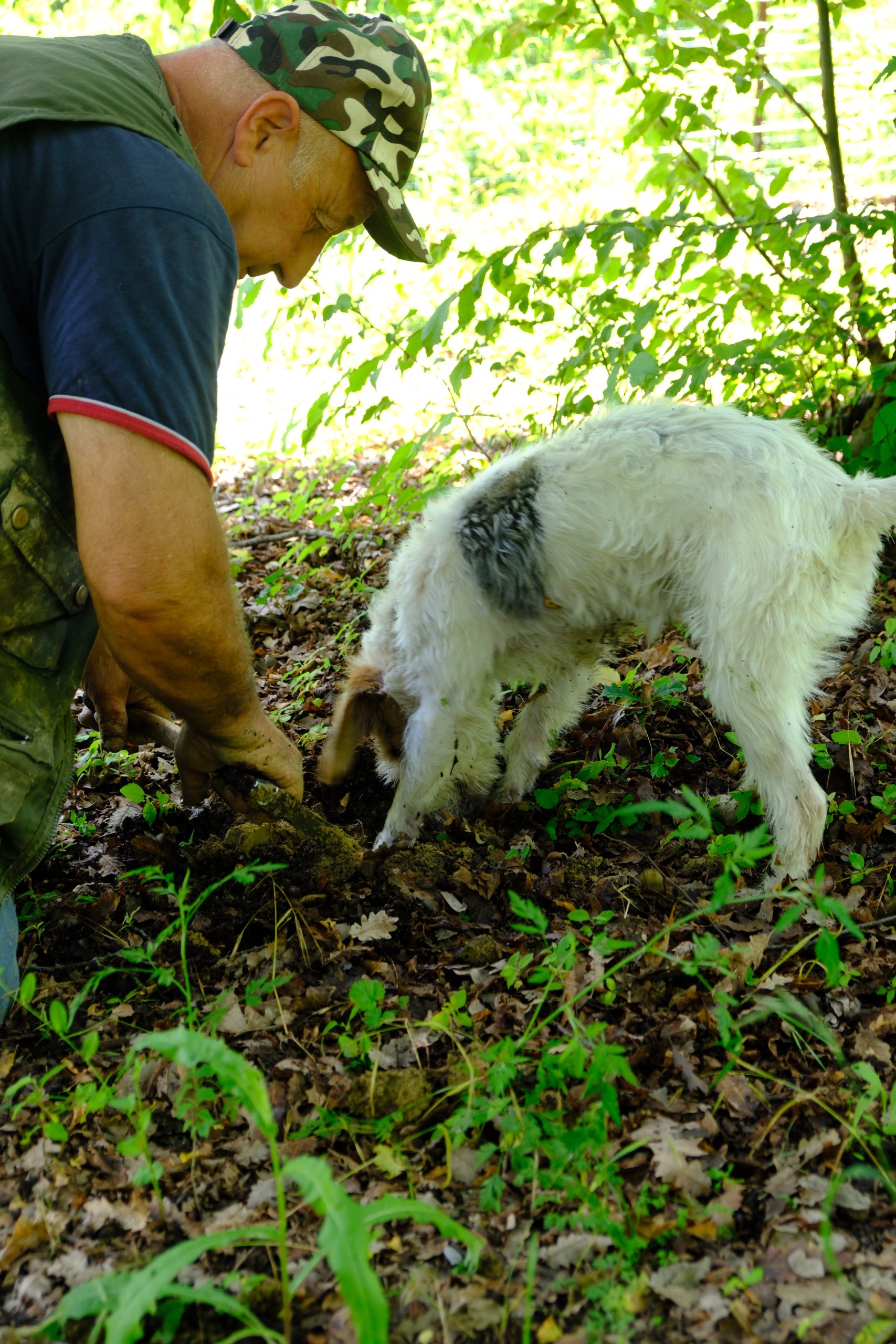
The dog stopped so suddenly that everyone else did too.
One moment we were walking through the woods outside Alba, following a narrow path beneath the trees.
The next, his nose was pressed to the earth.
There was a change in the air. A quickening. The quiet concentration of the hunter. The impatient scrape of paws through leaves and damp soil.
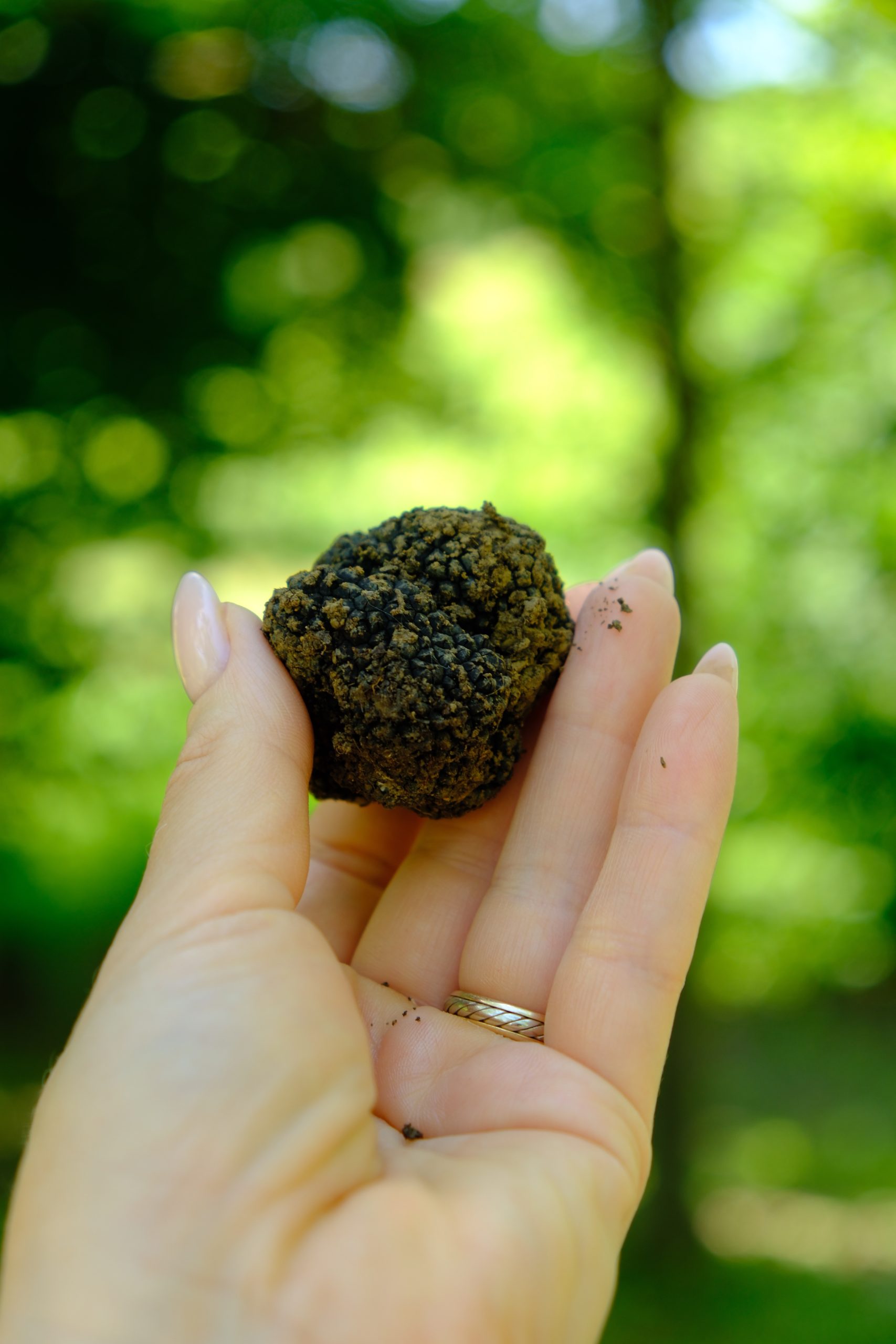
Somewhere beneath us, hidden in the roots, was the reason we had come to Piedmont.
Following the dog into the woods
On June 13, we joined the team from TartufLanghe for a truffle hunting tour and sampling dinner.
This was a family trip, not a visit arranged through work. Our time with TartufLanghe grew from the warm relationship we had developed with the company, which made the welcome feel personal long before we followed their dog into the woods.
Truffle hunting rewards attention.
The dog reads the woods through scent. The hunter reads the dog. A shift in posture, a faster movement, one patch of soil that suddenly matters more than all the others.
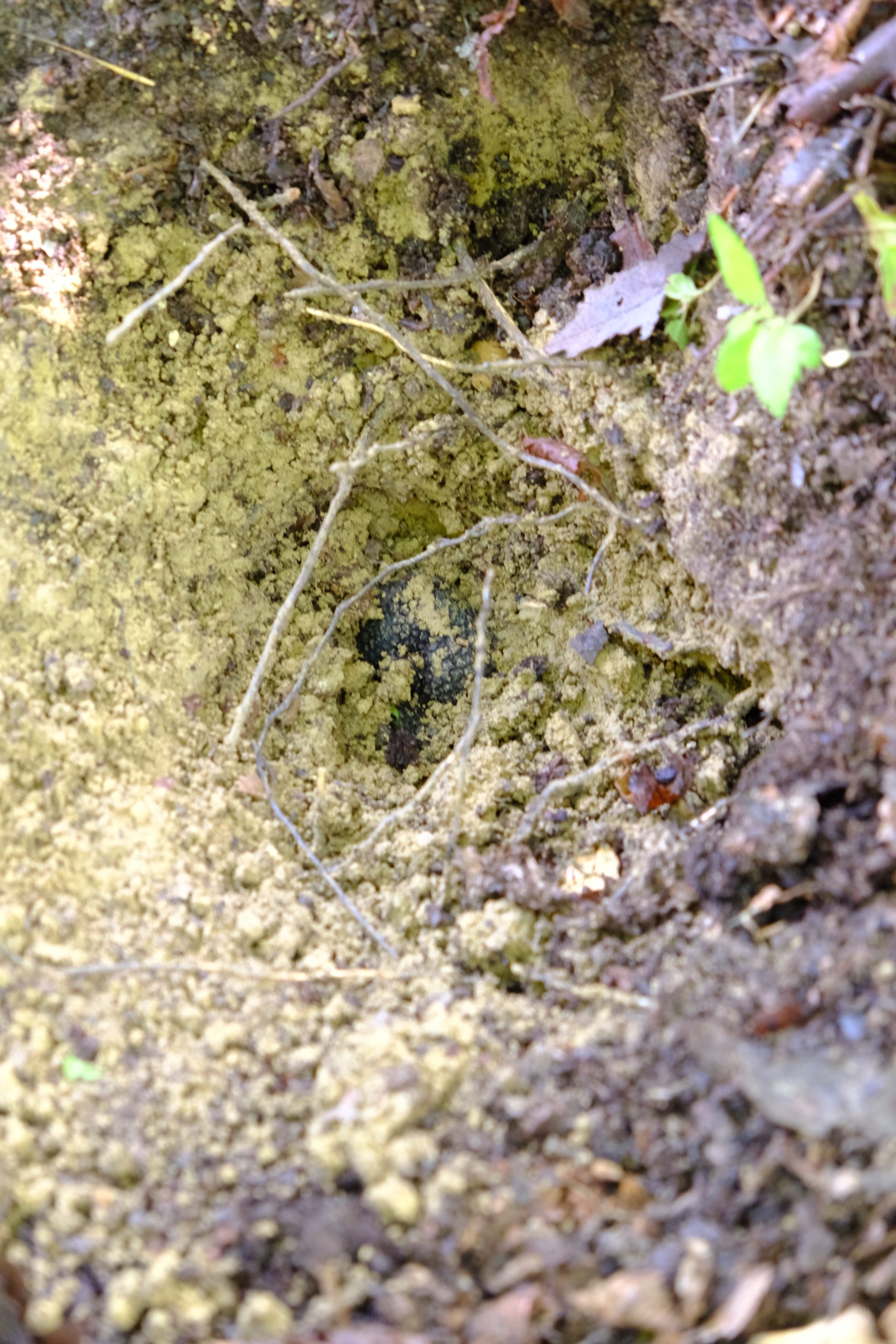
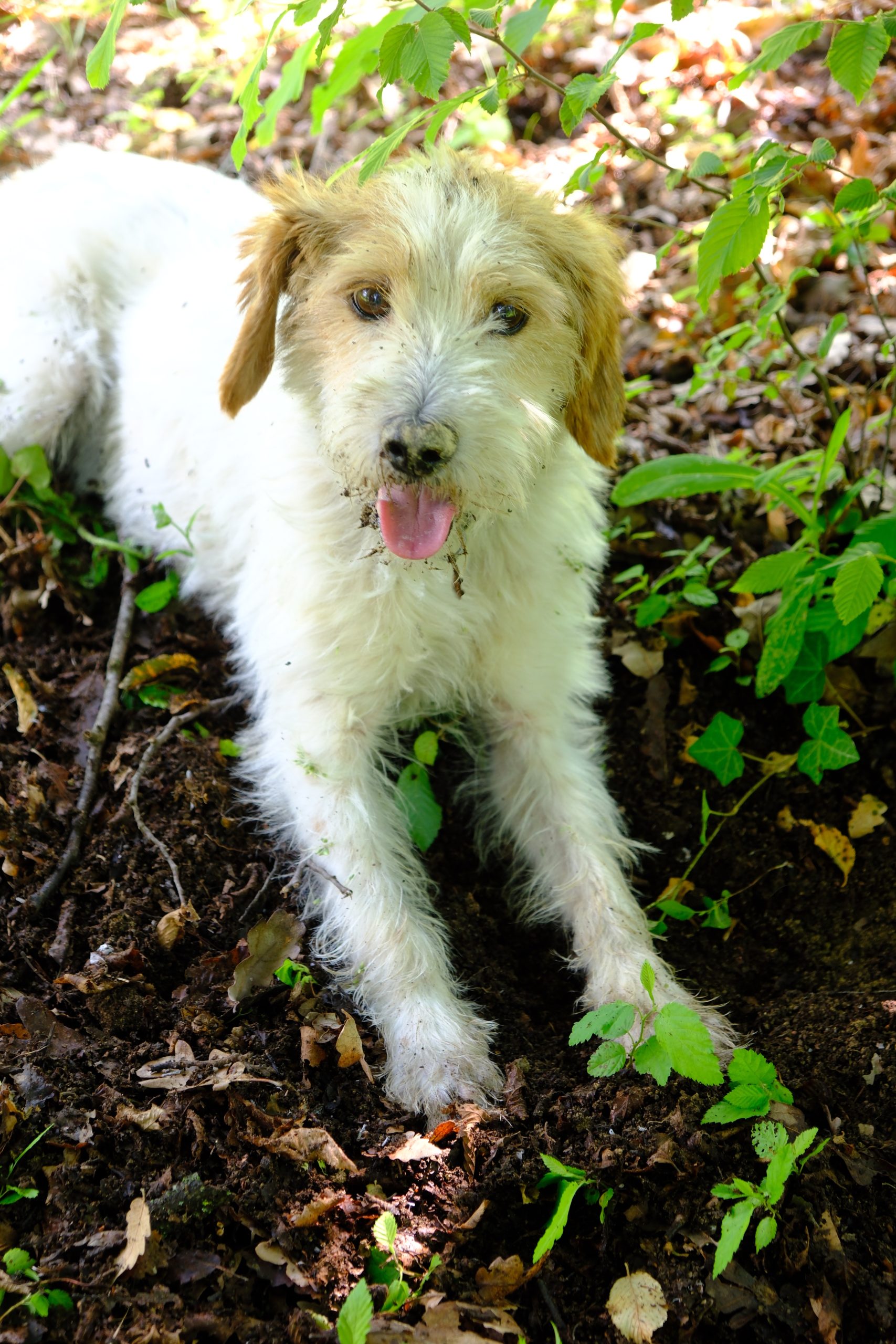
The work is ancient, but it is not careless. Italian truffle hunting and extraction was added to UNESCO’s Representative List of the Intangible Cultural Heritage of Humanity in 2021. The recognition honors not simply the truffle, but the environmental knowledge, trained dogs, careful digging, and oral traditions that have carried the practice across generations.
Watching it happen, the word hunting begins to feel slightly misleading.
It is closer to a conversation.
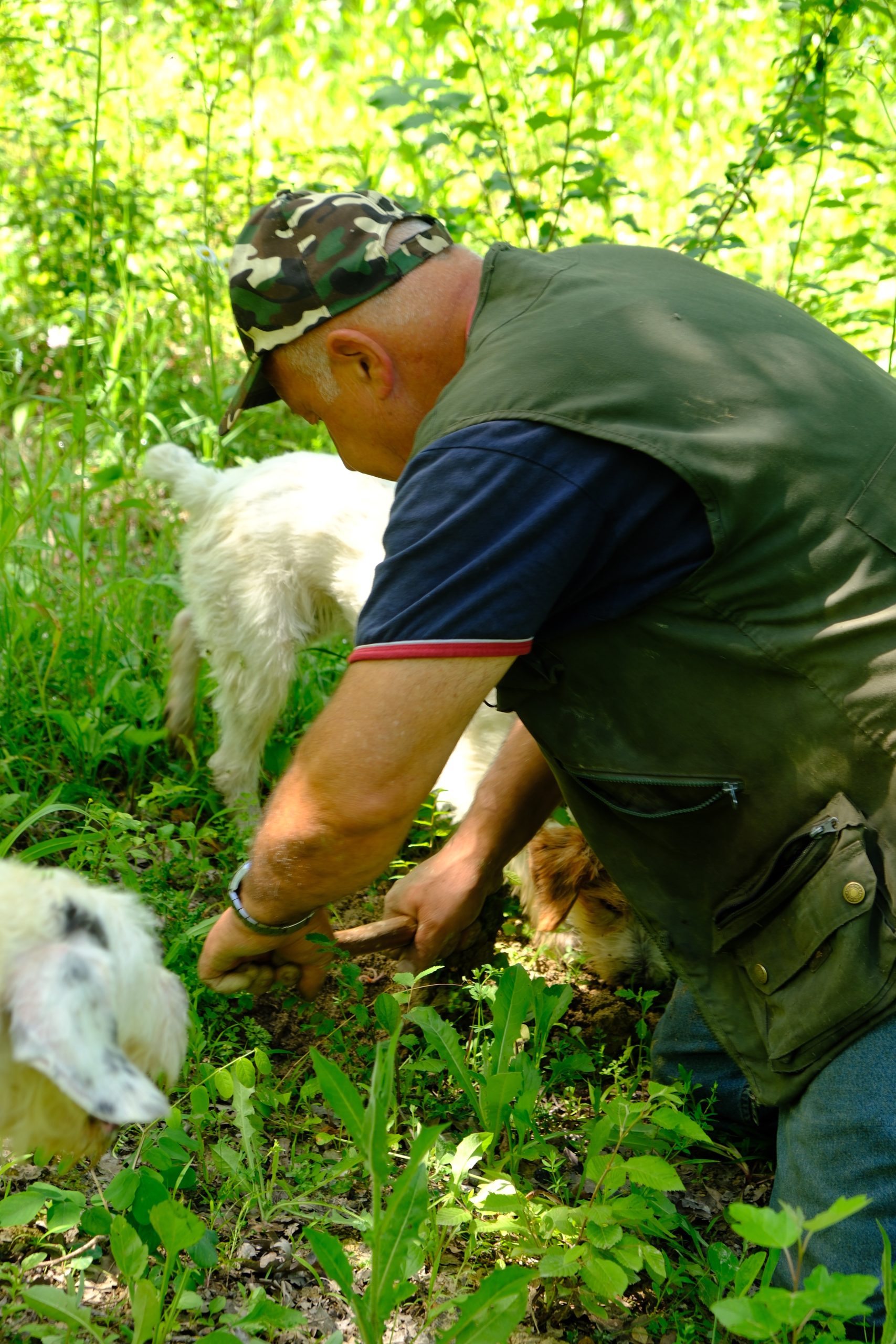
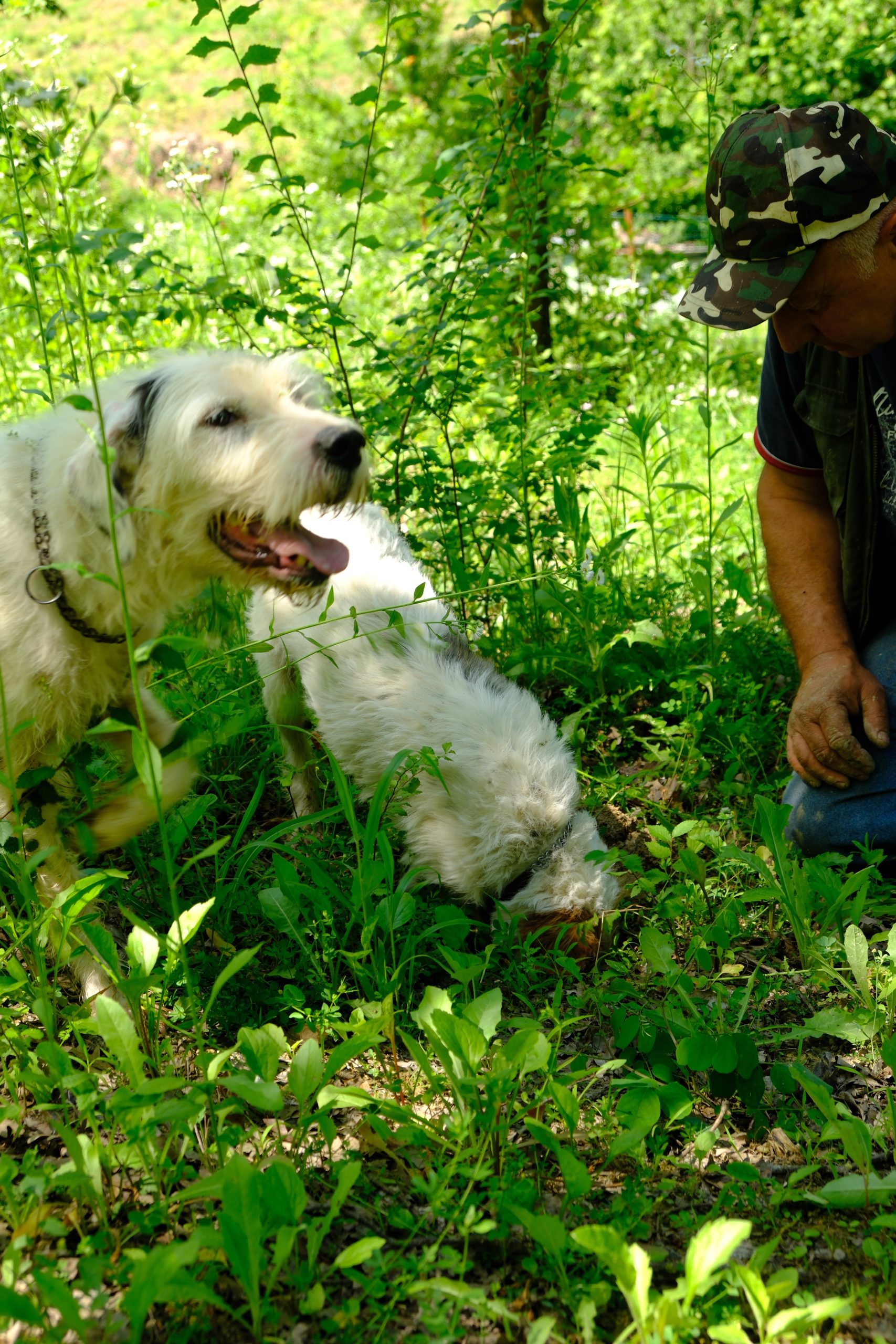
Popular legend gives the job to pigs, but modern truffle hunters in Piedmont work with trained dogs. A sow may be naturally drawn to the scent of a truffle, but finding one is only half the assignment. Pigs are powerful, eager to eat what they uncover, and inclined to root through the soil with considerably more enthusiasm than precision.
A dog can be trained to locate the scent, mark the exact spot, and then let the handler take over. That allows the truffle to be lifted carefully and the hole to be refilled, protecting the roots and the underground fungal network that may produce again.
Our hosts told us that an exceptional, fully trained adult truffle dog can cost more than $50,000. That is a serious price tag for a colleague who is partly paid in snacks, but the value lies in years of training, discipline, experience, and trust between dog and handler.
The reward was as local as the work. When the dog found one of the smaller truffles, the handler fed it to him as a treat.
Positive reinforcement, Piedmont style: locate one of the world’s most expensive ingredients and receive it as a snack. Some employees get a biscuit. This one had standards.
TartufLanghe, from forest to table
TartufLanghe has been working with the flavors of Alba since 1975. The company was founded in Piobesi d’Alba by Beppe Montanaro and his wife, Domenica, after Beppe opened a restaurant specializing in mushrooms and truffles.
Their work asks a practical question: how can the fleeting perfume of a truffle travel beyond the few days when a fresh one is at its best?
The answer fills their shelves with truffle oils, preserved products, and ingredients designed for restaurant kitchens and home cooks. Some TartufLanghe products can also be found through Amazon, making a little of the Langhe easier to bring home.
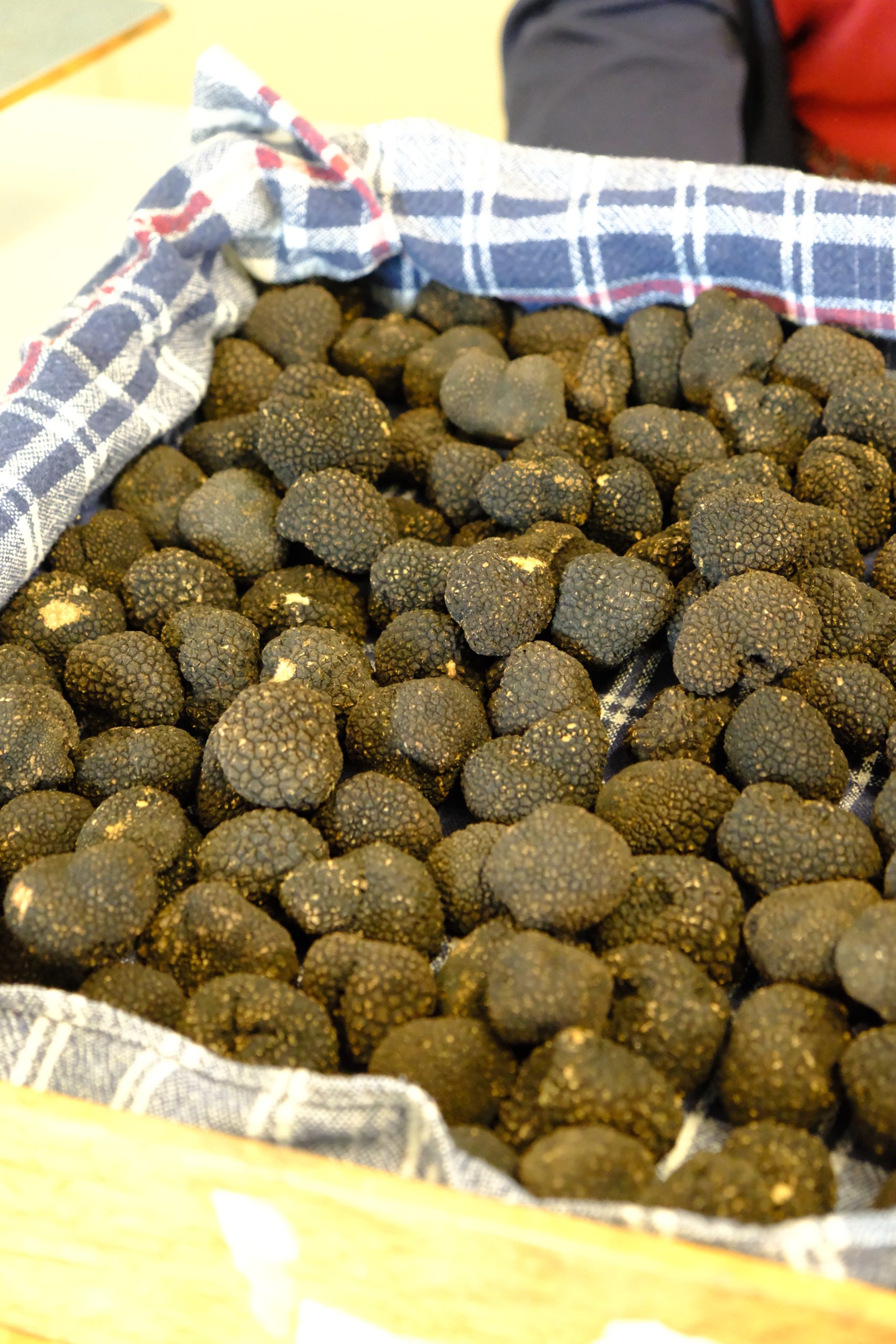
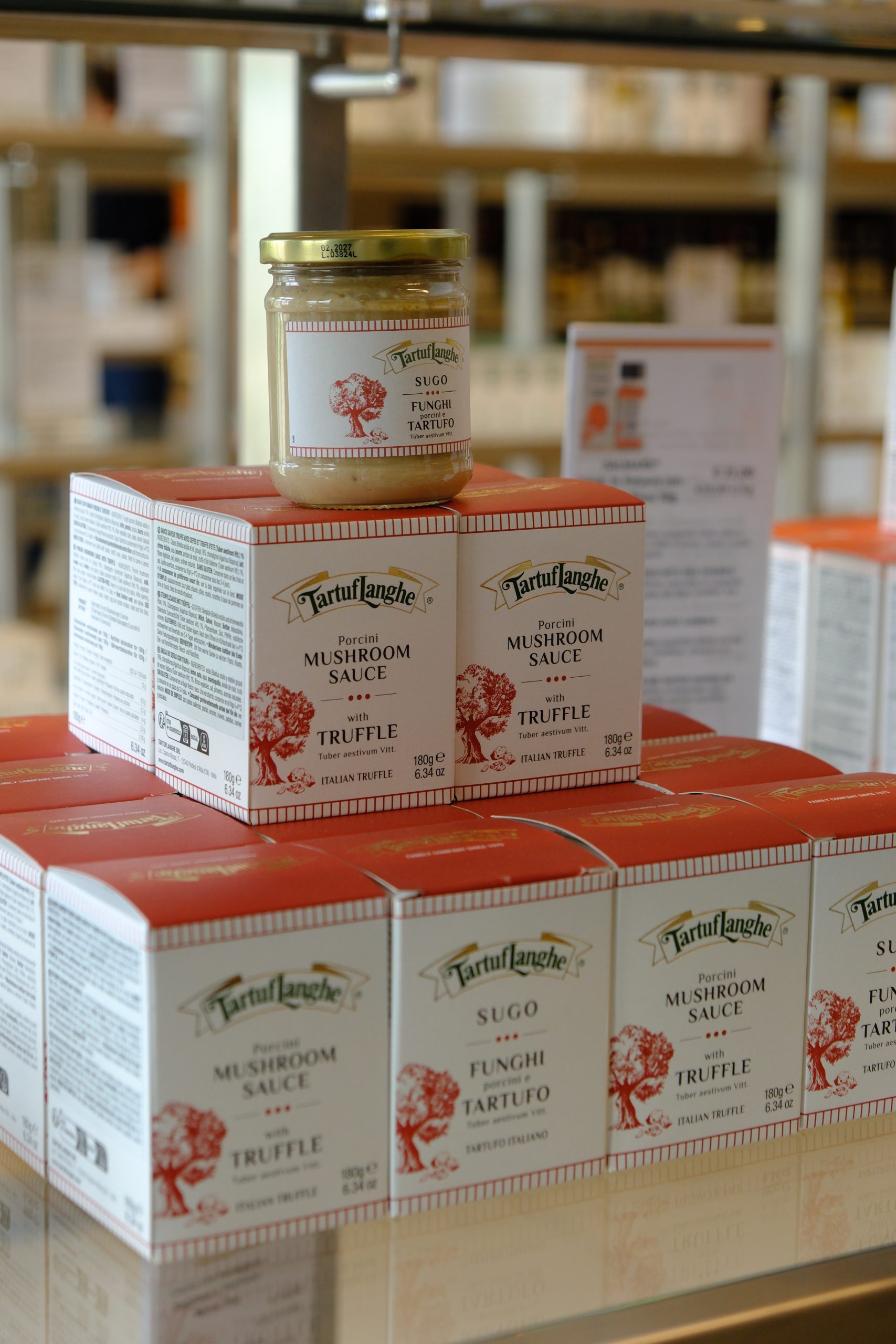
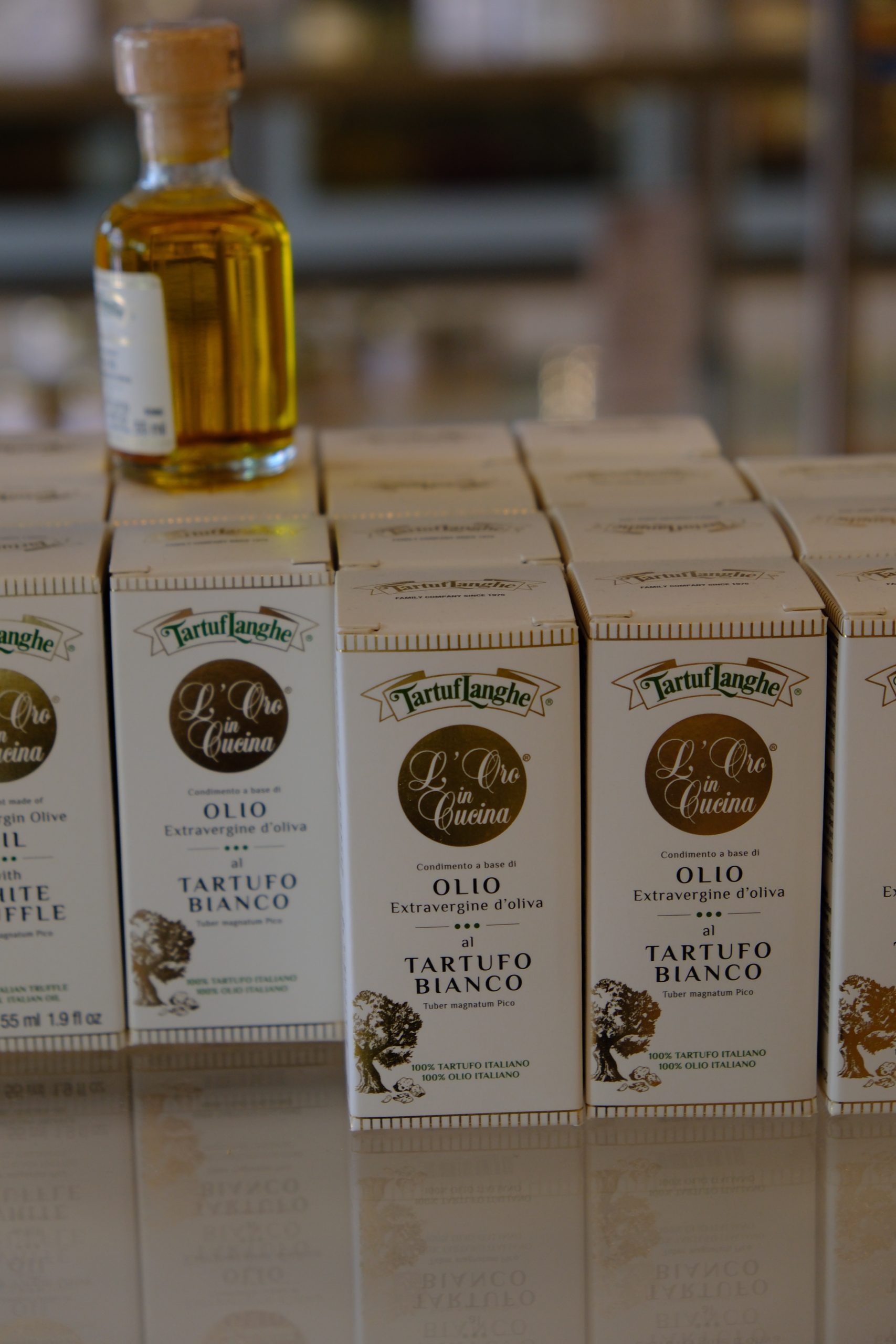
After the hunt, the team welcomed us for a sampling dinner.
They were generous, knowledgeable, and genuinely wonderful hosts. The meal completed the circle: an ingredient first discovered beneath the trees, then understood through the hands of the people who preserve, cook, and share it.
Piedmont food: why every meal felt worthy of a Michelin star
By the end of the trip, we had developed a small problem.
Every restaurant felt as though it were operating at the level of a Michelin starred dining room.
Not every dining room literally held a star, of course. But the precision was everywhere: immaculate ingredients, confident sauces, thoughtful wine pairings, and plates that looked composed without losing their sense of generosity.
Even the bread basket seemed to have professional ambitions.
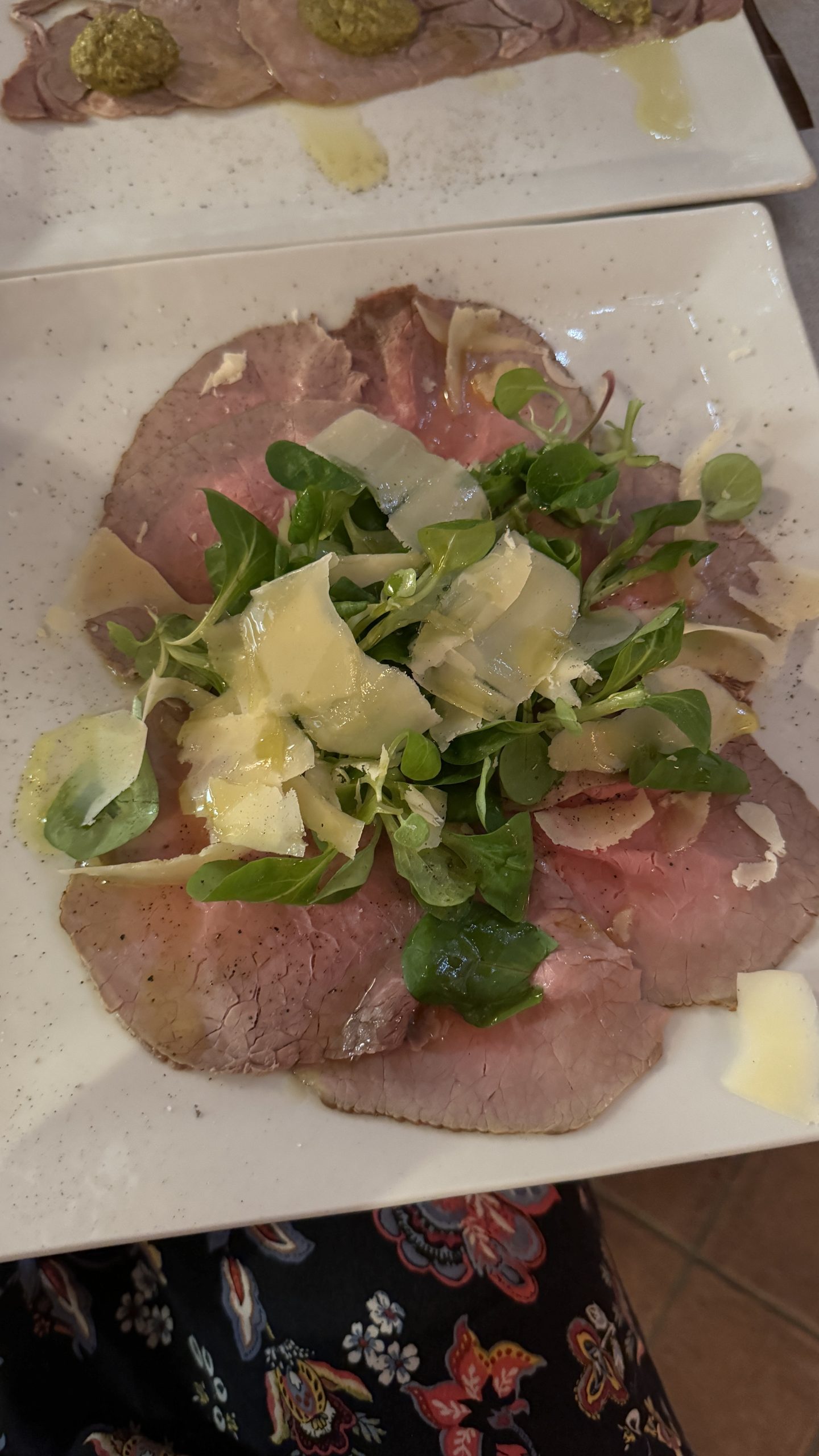
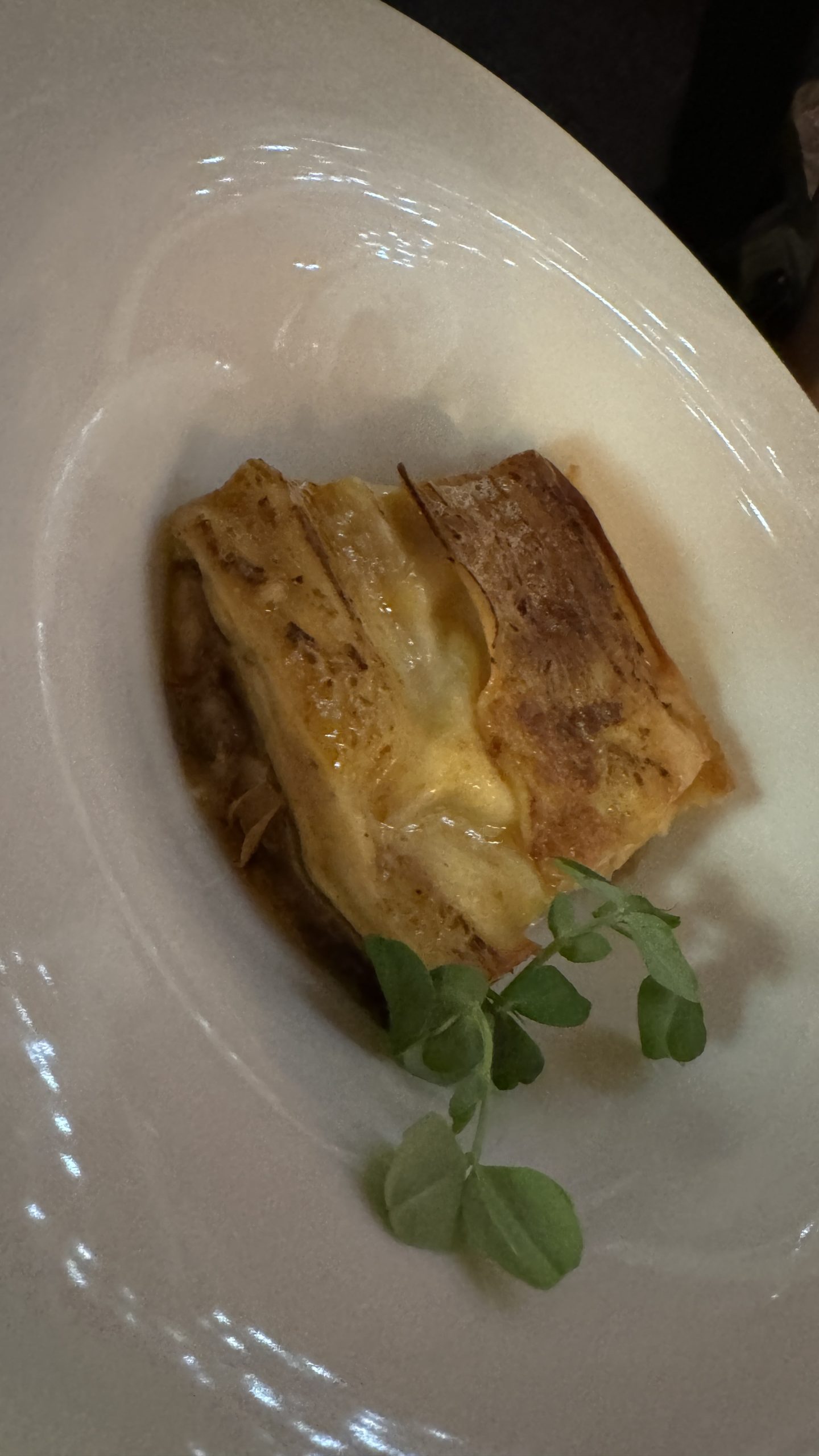
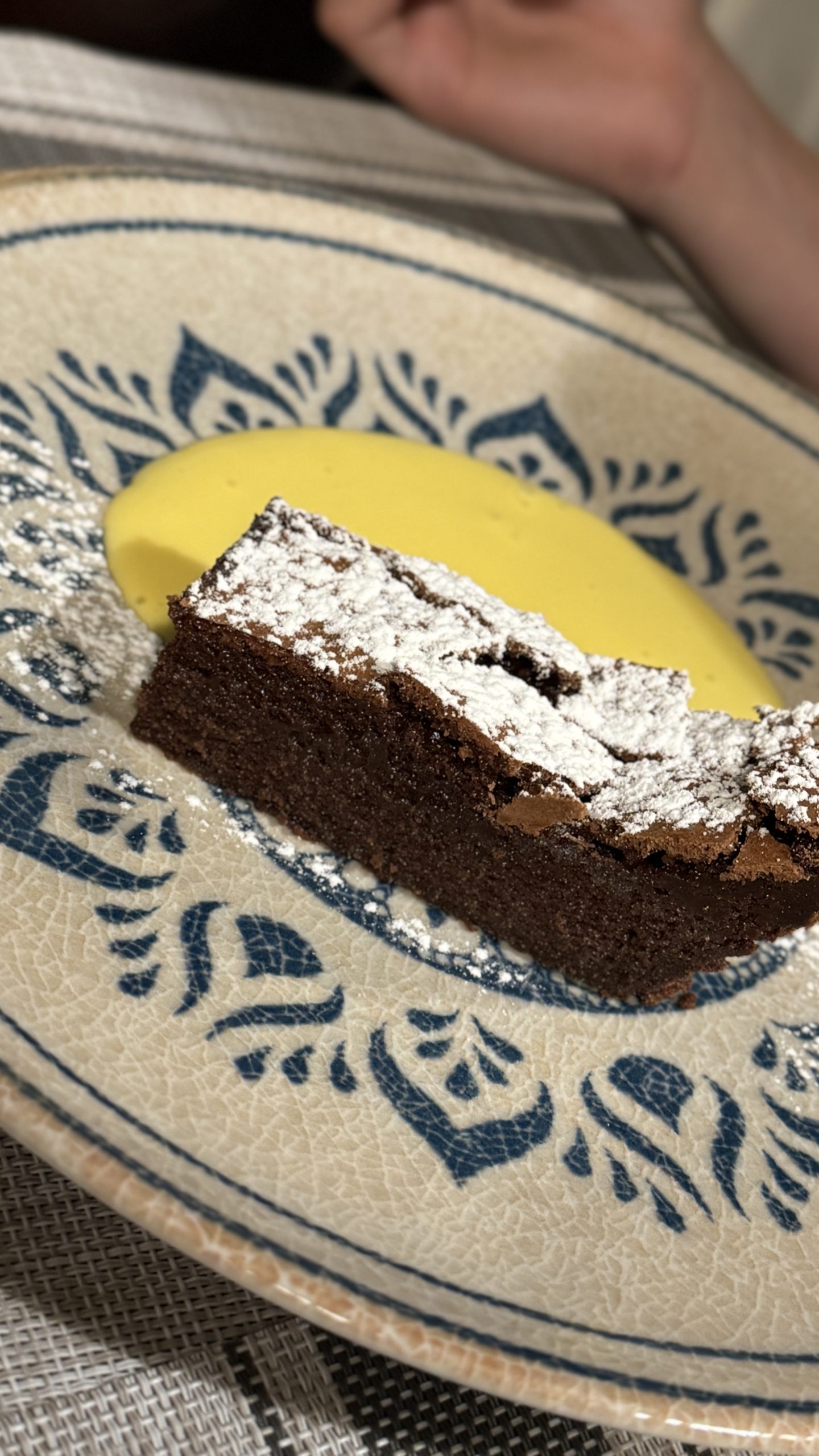
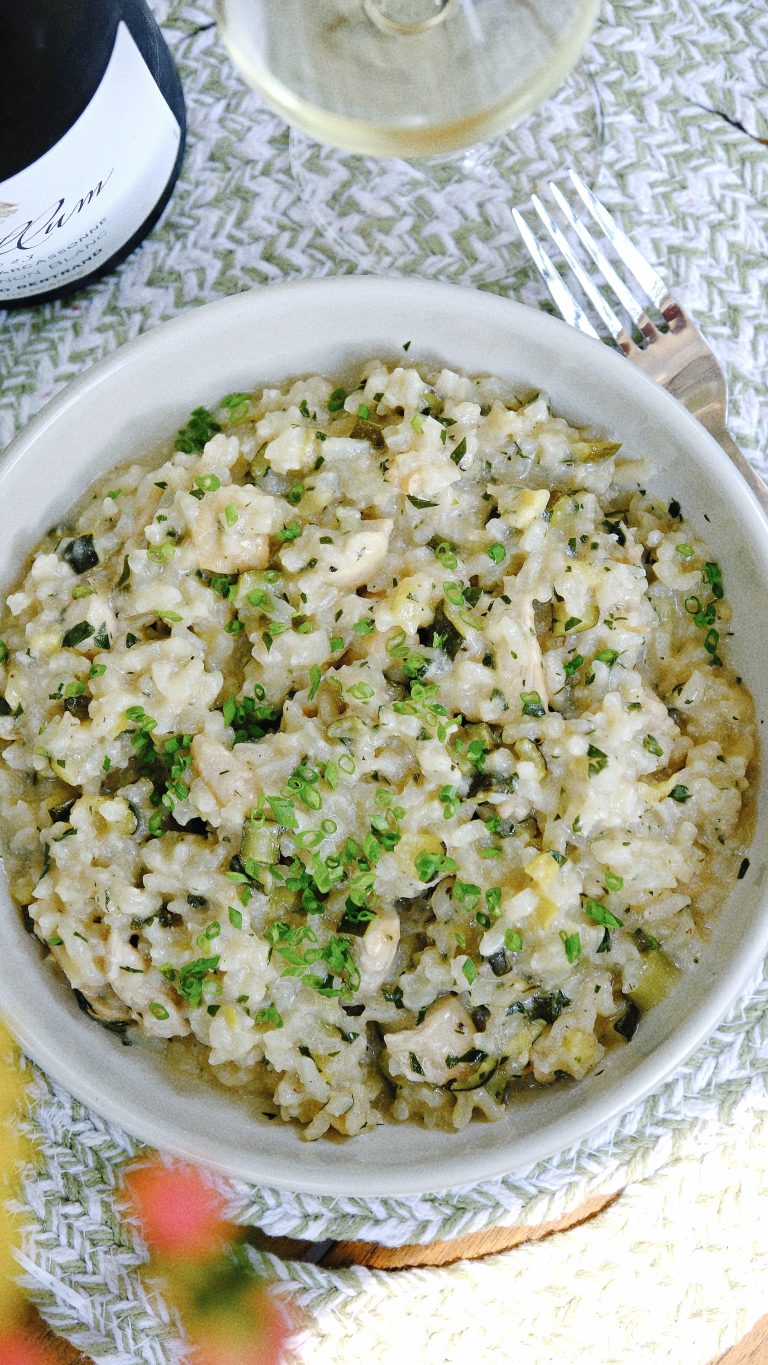
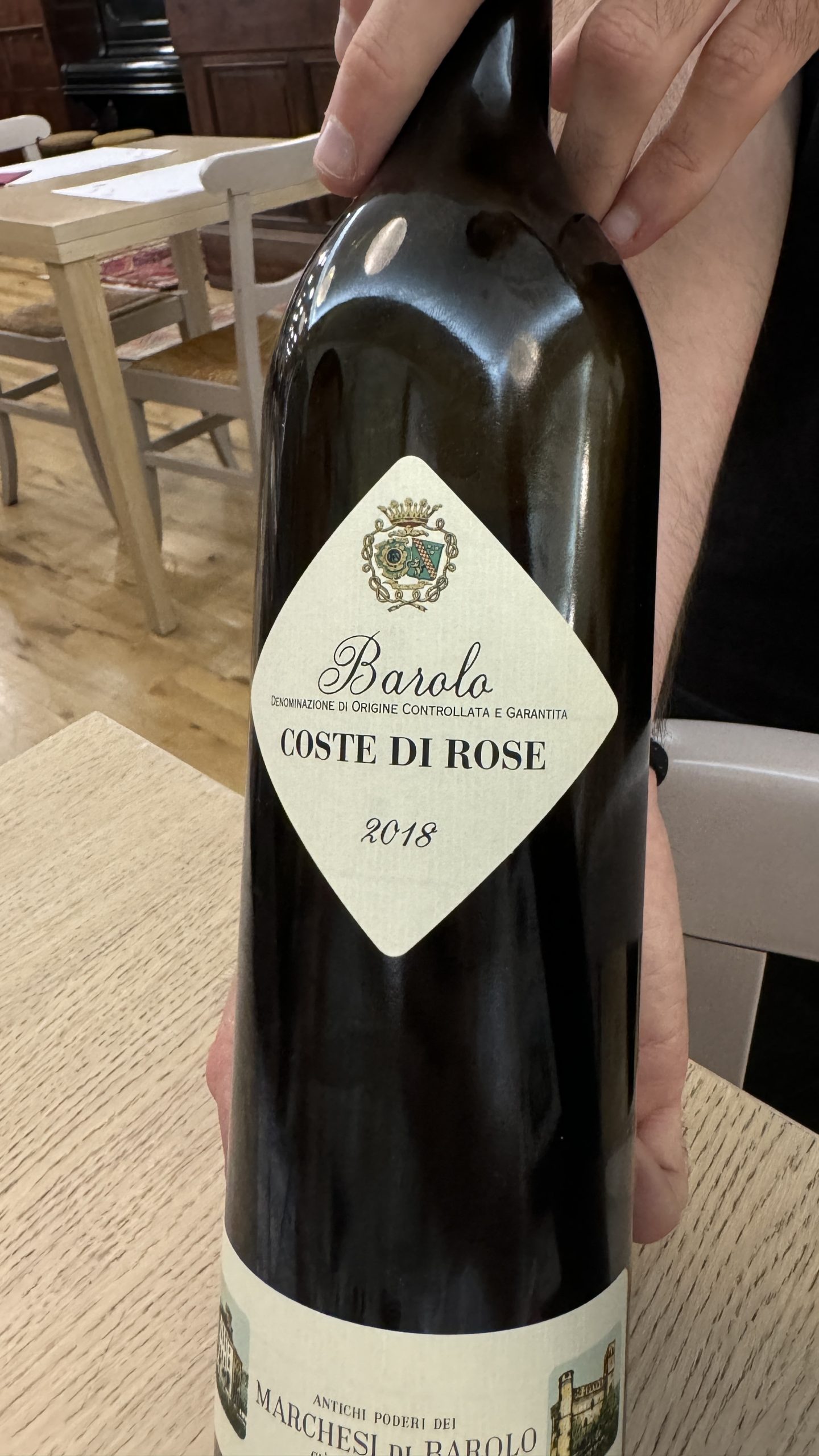
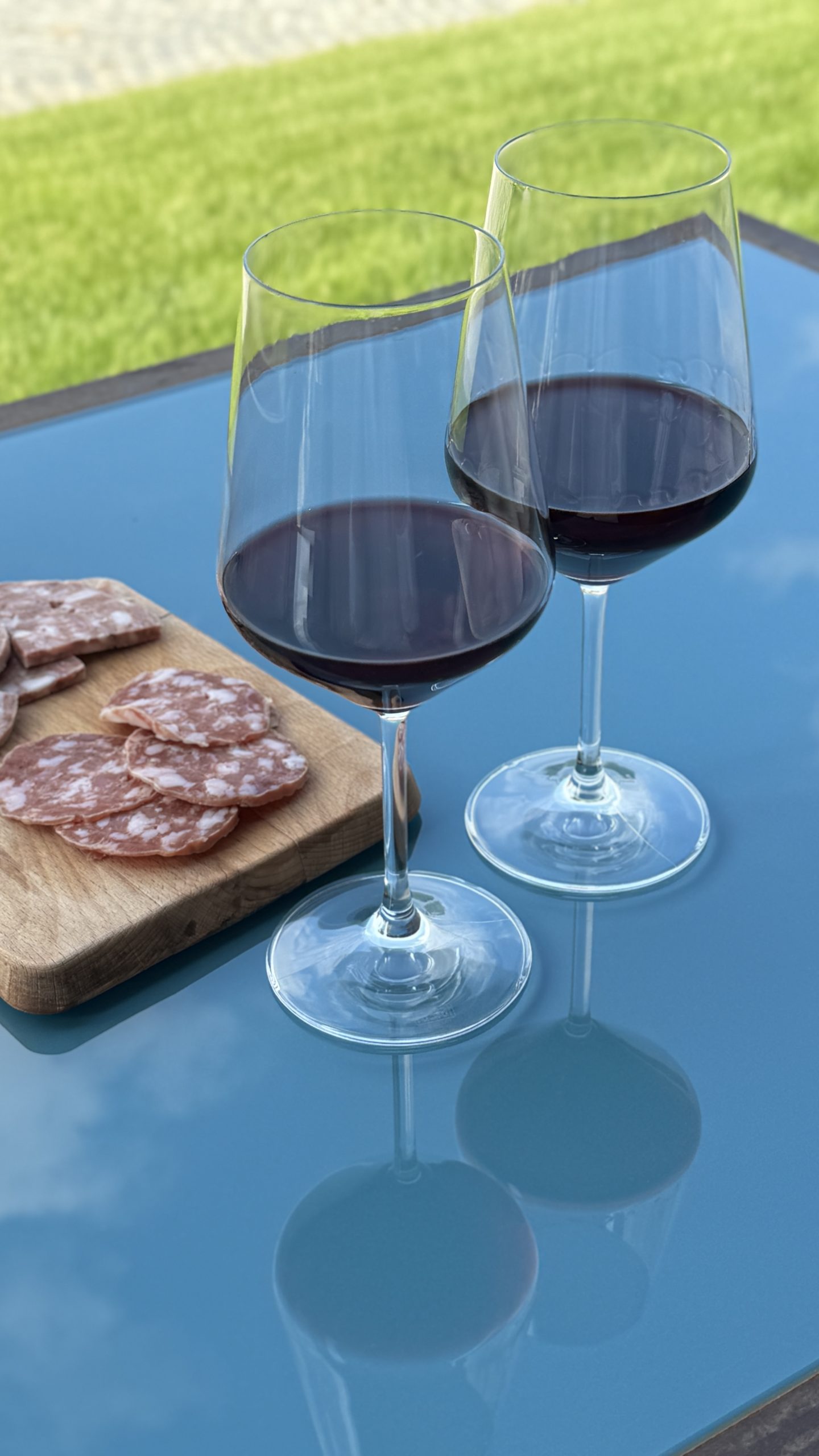
The food of Piedmont begins with products that already carry a strong identity. There is Fassona beef, prized for its tenderness; agnolotti del plin pinched into tiny parcels; tajarin made with an almost unreasonable number of egg yolks; risotto from the rice fields around Vercelli and Novara; raw milk cheeses from mountain pastures; bagna càuda; vitello tonnato; hazelnut cake; Barolo and Barbaresco; and, when the season allows, the Alba white truffle.
Piedmont appears to have misunderstood the concept of an ordinary meal.
Why Piedmont tastes like nowhere else
Piedmont is often described as a culinary mecca, and it is tempting to explain that reputation with a list.
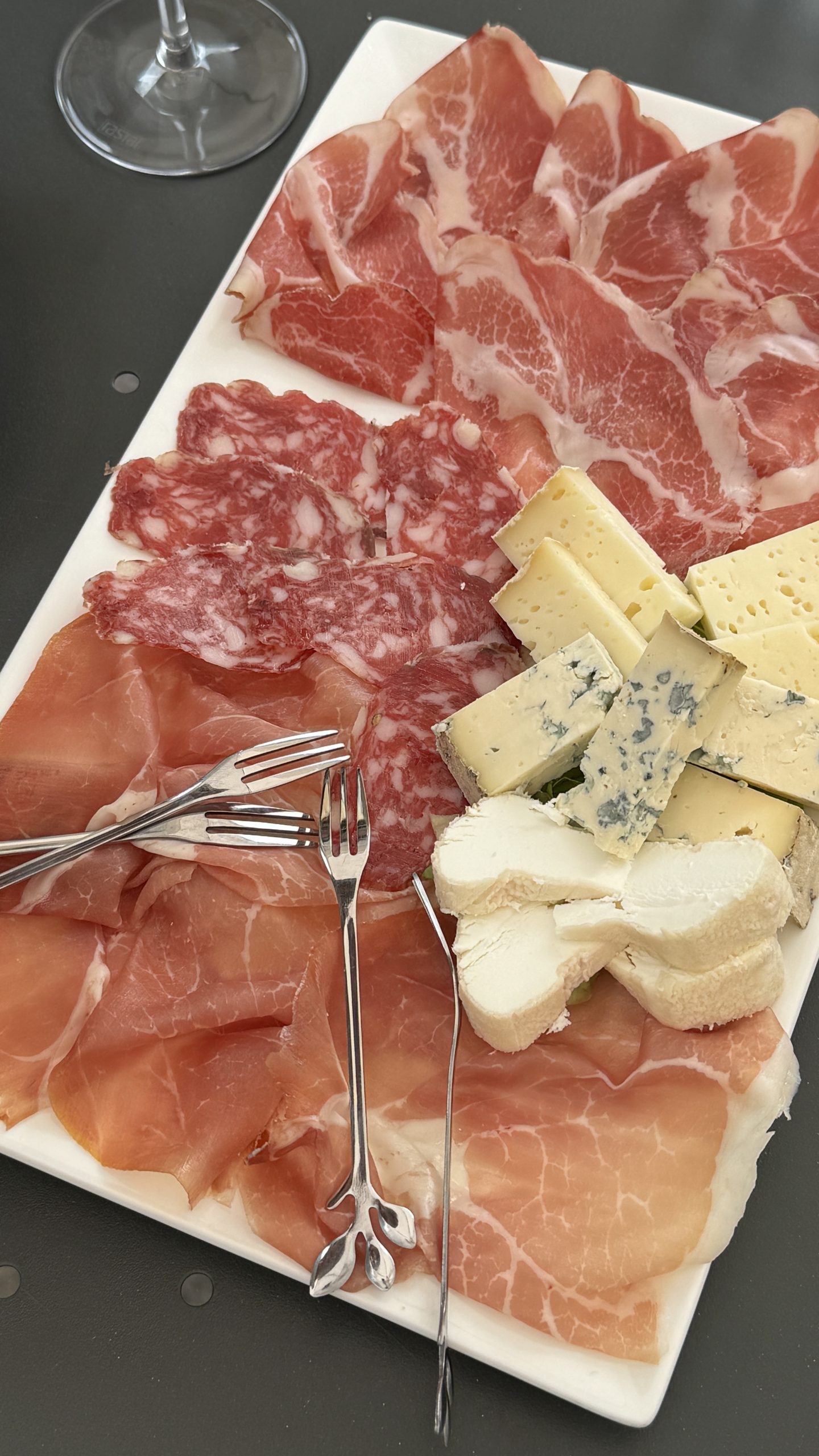
White truffles from Alba. Barolo and Barbaresco. Rice from the plains. Fassona beef. Cheeses from Alpine pastures. Hazelnuts from the Langhe. Turin’s chocolate and historic cafés.
But lists miss the essential thing.
Piedmont’s luxury is rooted in landscape and craft. Ingredients become precious through seasonality, local knowledge, patient production, and the people who carry those practices forward.
The current Michelin Guide lists 34 starred restaurants in Piedmont. That means 34 individual restaurants with at least one Michelin star. It does not mean 34 total stars, and the number can change with each annual guide.
How did one region develop so much culinary depth?
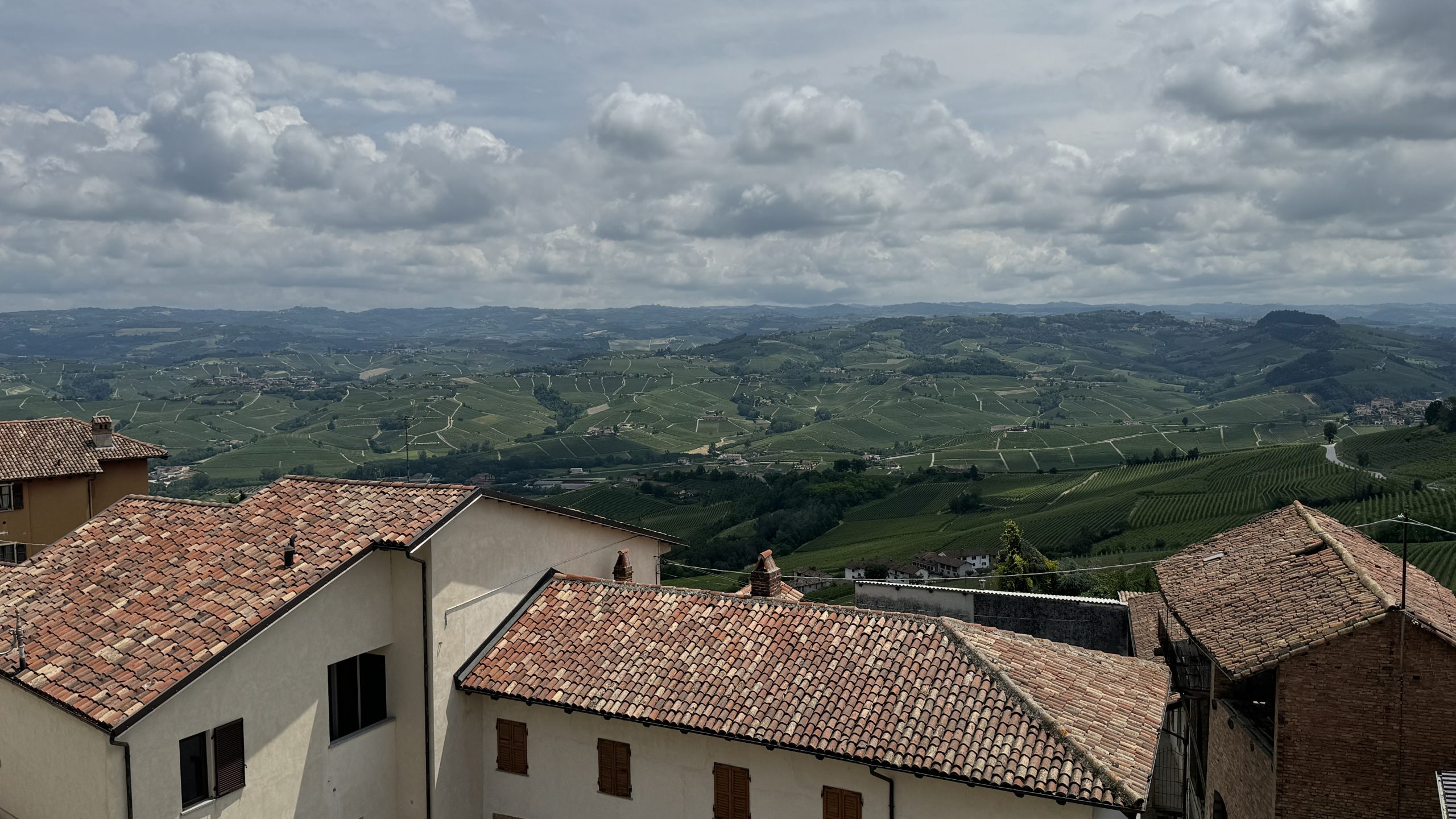
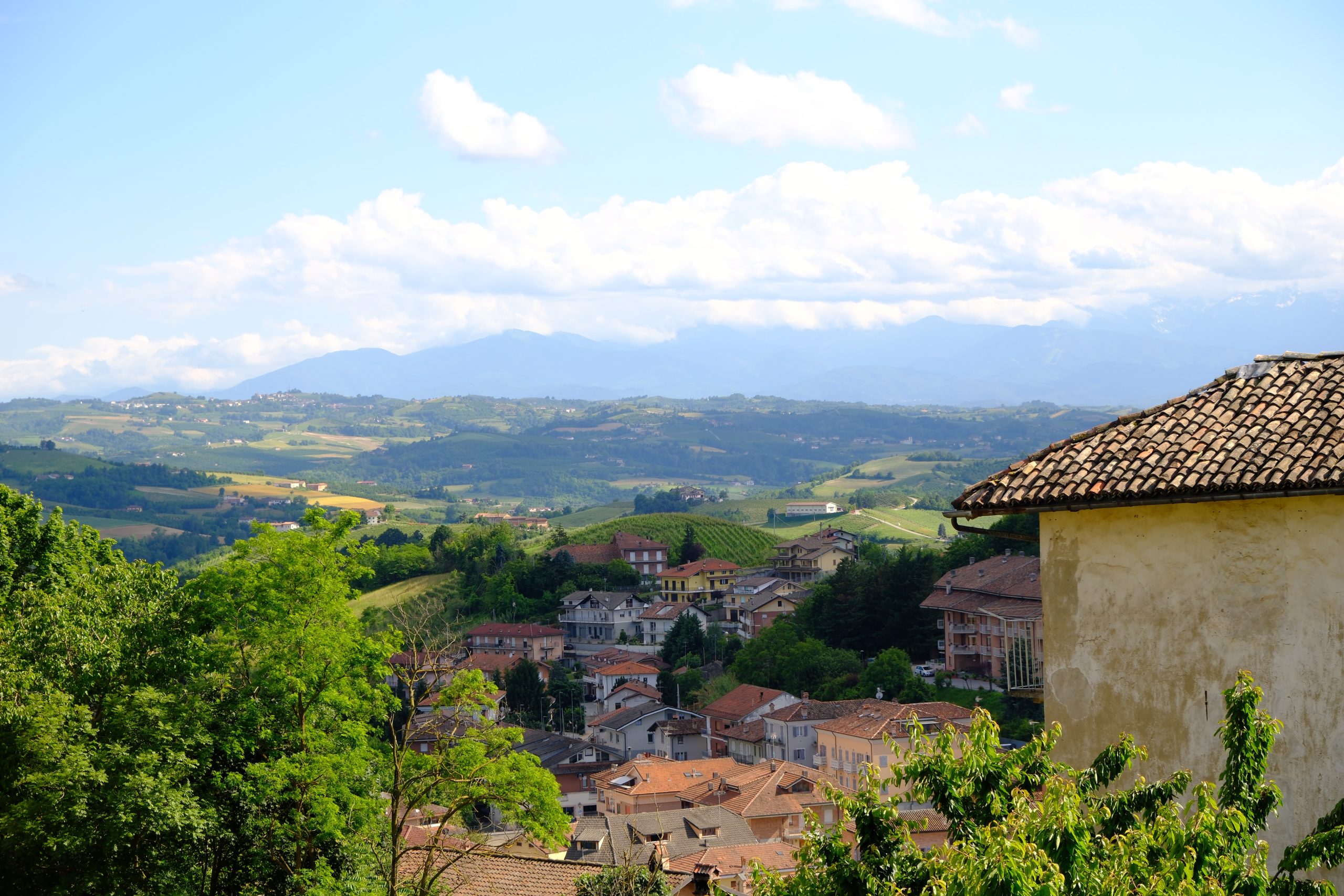
Part of the answer is geography. Alpine pastures, fertile rice plains, wooded truffle country, hazelnut groves, and the vineyards of the Langhe, Roero, and Monferrato place radically different ingredients within reach of the same kitchens.
History matters too. The Savoy court helped shape Turin’s elegant dining and chocolate culture, while rural cooks preserved dishes built around thrift, seasonality, and long technique. Wine estates, cheesemakers, butchers, truffle hunters, and pastry shops formed a dense network of specialists rather than a handful of isolated luxury producers.
Then there is the modern culture of protecting those traditions. Bra is the hometown of the Slow Food movement, and nearby Pollenzo became home to the University of Gastronomic Sciences. The region has spent decades treating biodiversity, craftsmanship, and culinary knowledge as things worth defending.
Michelin stars did not create Piedmont’s food culture. They followed an ecosystem already built around extraordinary products, rigorous technique, serious wine, and an audience that knows the difference.
Chefs here inherit remarkable raw material.
They also inherit expectations.
Hazelnuts, chocolate, and the recipe that followed us home
If truffles are Piedmont’s most mysterious ingredient, hazelnuts may be its most comforting.
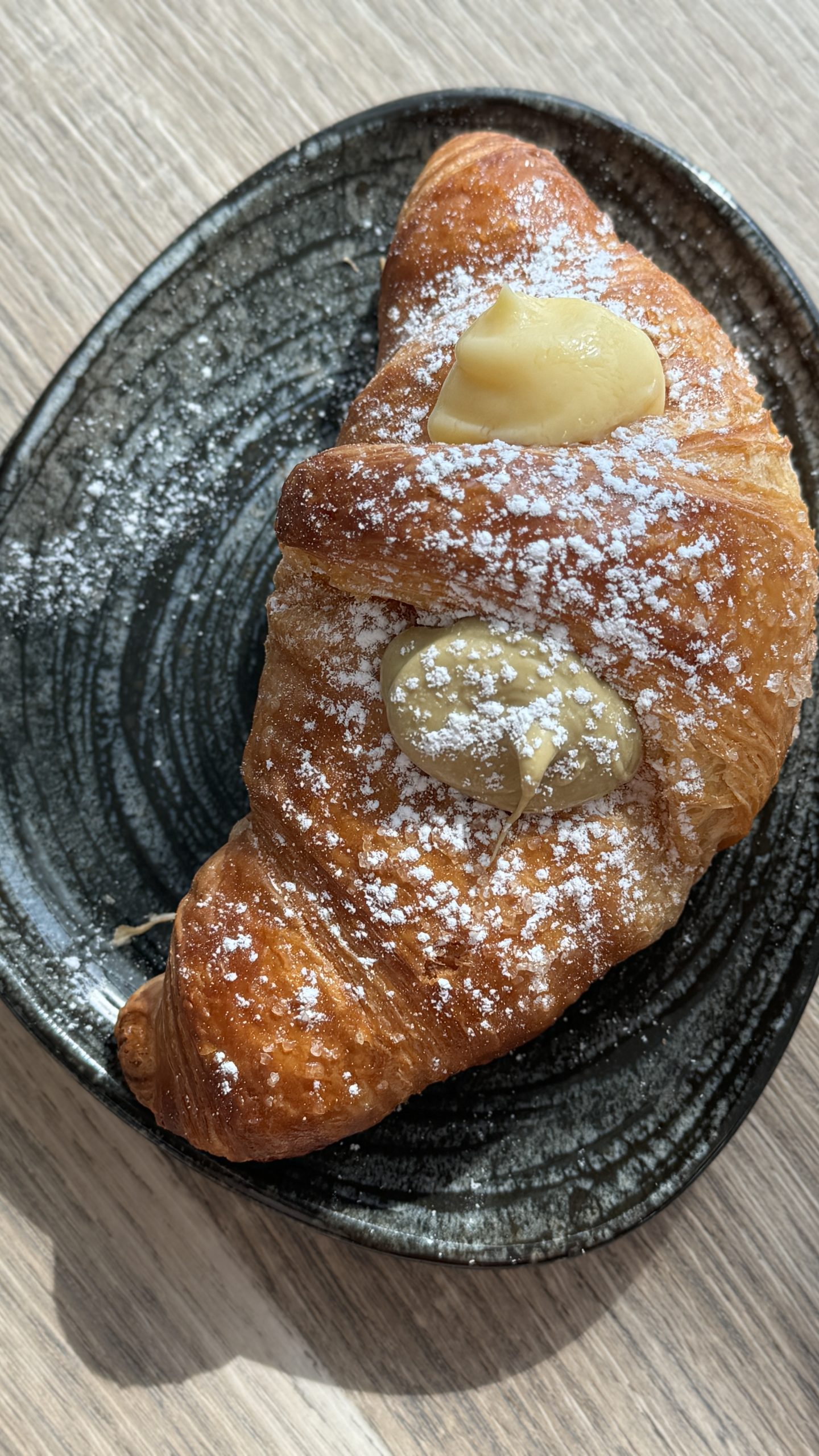
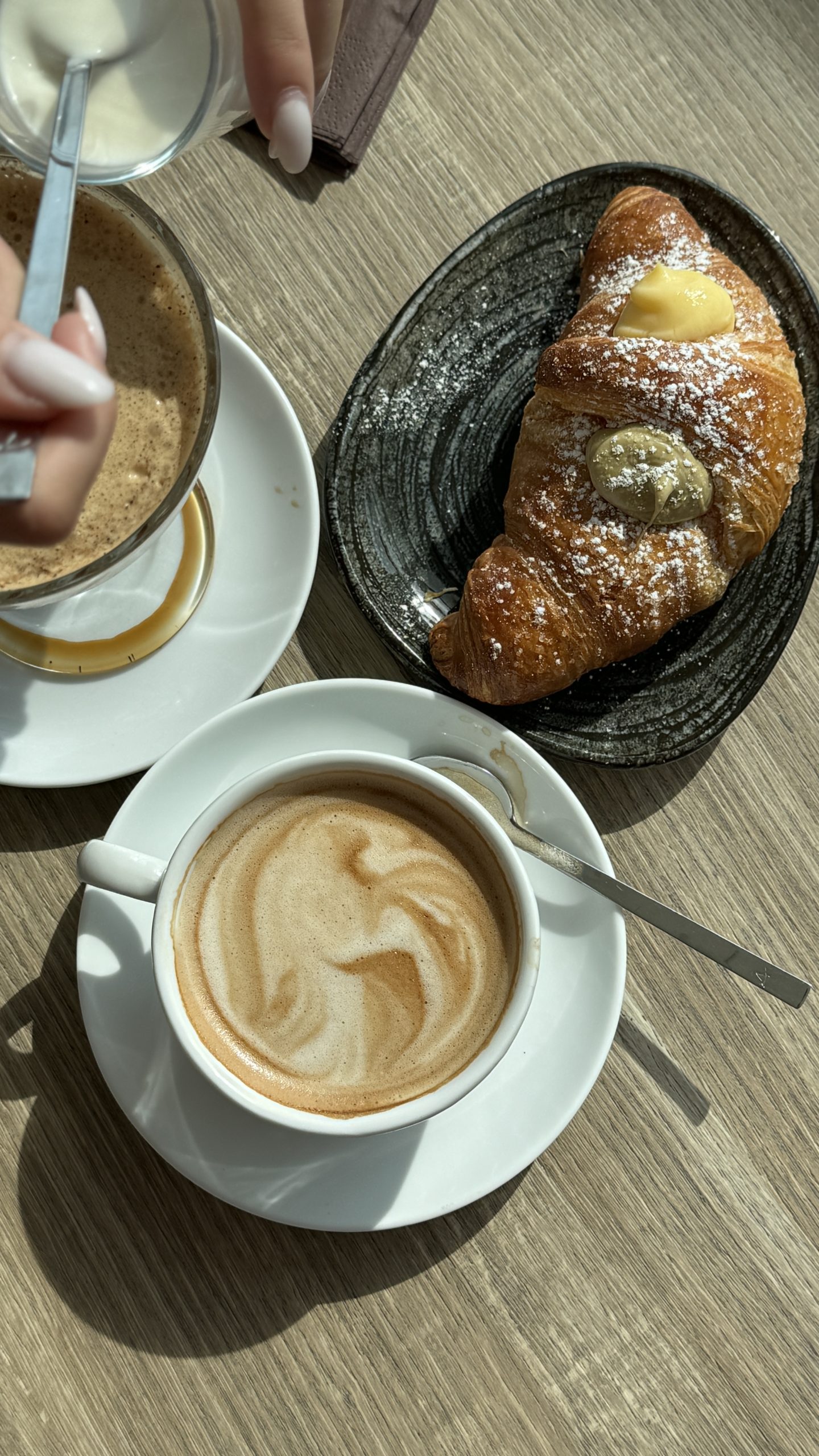
The round hazelnuts of the Langhe are prized for their aroma and sweetness. In Turin, they became inseparable from chocolate through gianduja, a smooth mixture of cocoa and finely ground hazelnuts, and the boat shaped gianduiotto, officially born in the city in 1865.
That combination has been following me home ever since.
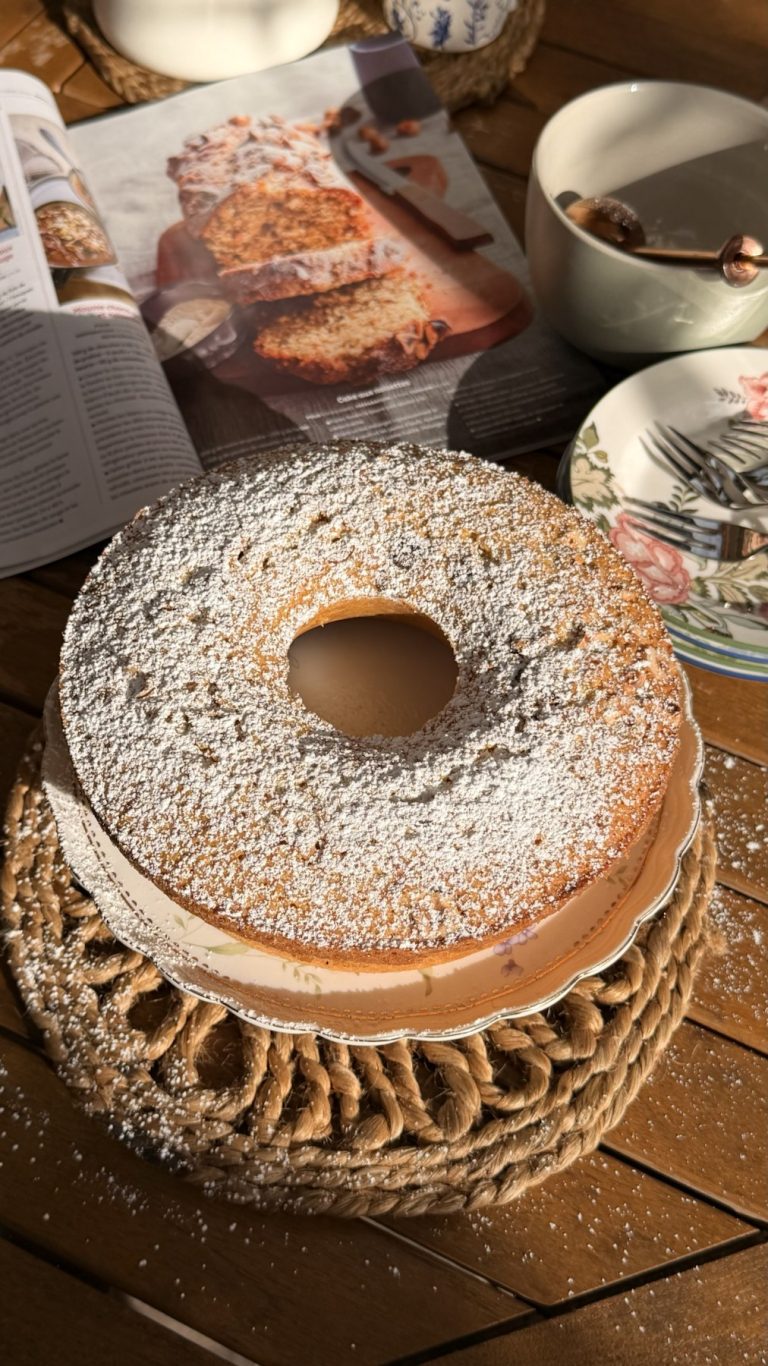
I brought those flavors home in Piedmont Inspired Hazelnut Cake (Cake aux Noisettes), a French magazine recipe baked exactly as printed with my six year old sous chef. Christopher gave the finished cake 10 out of 10 for its buttery crumb, crunchy hazelnuts and wonderful moisture.
That may be what travel gives us at its best.
Not souvenirs exactly.
New instincts.
A scent remembered from the woods. A flavor that keeps asking to be cooked again. A little piece of Piedmont waiting, patiently, to become cake.
TartufLanghe hosted our truffle hunting tour and sampling dinner during a private family trip. The visit grew from the good relationship we had developed with the company and was not arranged through my work. This draft reflects my own experience and opinions. Disclosure details will be confirmed before publication.