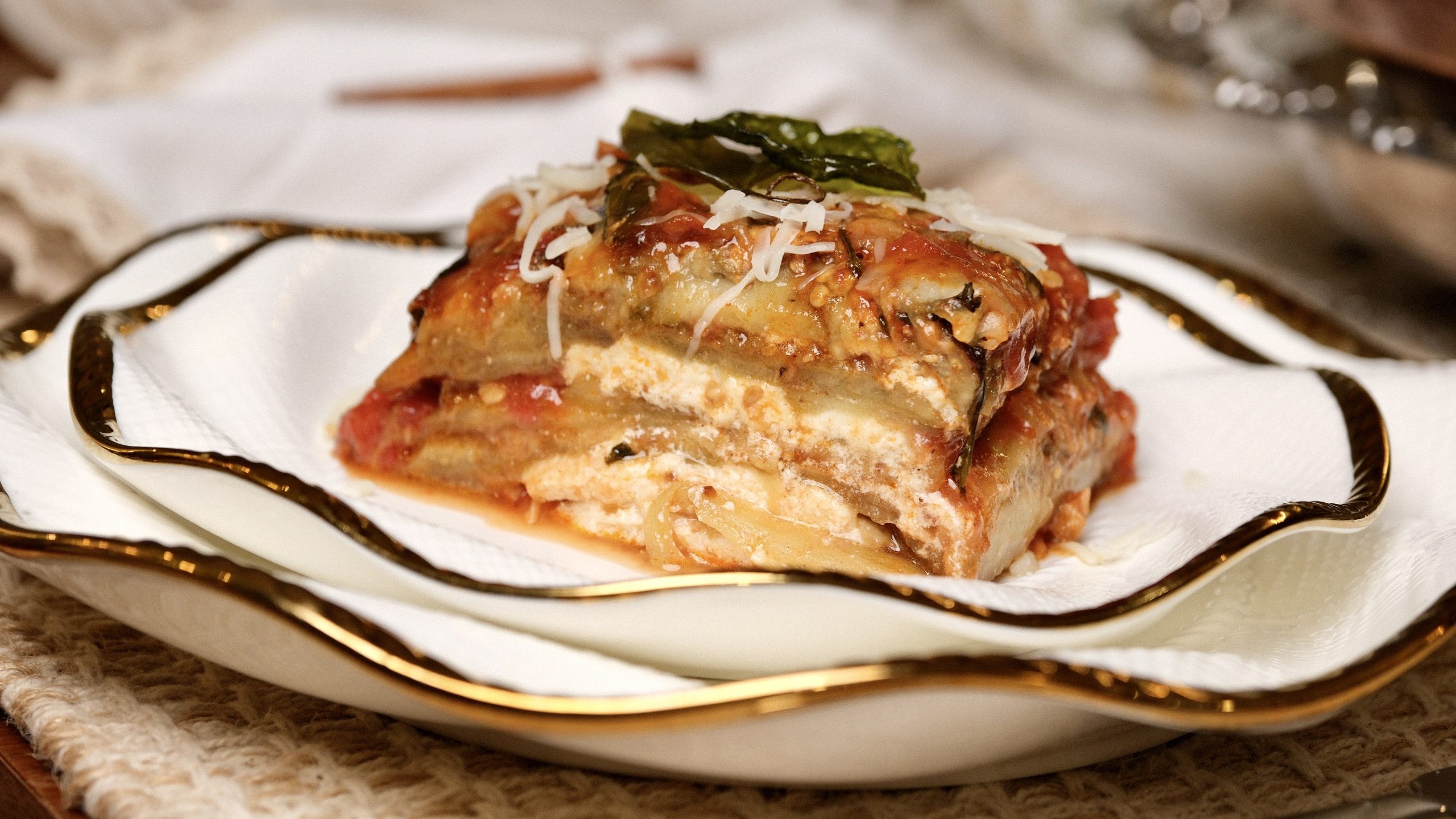
Eggplant Lasagna with Walnuts, Whipped Ricotta & Crispy Basil

This eggplant lasagna is built for the holiday table: dry-roasted eggplant, deeply reduced tomato sauce, toasted walnuts, basil, mozzarella, and smooth Parmesan ricotta piped between the layers. There are no pasta sheets and no egg in the ricotta filling, so it makes a generous vegetable side for Thanksgiving or Christmas.
It is also designed to be made ahead. The eggplant and sauce can be cooked and cooled, the full lasagna assembled and frozen before baking, and the crisp basil prepared separately for the final finish. Give it at least 1 hour to rest after baking so the layers can settle before the first slice is lifted from the dish.
Like so many complex vegetable dishes, this lasagna is even better on the second day. An overnight rest gives the roasted eggplant, concentrated tomato sauce, toasted walnuts, basil, and ricotta time to settle into a deeper, more cohesive flavor.
Roast the eggplant instead of frying it
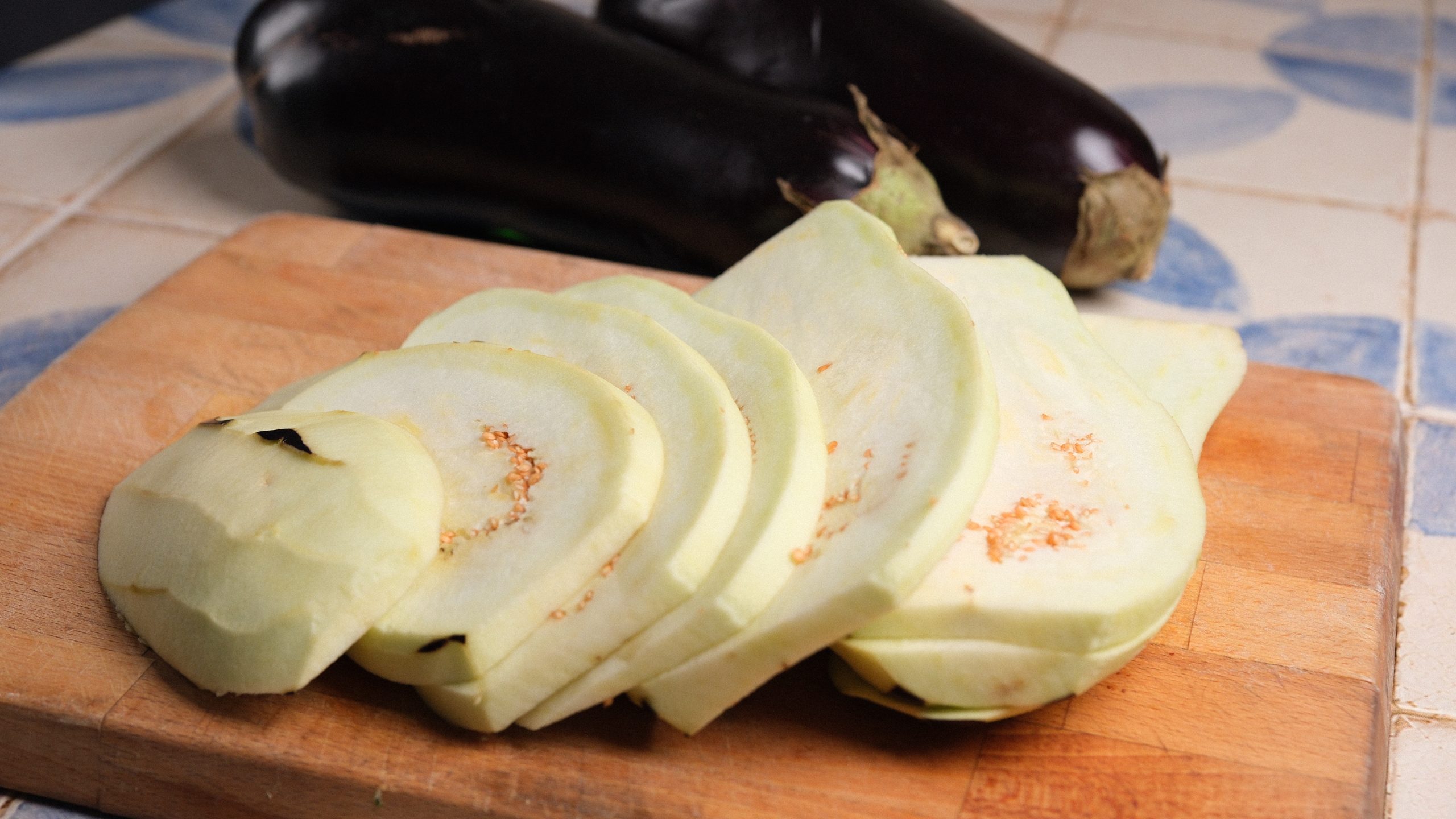
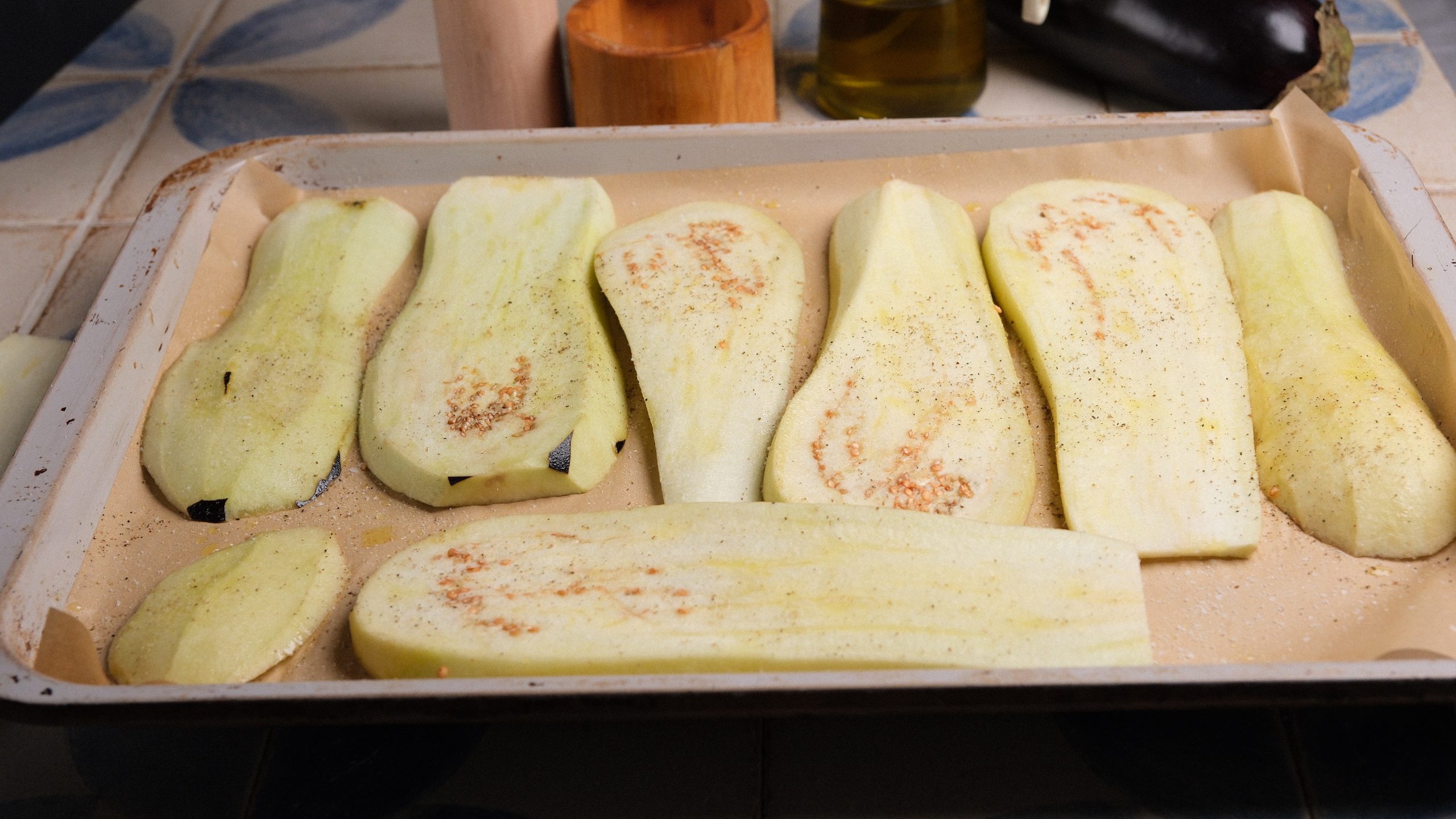
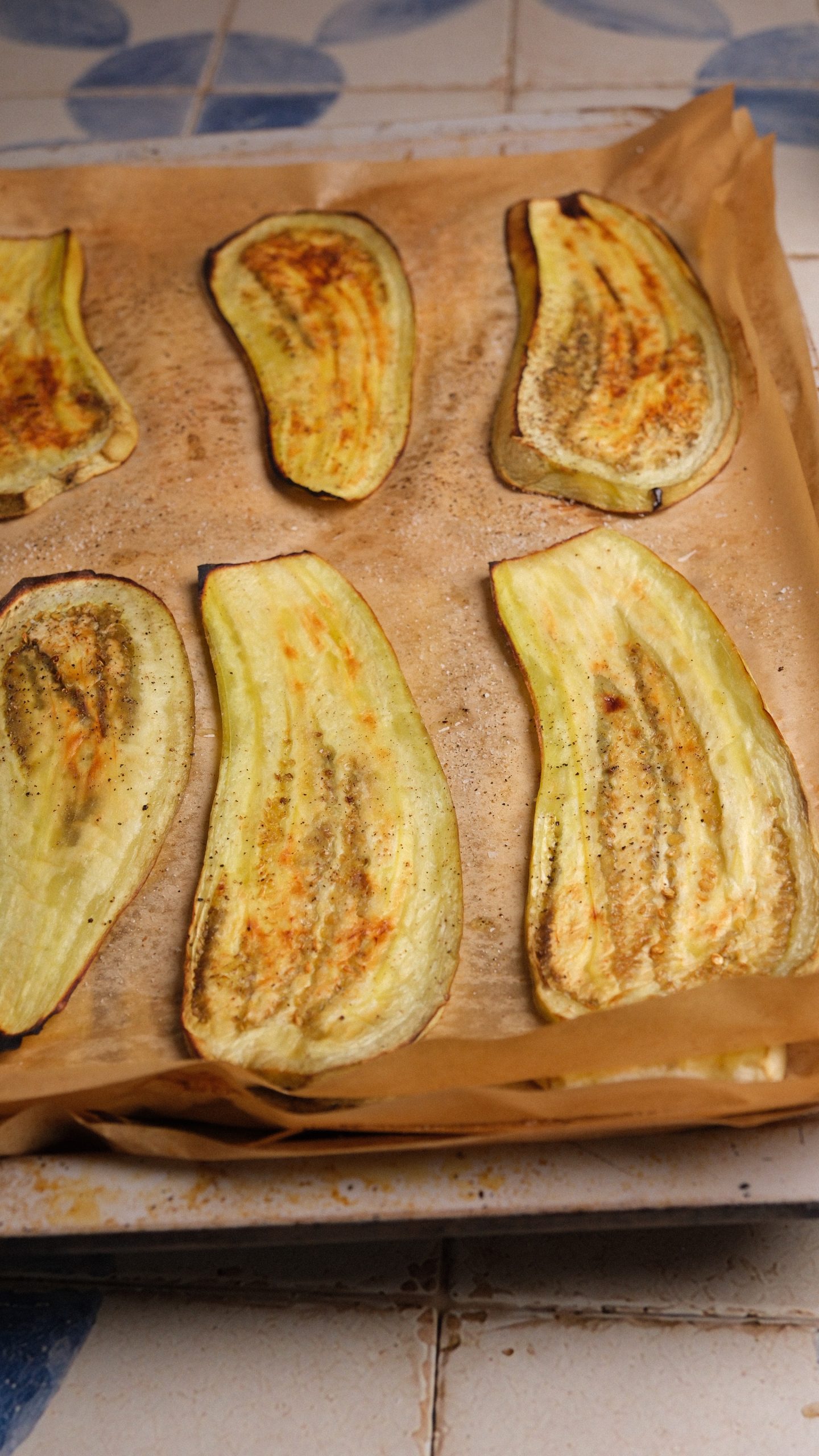
Three kilograms of eggplant may look like too much at first, but the slices lose a great deal of volume in the oven. Cut them lengthwise, use only a very light spray of olive oil, and roast them without overlapping. The goal is not only to make them tender but to toast them, give them some color, and dry them out. They should feel almost like a sponge, ready to absorb the tomato sauce between the layers.
Avoid coating the slices heavily with oil: the sauce, ricotta, mozzarella, walnuts, and Parmesan already bring plenty of richness. Keeping the eggplant relatively dry gives the finished lasagna better structure and flavor.
Make a sauce thick enough for layering
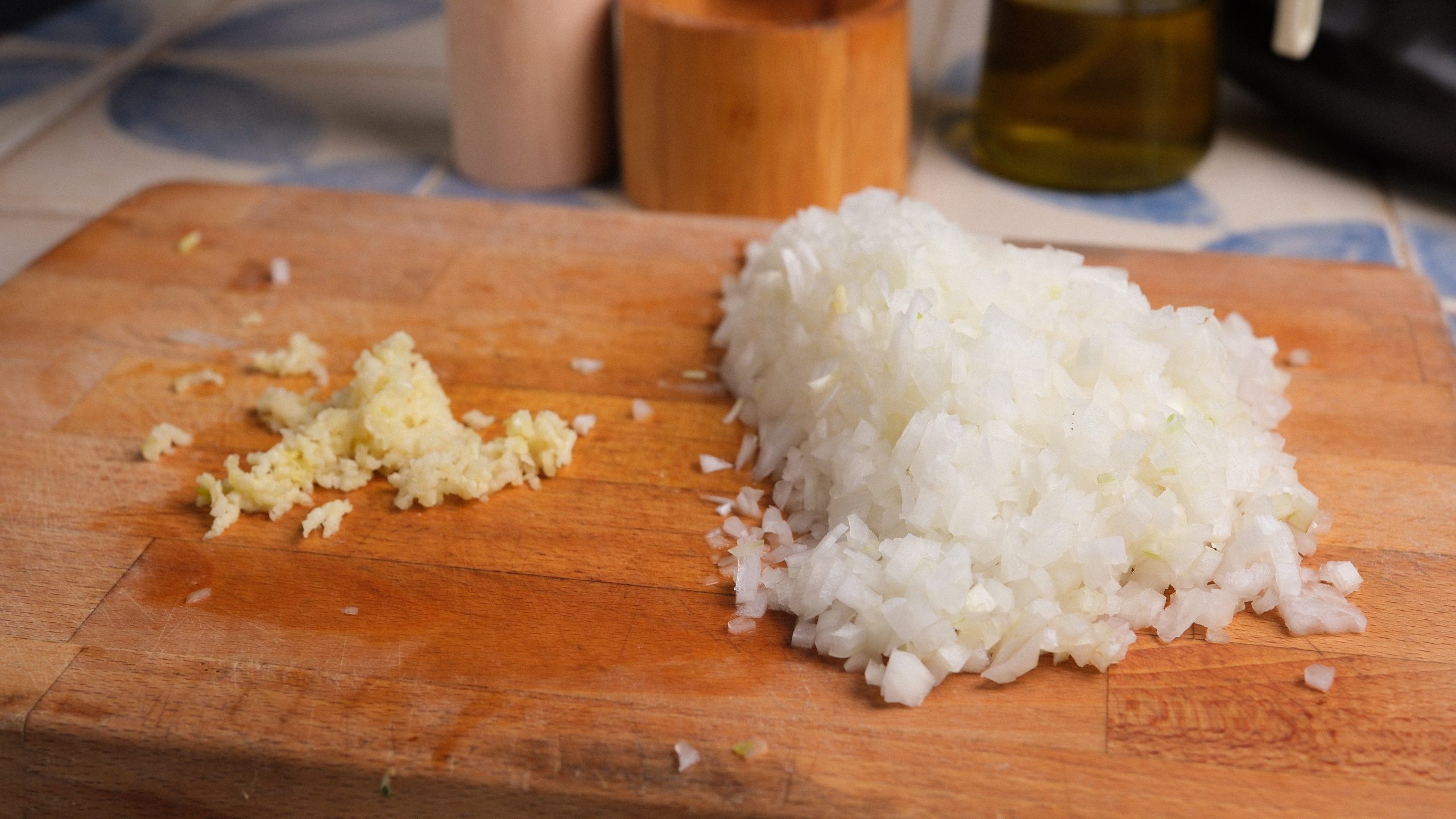
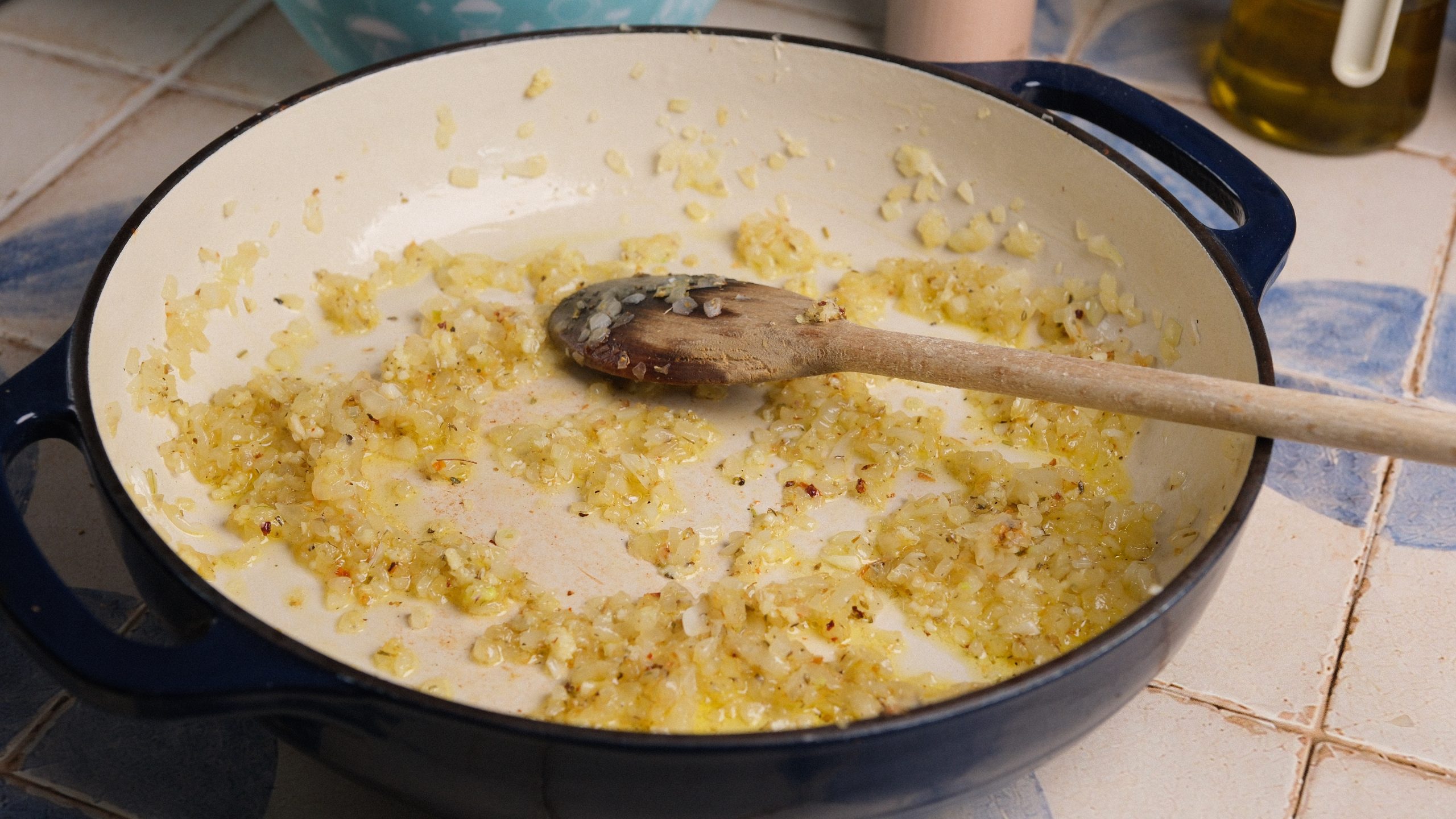
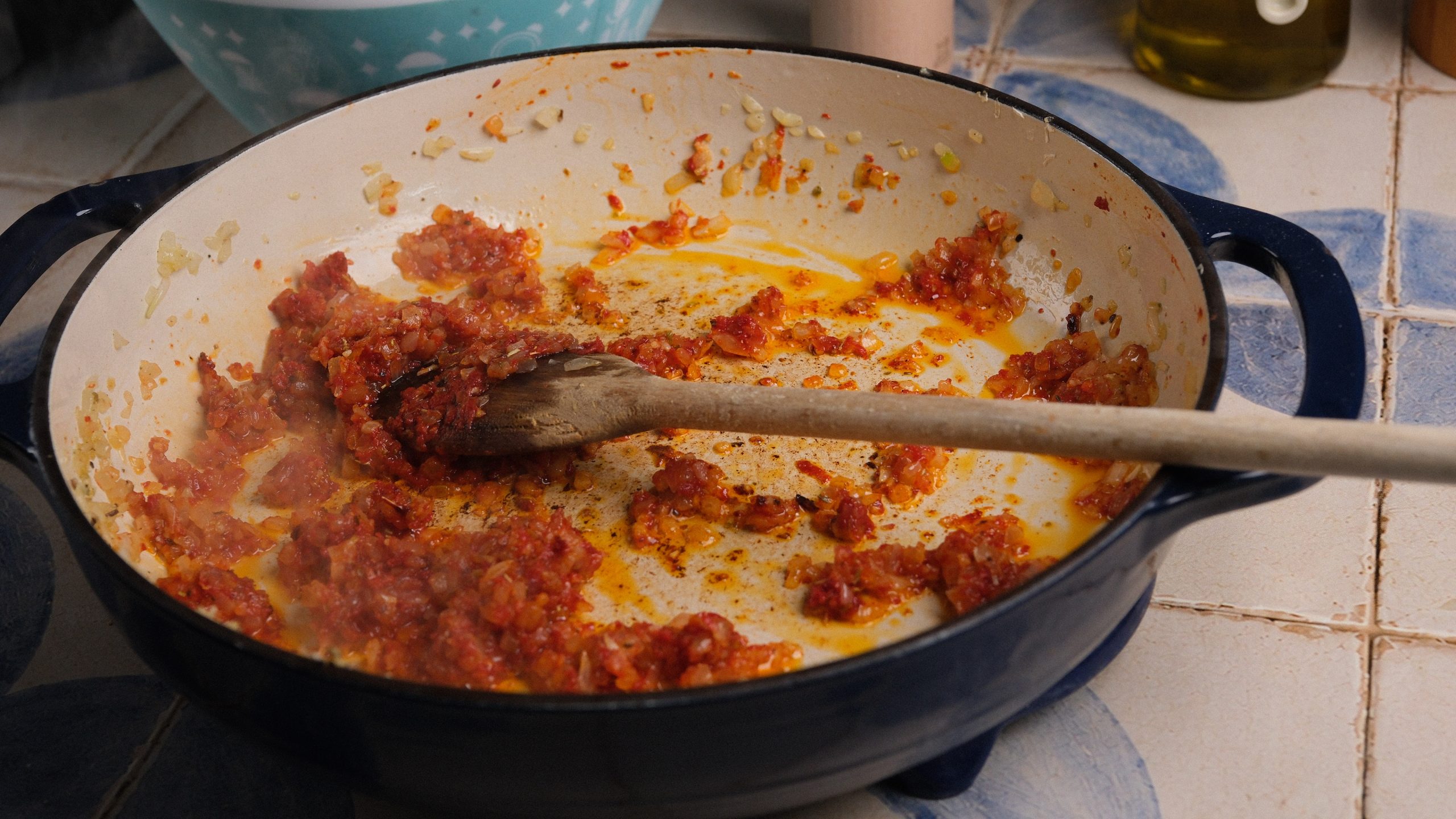
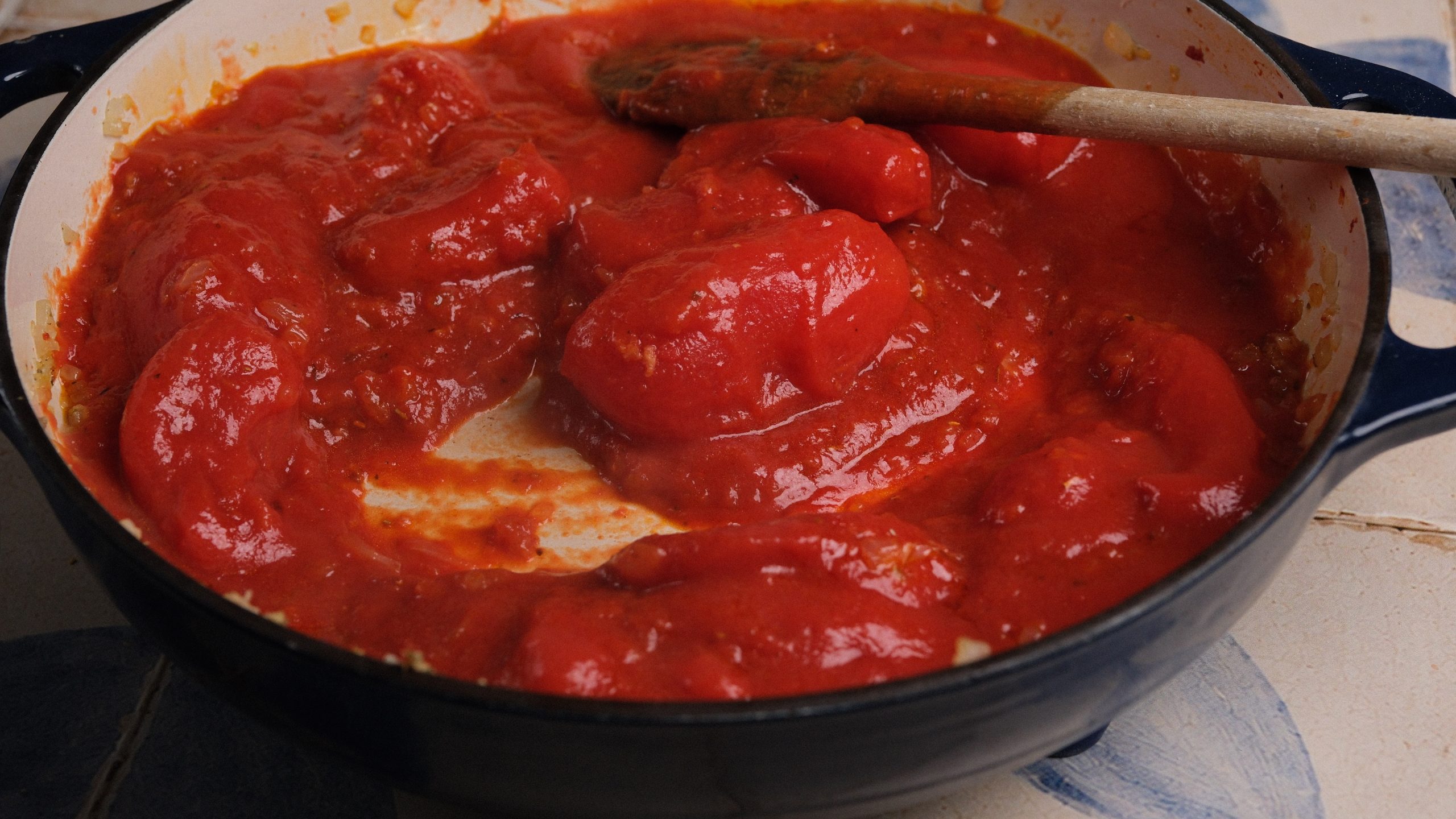
Onion and garlic, gently softened in olive oil, create the savory foundation of the sauce. Cooking the tomato paste before adding the tomatoes builds depth, while a small amount of passata helps the crushed whole tomatoes come together into a cohesive sauce.
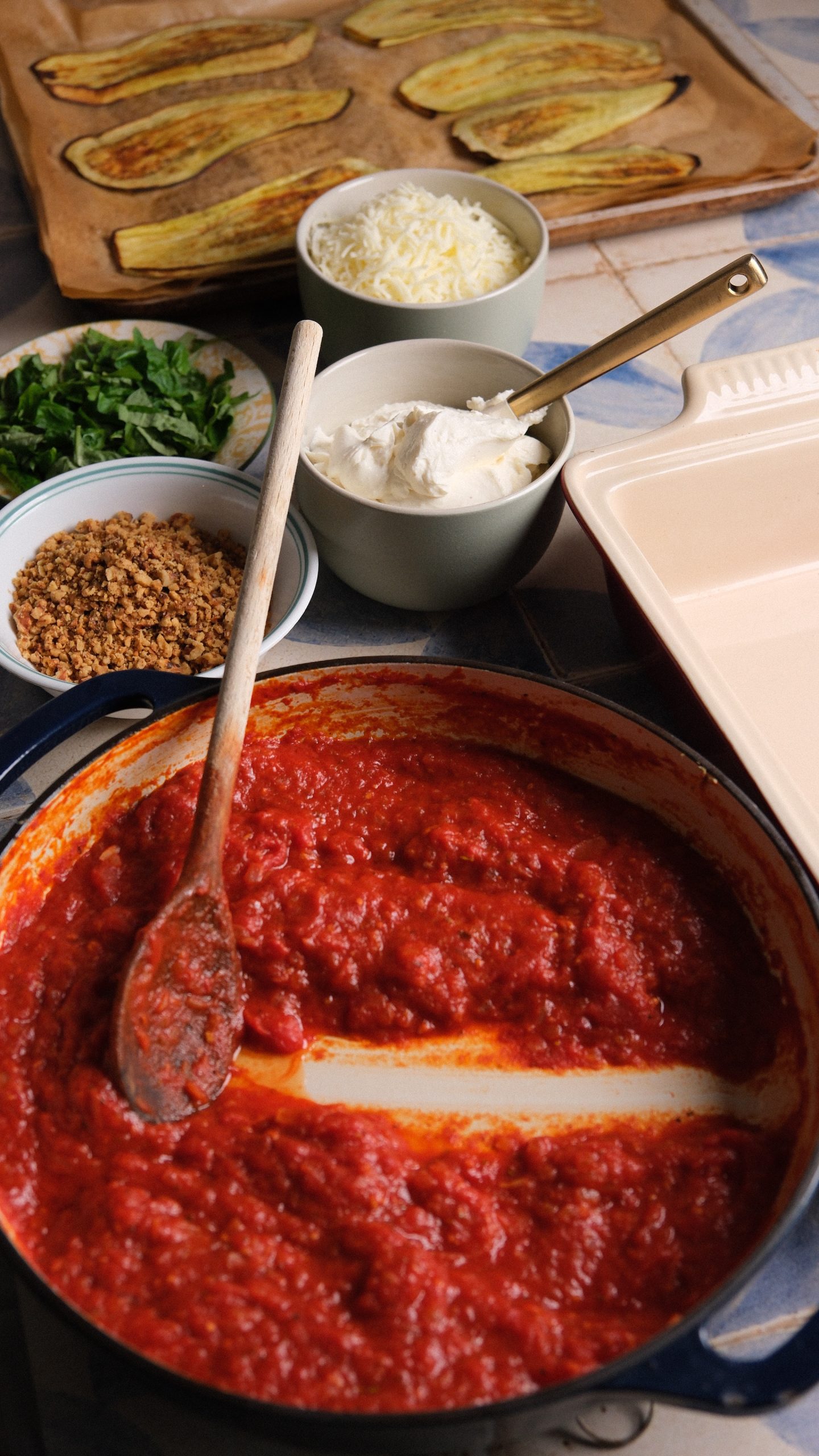
Let the sauce simmer uncovered until it is deeply reduced, thick, and spreadable, with no loose liquid left behind. Test a spoonful on a plate: it should hold together without releasing a watery ring. The dry-roasted eggplant will absorb the concentrated sauce as the lasagna bakes, while a loose sauce would collect in the dish and weaken the layers.
Walnuts and whipped ricotta between every layer
The walnuts are phenomenal in this recipe. Toast them before chopping them into coarse crumbs so their warm, earthy flavor stays distinct between the eggplant, tomato, and cheese. The ricotta is blended with Parmesan until smooth, then piped into small dots rather than spread. That keeps distinct pockets of creamy ricotta throughout the lasagna.
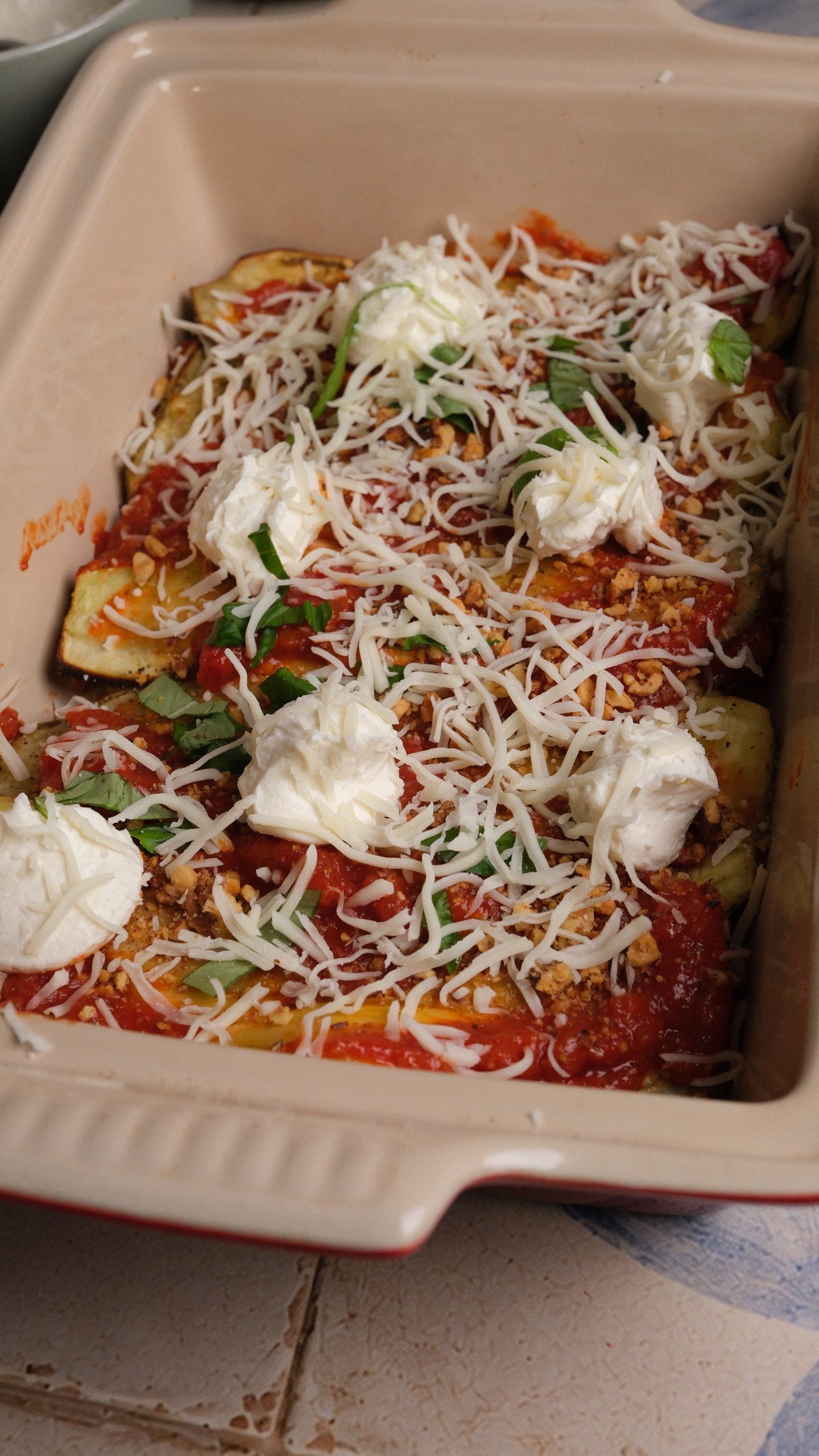
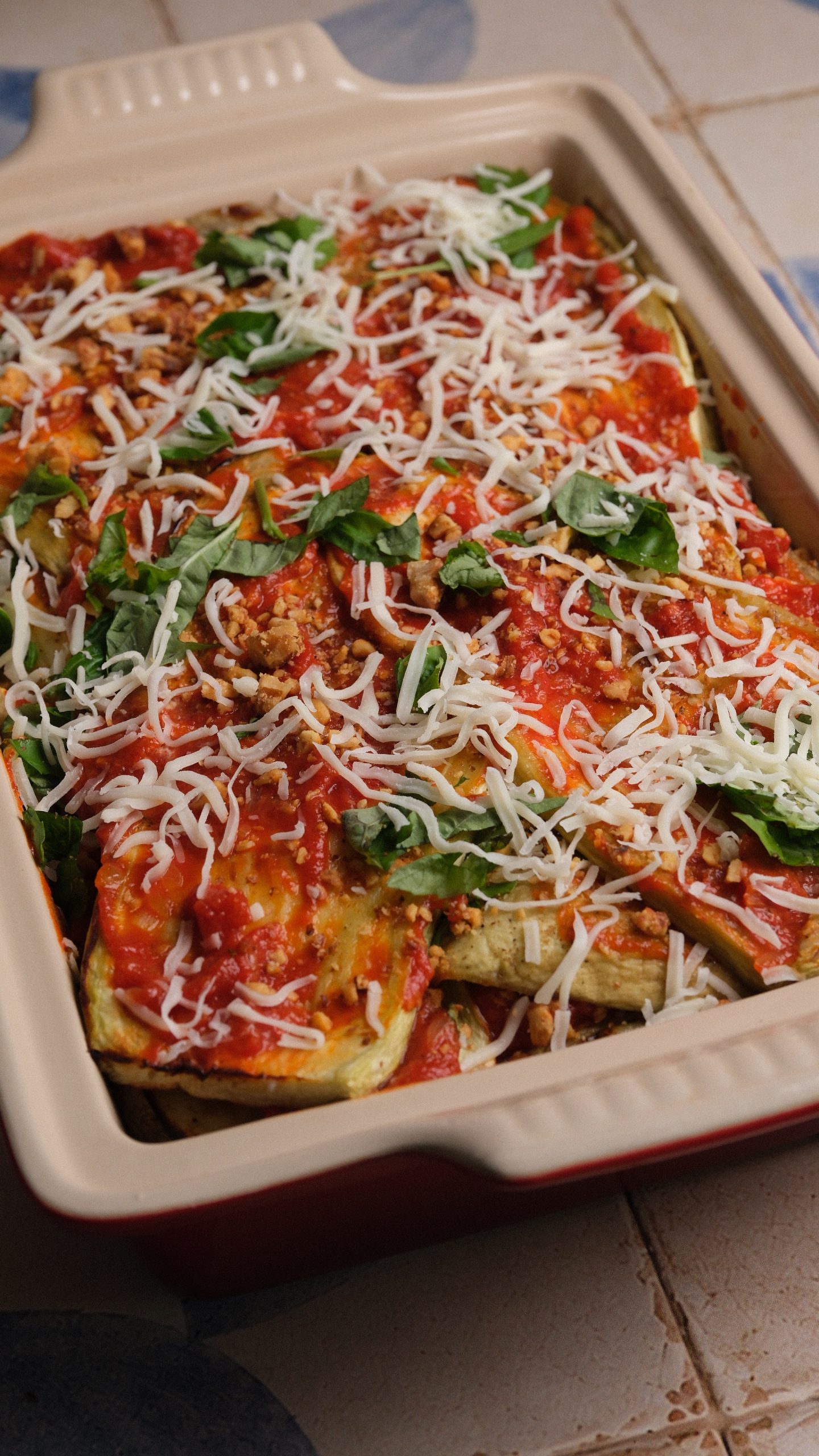
Build two interior layers in the same order: eggplant, walnuts, sauce, basil, whipped ricotta, and mozzarella. Finish with the remaining eggplant and sauce, then the last of the mozzarella and Parmesan. Slightly overlap the eggplant to cover gaps, and stop about one centimetre below the rim so the bubbling sauce stays in the dish.
Freeze it before baking
For Thanksgiving or Christmas, assemble the lasagna with chilled components, cover it tightly, and freeze it before baking. Allow a full 48 hours in the refrigerator for the center to thaw; for a Thursday Thanksgiving meal, move it to the refrigerator on Tuesday.
A deep ceramic dish benefits from a gradual start. Put the thawed dish, loosely covered with foil, into a cold oven, then set the temperature to 375°F. Bake for 45 minutes, uncover, and bake for another 25 minutes so the cheese can become golden. The lasagna is ready when it is bubbling and reaches 165°F in the center.
Rest it for at least 1 hour before slicing. Add the fried basil only after the rest so steam does not soften the leaves. If you can make the lasagna a day ahead, do: it develops an even deeper flavor overnight and slices especially well on the second day.
Cadre Nomade recipe
Eggplant Lasagna
roasted eggplant, toasted walnuts, whipped ricotta, tomato, crispy basil
Roasted eggplant layered with thick tomato sauce, toasted walnuts, basil, mozzarella, and whipped Parmesan ricotta, finished with crisp basil leaves.
Ingredients
Roasted eggplant
- 3000 g eggplant
- Olive oil spray, only enough for a very light coating
- ½ tsp fine salt
Tomato sauce
- 1 tbsp olive oil
- 1 onion, finely diced
- 3 garlic cloves, minced
- 2 tbsp tomato paste
- 800 g canned whole peeled San Marzano tomatoes, with their juice
- 100 g passata
- 1 tsp dried oregano
- ½ tsp fine salt, plus more to taste
- ¼ tsp black pepper
Walnuts and whipped ricotta
- 100 g walnuts
- 400 g whole-milk ricotta, well drained
- 60 g Parmesan, finely grated
- ⅛ tsp fine salt, plus more to taste
- ⅛ tsp black pepper
For layering and topping
- 10 g fresh basil, thinly sliced just before assembling
- 150 g low-moisture mozzarella, grated
- 30 g Parmesan, finely grated
Crispy basil
- 12 to 16 fresh basil leaves
- 250 ml neutral oil, or enough for a 1 to 2 cm depth in a small saucepan
- A small pinch of fine salt
Method
- Prepare the eggplant. Heat the oven to 425°F on regular bake. Line baking sheets with parchment. Cut the eggplant lengthwise into 7 to 8 mm slices, keeping the skin on. Spray the slices very lightly with olive oil and sprinkle with salt. Do not saturate them with oil.
- Roast until colored and dry. Arrange the slices in a single layer without overlapping. Roast for 20 to 25 minutes, until toasted in places, tender, and dry like a sponge rather than oily. Swap the trays halfway through if using two racks. Work in batches if needed.
- Start the sauce. While the eggplant roasts, heat the olive oil in a wide saucepan over medium-low heat. Cook the onion for 7 to 10 minutes, until soft and lightly golden. Add the garlic and cook for 30 seconds. Stir in the tomato paste and cook for 2 minutes.
- Reduce the sauce completely. Crush the whole tomatoes by hand. Add them and their juice with the passata, oregano, salt, and pepper. Simmer uncovered for 30 to 45 minutes, stirring occasionally, until very thick, concentrated, and spreadable, with no loose liquid left behind. A spoonful on a plate should hold together without a watery ring. Taste and adjust the seasoning. Let the sauce and eggplant cool before assembling.
- Toast the walnuts. Toast them in a dry pan over medium-low heat, stirring frequently, until fragrant and lightly golden. Cool completely, then chop into coarse crumbs. Do not skip them; their toasted flavor is one of the defining elements of the lasagna.
- Whip the ricotta. Process the drained ricotta, Parmesan, salt, and pepper for 1 to 2 minutes, scraping down the sides as needed, until smooth and creamy. Stop once smooth; do not add milk or cream. Taste and adjust the seasoning. Transfer to a piping bag with a 1 to 1.5 cm round opening and refrigerate until assembling.
- Prepare the dish. Spread a thin layer of tomato sauce over the bottom. Divide the eggplant and the remaining sauce into three portions. Keep enough mozzarella and all of the topping Parmesan for the top.
- Build the first layer. Slightly overlap one portion of eggplant to cover gaps. Scatter with walnuts, spoon over one portion of sauce, add sliced basil, pipe half of the ricotta into small evenly spaced dots, and finish with mozzarella.
- Repeat. Add a second portion of eggplant, walnuts, sauce, basil, the remaining ricotta dots, and mozzarella.
- Finish the top. Add the remaining eggplant and sauce, then the reserved mozzarella and topping Parmesan. Leave approximately 1 cm below the rim.
- Bake freshly assembled. Heat the oven to 375°F. Cover the dish loosely with foil and bake for 45 minutes. Uncover and bake for another 25 minutes, until bubbling, golden, and 165°F in the center.
- Rest. Let the lasagna rest for at least 1 hour before slicing so the layers can settle. Add the crispy basil immediately before serving.
Crispy basil
- Wash the basil if needed, then dry every leaf completely, including the undersides.
- Heat the neutral oil in a small, high-sided saucepan to 350°F.
- Carefully lower a few leaves at a time into the oil with a slotted spoon. The oil may splatter. Fry for about 5 to 10 seconds, until translucent and green, removing the leaves before they brown.
- Drain on paper towels and sprinkle lightly with salt. Cool completely, then store loosely in a dry, airtight container lined with fresh paper towel.
- For the best color and texture, fry the basil on the serving day and keep it at room temperature. Add it only after the lasagna has rested.
Make ahead and freeze
- Prepare and chill. Roast the eggplant and cook the sauce fully. Spread the eggplant out to cool and transfer the sauce to a shallow container. Refrigerate within 2 hours, then assemble using chilled components.
- Assemble and freeze before baking. Complete all of the layers and the mozzarella-Parmesan topping, leaving off the crispy basil. Cover tightly with plastic wrap and then foil, label, and freeze. For the best quality, use within 2 months.
- Thaw in the refrigerator. Keep covered and allow 24 to 48 hours, planning on the full 48 hours for a deep ceramic dish. Check that the center has completely thawed. For a Thursday meal, move it to the refrigerator on Tuesday. Do not thaw it on the counter.
- Bake after thawing. Remove all plastic wrap and cover loosely with foil. For a ceramic dish, place the lasagna on the middle rack of a cold oven, then set the oven to 375°F. Bake for 45 minutes from the time the oven is switched on, then uncover and bake for another 25 minutes, until golden and 165°F in the center.
- Rest and finish. Rest for at least 1 hour before slicing, then decorate with the separately prepared crispy basil leaves. For the deepest flavor and cleanest slices, cool and refrigerate the baked lasagna, then serve it reheated the next day.
Recipe and photographs by Karolina.