Austria’s Black Gold: A Styrian Boiled Beef Salad

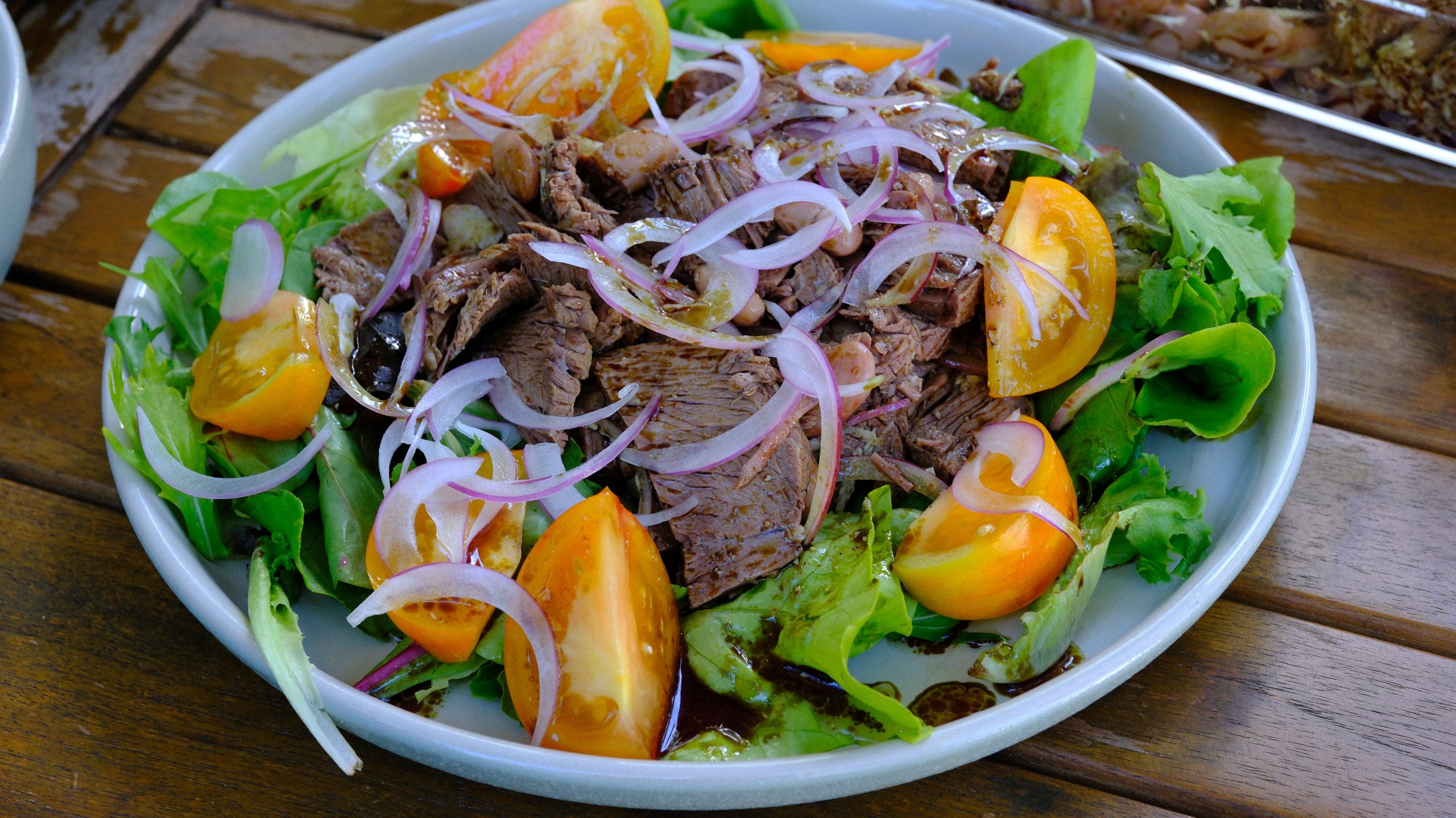
Some dishes announce themselves before the first bite. This one did it with a puddle of dressing so dark it looked almost black against the white plate.

While staying in Schruns, Austria, I ordered a boiled beef salad with runner beans, tomatoes, red onion, tender greens, and freshly grated horseradish. I asked the server what gave the dressing its extraordinary flavor. He named beef broth, apple vinegar, and plenty of pumpkin seed oil, which he called the region’s “black gold.” It was nutty, sharp, savory, and unlike any salad dressing I had tasted before.
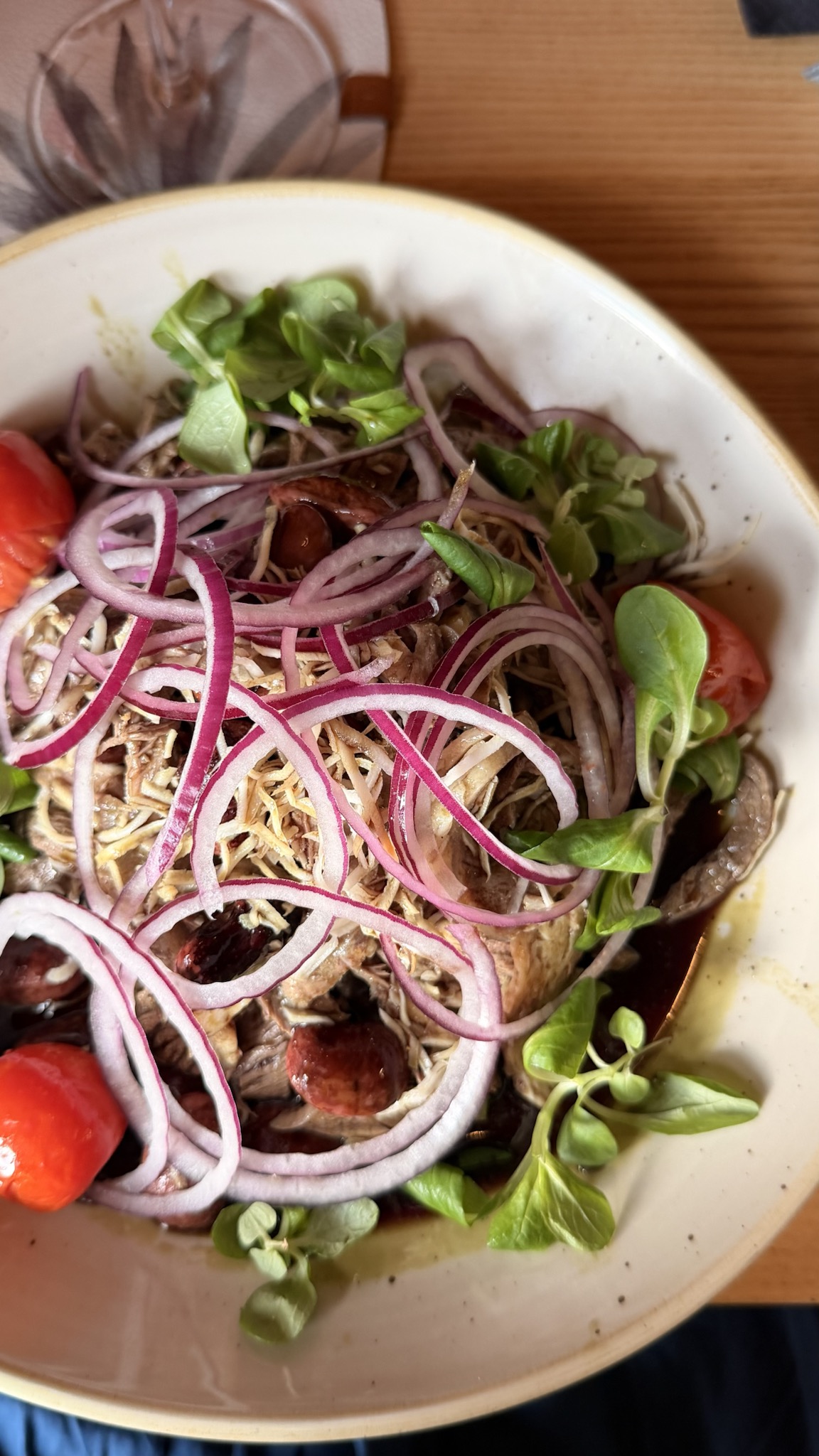
The server told us he was from Styria, or Steiermark in German, and described how amazingly green and beautiful the region is. He spoke about his home with such pride that the story of the place became part of the meal.
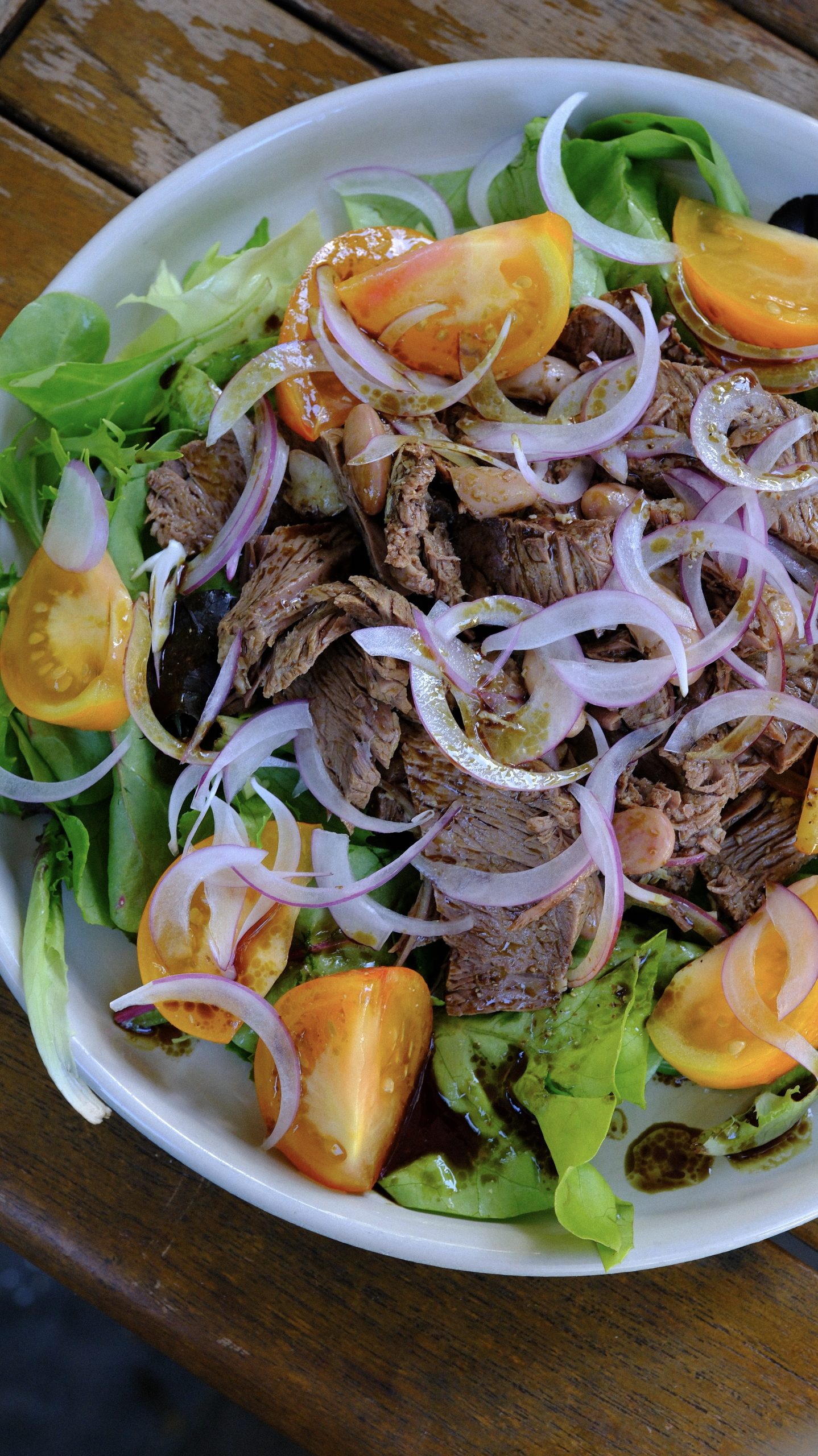
A plate that tastes of Styria
Styria lies in southeastern Austria, a landscape of green hills, vineyards, apple orchards, and pumpkin fields. Its cooking is deeply attached to a few ingredients that are unmistakable once you know them.
Käferbohnen, large scarlet runner beans with mottled skins and a creamy interior, are one of the region’s best-known foods. So is Steirisches Kürbiskernöl, the dark, viscous oil pressed from Styrian pumpkin seeds. The oil appears green-red in the light and tastes intensely of roasted nuts. Fresh Kren, or horseradish, brings heat and brightness. Together with boiled beef, onion, and apple vinegar, they make a salad that feels both substantial and fresh.
The combination is not merely suggestive of Styria. An official Styrian recipe pairs cooked beef and Käferbohnen with beef broth, apple vinegar, pumpkin seed oil, onion, and freshly grated horseradish. It was the same language of flavors the server had described at the table.
The dressing is the point
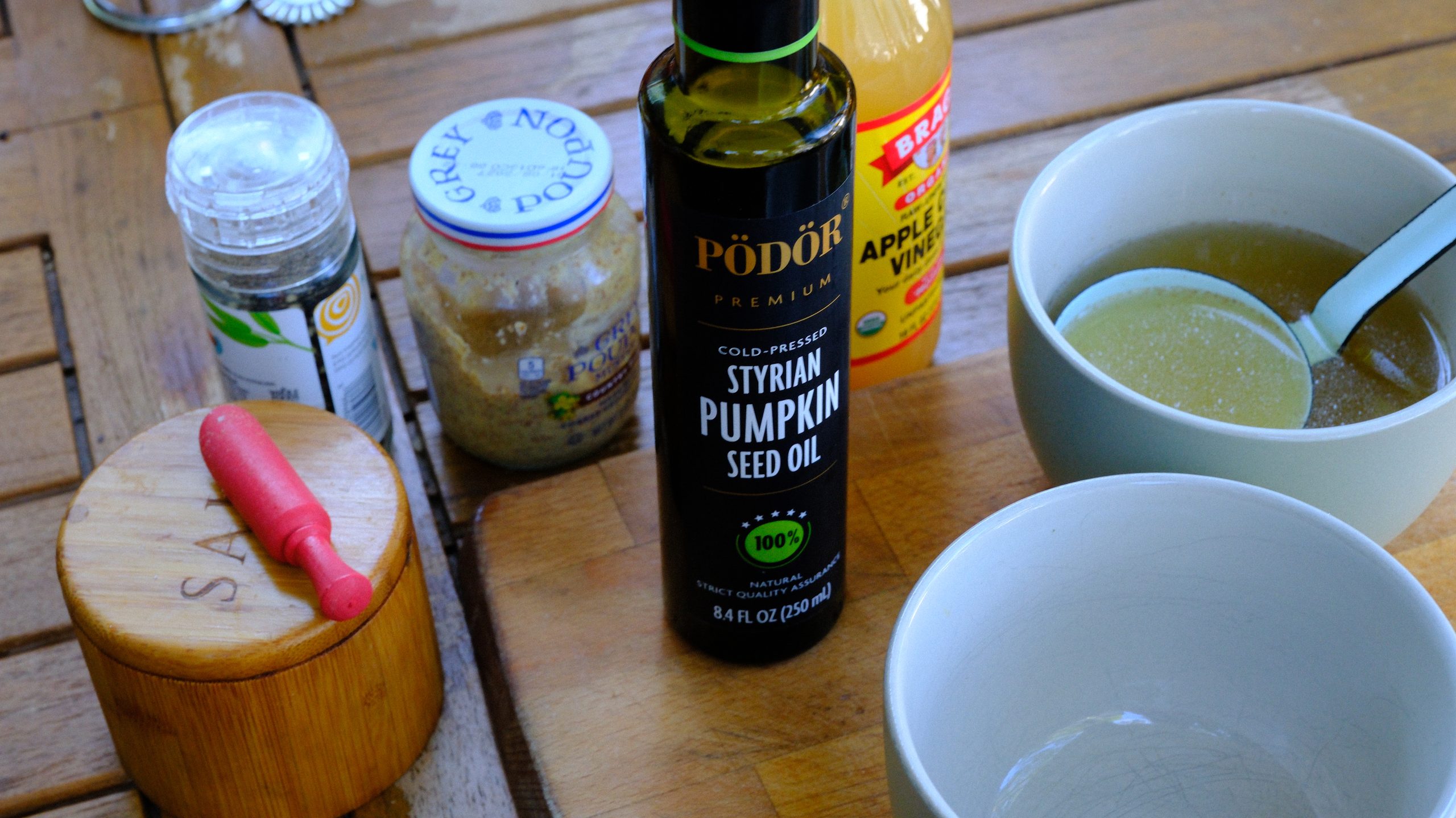
At first, three quarters of a cup of oil may look generous. Here it is intentional. The pumpkin seed oil is not a neutral carrier but the central flavor of the dish. Broth softens its richness, while apple vinegar cuts through both the beef and the oil. The result should be tangy and deeply nutty, with enough dressing to gather around the salad rather than merely gloss it.
Use genuine dark Styrian pumpkin seed oil if you can find it. Its roasted flavor and green-brown color are essential. Taste the dressing before adding it to the salad. It should seem slightly more assertive than you expect because the beef, beans, and greens will absorb and mellow it.
At a time when seed oils seem capable of starting an argument before dinner, I had to smile at the generous pour. Pumpkin seed oil is widely used in Ukraine too, so the flavor felt both surprising and familiar. After one taste, I remember thinking that this would not be a one-time experiment. It was far too flavorful, and felt far too nourishing, not to become part of our regular rotation.
About the beef
Traditionally, the beef can be cooked gently in an aromatic broth until tender. Sirloin cap, also sold as picanha or coulotte, gives neat, tender slices. Boneless chuck becomes softer and more shreddable.
If you have a sous vide circulator, it is my preferred method for sirloin cap. The low, even heat keeps the meat tender and makes it easy to slice thinly. The flavorful juices collected in the bag can be simmered briefly with the aromatics, then used in the dressing. A traditional stovetop method is included too.
Cadre Nomade recipe
Styrian Boiled Beef Salad with Runner Beans
Tender beef, creamy runner beans, tomatoes, red onion, and greens dressed with apple vinegar, broth, horseradish, and dark Styrian pumpkin seed oil.
Ingredients
For the beef
- 800 g (1¾ lb) sirloin cap, picanha, or coulotte
- 2 tsp kosher salt
- 2 quarts (2 liters) water, approximately, for the stovetop method
- 1 yellow onion, halved
- 1 carrot, roughly chopped
- 1 celery stalk, roughly chopped
- 1 bay leaf
- 6 black peppercorns
- 2 parsley stems, optional
For the salad
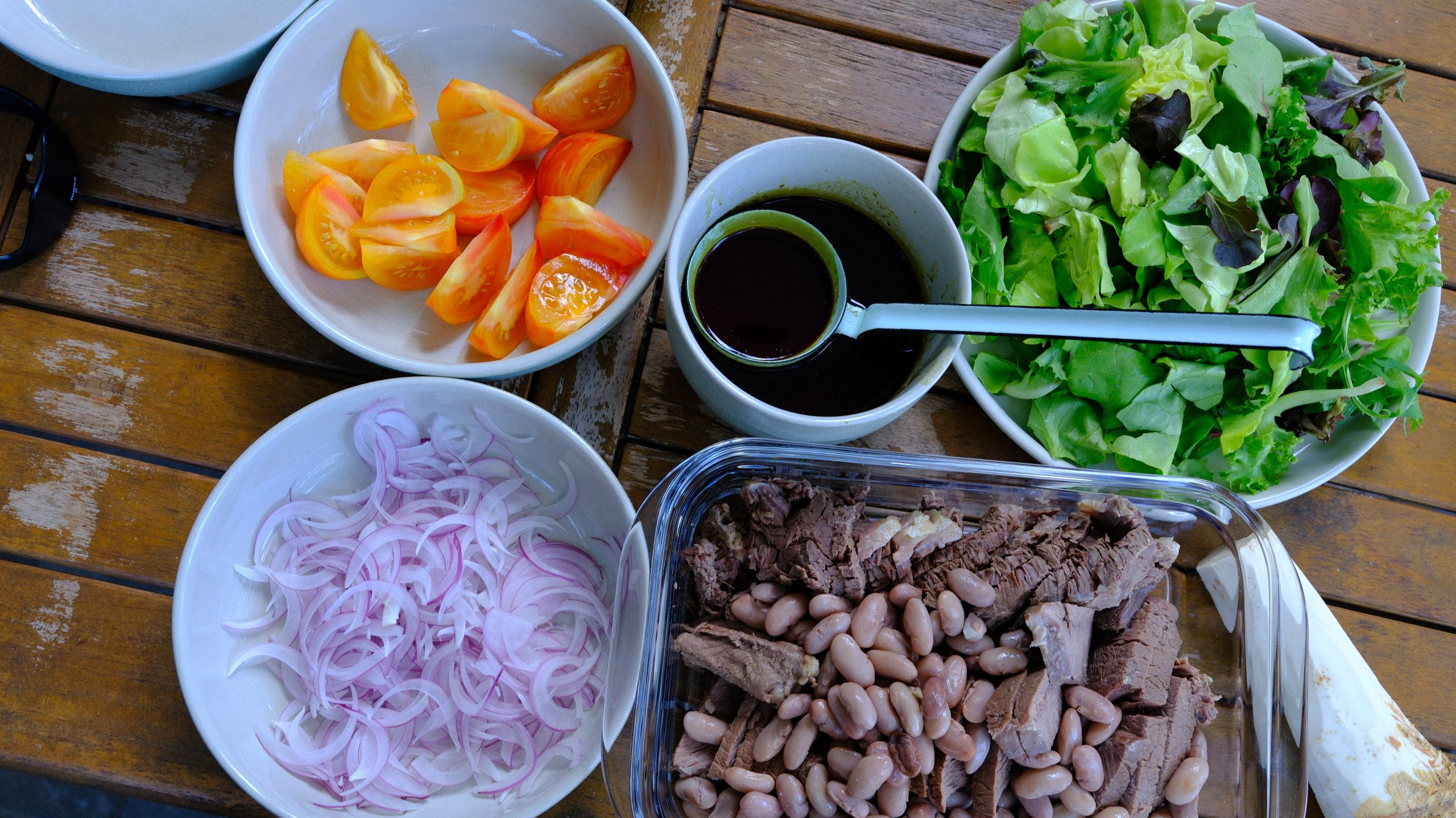
- 2 cups cooked Käferbohnen or scarlet runner beans, drained
- 1/2 medium red onion, very thinly sliced
- 2 cups mâche, lamb’s lettuce, or tender mixed greens
- 1 cup cherry tomatoes, halved
- 2 to 3 tbsp freshly grated horseradish, divided
For the dressing
- 3 tbsp apple cider vinegar
- 1 tsp Dijon mustard
- 1/2 tsp fine salt, plus more to taste
- Freshly ground black pepper
- 3/4 cup dark Styrian pumpkin seed oil
- 2 to 3 tbsp warm beef broth
Method
- Cook the beef sous vide. Trim away any hard exterior fat, leaving a thin fat cap. Season the beef with the kosher salt and seal it in a sous vide bag. Cook at 140°F (60°C) for 8 to 10 hours. Remove the bag from the water and let the beef rest in its juices for 20 minutes. Pour the bag juices into a small saucepan with the onion, carrot, celery, bay leaf, peppercorns, parsley stems, and 1 cup water. Simmer gently for 20 minutes, then strain. Reserve the broth for the dressing.
- For the traditional stovetop method, place the water, salt, onion, carrot, celery, bay leaf, peppercorns, and parsley stems in a pot and bring to a gentle simmer. Lower in the whole piece of beef, adding hot water if needed to keep it mostly submerged. Cook at a bare simmer until fork-tender, about 1½ to 2 hours for sirloin cap or 2 to 3 hours for boneless chuck. Turn once or twice. Remove the pot from the heat and rest the beef in the broth for 20 to 30 minutes. Reserve some broth for the dressing.
- Slice the beef. Trim any remaining heavy fat. Identify the direction of the muscle fibers and slice the meat very thinly across the grain. Separate some slices into irregular strips for a more rustic texture. You should have about 550 to 600 g (1¼ lb) cooked beef.
- Soften the onion. Place the sliced red onion in a small bowl of cold water for 10 minutes. Drain and pat dry. This keeps its crunch while softening its sharpness.
- Make the dressing. Whisk together the apple cider vinegar, Dijon mustard, salt, and several grinds of black pepper. Slowly whisk in the pumpkin seed oil, followed by 2 tablespoons of warm beef broth. Taste and add the remaining broth if you prefer a lighter dressing. It should be tangy, nutty, and assertively seasoned.
- Dress the beef and beans. While the beef is still slightly warm, combine it with the runner beans, half the red onion, and 1 tablespoon of grated horseradish. Pour over about three quarters of the dressing and toss gently. Let stand for 10 to 15 minutes so the beef and beans absorb the flavors.
- Assemble. Arrange the greens around a wide serving bowl or platter. Spoon the dressed beef and beans into the center. Add the tomatoes and remaining onion. Drizzle with the remaining dressing and finish with another 1 to 2 tablespoons of freshly grated horseradish. Serve at room temperature with crusty rye or country bread.

A flavor worth bringing home
What stayed with me was not only the richness of the pumpkin seed oil, but the way the whole plate held together. The broth connected the dressing to the beef. The vinegar lifted the beans. Horseradish sharpened every bite, while the tomatoes and greens kept it light enough for a warm day.
I had never tasted this combination before. Now the almost-black pool of dressing is the detail I remember first, followed by the server’s pride as he explained where it came from. Some recipes travel home because they are comforting or easy. This one came home because a new flavor made an entire region suddenly visible.